
A cancer diagnosis brings a lot of questions. When doctors mention proton therapy, families often have even more.
For many families researching proton therapy India for international patients, the biggest questions are simple:
- Is the proton treatment available in India?,
- How much does it cost?,
- And how does it compare with options in the US, UK, or Germany?
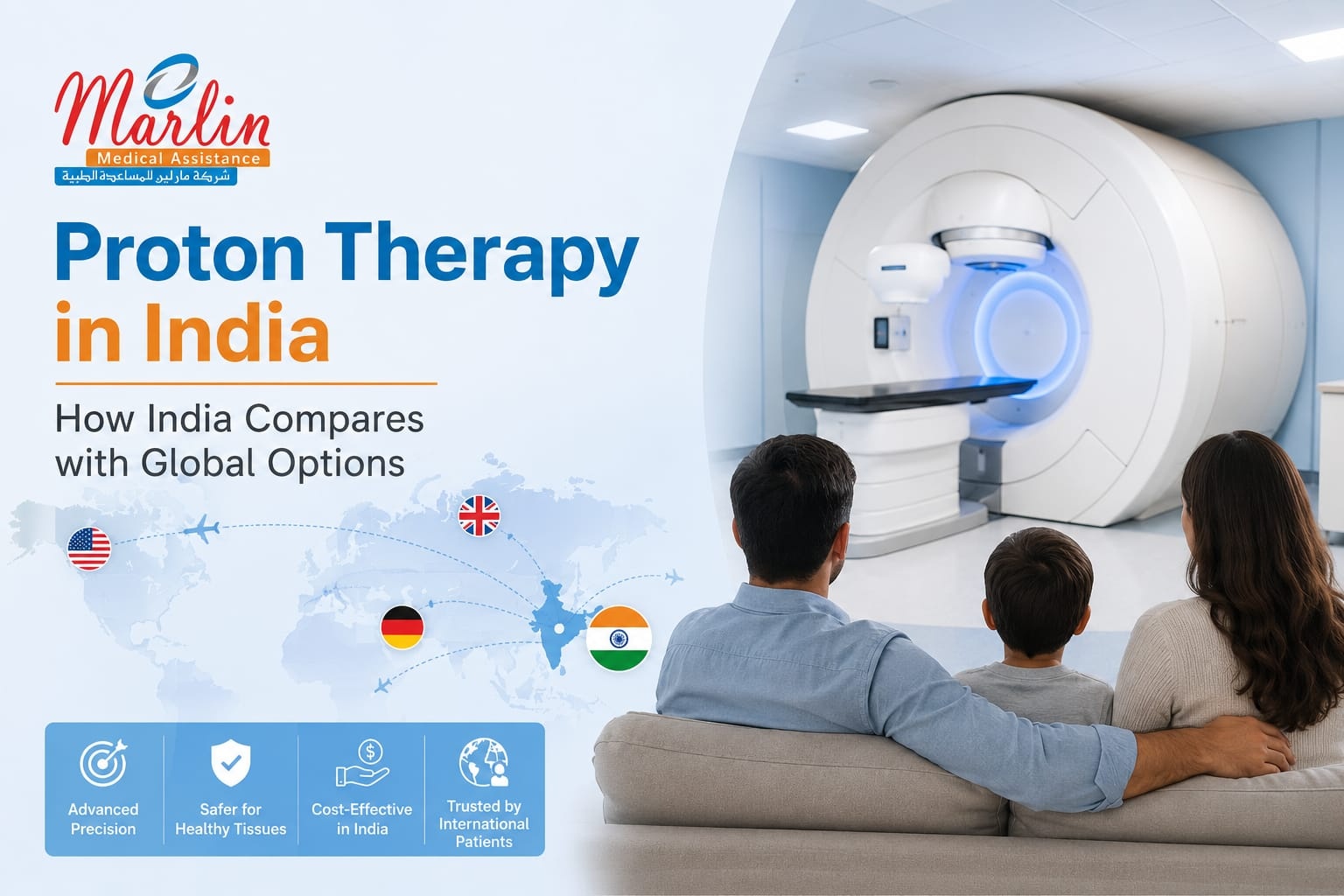
The short answer is “yes” India now offers advanced proton therapy at significantly lower costs than many Western countries. Plus support for international patients are also available.
Since opening in 2019, Apollo Proton Cancer Centre Chennai, or APCC, has become a go-to option for patients looking for advanced cancer care closer to their home.
For children with brain tumours, patients with skull base cancers, and anyone whose tumour is close to critical organs, APCC covers all.
In this article, we’ll explain how proton therapy works and who may benefit from it. We'll also look at proton beam therapy cost India, discuss proton therapy vs radiation India, and walk you through what to expect before travelling for treatment.
What Makes Proton Therapy Different From Conventional Radiation?
“Bragg Peak” Physics Explained Simply
Many patients hear the term "proton therapy" long before they understand what actually makes it different.
At first, proton therapy and conventional radiation seem quite similar. Both are used to destroy cancer cells. Both require careful planning. Both are delivered over several treatment sessions. The real difference lies in how the radiation behaves once it enters the body.
With conventional radiation, X-rays pass through the tumour and continue beyond it. In this, doctors carefully work to limit radiation exposure to healthy tissues. Still, some radiation doses reaches the areas around the cancer.
Proton therapy works differently. The proton beam travels to a specific depth and releases most of its energy at that point. This point is called by the doctors “Bragg Peak”. After delivering that energy, the beam just stops rather than continuing through the body.
Patients basically do not need to remember the physics behind it. The important thing is why doctors pay attention to it and how it helps during treatment.
Why It's Preferred for Children and Complex Tumours
When doctors discuss proton therapy, children are often among the first patients who come into the conversation. The reason is quite simple. A child who receives cancer treatment today may live long and healthy. That’s why doctors are not only focused on treating the tumour. They are also thinking about what happens years after treatment ends.
With conventional radiation, some healthy tissue around the tumour can still receive radiation. For an adult, that may be acceptable in certain situations. For a growing child, doctors usually try to avoid that exposure as much as possible.
This is one reason proton therapy is commonly considered for:
- Brain tumours in children
- Skull base tumours
- Spinal tumours
- Certain head and neck cancers
- Other paediatric cancers located near important organs
Parents often ask a different question.
Not "Will it treat the cancer?"
But: "Is there a way to target the cancer while reducing radiation to nearby tissues?"
In a few cases, proton therapy may help by radiation reduction exposure to nearby healthy tissues.
The same idea applies to some adult cancers. Tumours do not always appear in convenient places. Sometimes they sit very close to structures that doctors would rather leave untouched.
Examples include:
- The brainstem
- Optic nerves
- Eyes
- Spinal cord
- Inner ear
- Major blood vessels
In these cases, treatment planning can become more complicated. The challenge is not simply reaching the tumour. The challenge is reaching it while limiting radiation to the tissues around it.
This is one reason many families researching proton therapy India for international patients end up asking about proton therapy, especially when they have been told the tumour is close to a critical structure.
Of course, proton therapy is not a treatment recommended for every child or every complex tumour. The decision depends on several factors, including the cancer type, location, and stage.
That is why doctors at Apollo Proton Cancer Centre Chennai review scans and medical reports first. Only then they decide between proton therapy and conventional radiation.
When Proton Therapy Is NOT the Best Choice
Many people assume that if proton therapy is newer and more advanced, it must automatically be the best treatment available. But in reality, cancer treatment does not work that way.
Doctors do not choose a treatment simply because it is newer. They choose it because they believe it offers the most benefit for a particular patient.
There are situations where conventional radiation may work just as well. If the tumour is located in an area where nearby healthy tissues can already be protected effectively, the extra precision of proton therapy may not provide a meaningful advantage.
There are also cases where other treatments may be more important than radiation itself.
For example:
- Surgery may be the first recommendation.
- Chemotherapy may be needed before or after treatment.
- Targeted therapy or immunotherapy may play a larger role in the treatment plan.
Plus, a mix of treatments may offer the best outcome.
Here, the stage of cancer matters too. If the disease has spread to multiple parts of the body, doctors may focus more on systemic treatments that travel throughout the body rather than a highly targeted treatment such as proton therapy.
The Role of Cancer Stage
One thing many patients don't realise is that proton therapy is not automatically the best choice for every cancer.
It depends a lot on where the tumour is located. If the cancer is not close to important structures like the brain, spinal cord, optic nerves, or major blood vessels, regular radiation treatment may already do the job well.
This is why for patients technology alone should not be the sole reason for making final decisions.
At APCC, they review your reports, past treatments, and overall condition first. In some cases, proton therapy may offer clear advantages. In other cases, a different treatment approach may be a better fit.
Apollo Proton Cancer Centre (APCC): South Asia's Pioneer
First Clinical Proton Facility in South Asia (2019)
In the past, patients from India, the Middle East, African countries who were looking for proton therapy had just one option. Either they had to travel to a few European countries, the United States, or a countable specialised center in East Asia.
But in 2019 when Apollo Proton Cancer Centre Chennai (APCC) started clinical operations everything changed. It was inaugurated by the Hon’ble Vice President of India, Shri Venkaiah Naidu in the presence of Founder and Chairman of Apollo Hospitals Group.
The day APCC opened was a major step forward not just for India but for the whole South Asian region. It became the first proton therapy center in South Asia.
For many families or anyone, it’s not easy to travel long distances for cancer care. Having treatment available nearby can make the entire journey a little easier.
Today, APCC is offering advanced cancer treatment in over 147 countries, including:
- United Arab Emirates
- Oman
- Kuwait
- Saudi Arabia
- Nigeria
- Kenya
- Bangladesh
- Sri Lanka
- United Kingdom
For international families researching proton therapy India for international patients, APCC is indeed the first name they come across. That is largely because it remains one of the few centres in this part of the world offering dedicated proton therapy services under one roof.
Types of Cancers Treated at APCC
Proton therapy is often considered when a tumour is located close to organs that doctors want to protect from unnecessary radiation exposure. This may include areas around the brain, eyes, spinal cord, heart, or major blood vessels.
Because of that, certain cancers are more commonly treated with proton therapy than others.
APCC is part of the Apollo Hospitals network. The centre was set up to offer proton therapy along with other cancer treatments. According to information published by Apollo Proton Cancer Centre, the treatment may be considered for selected patients with:
- Appendix cancer,
- Paediatric cancers
- Brain tumours
- Skull base tumours
- Head and neck cancers
- Spine and spinal cord tumours
- Prostate cancer
- Breast cancer
- Lung cancer
- Liver cancer
- Gastrointestinal cancers
- Sarcomas
- Recurrent cancers that require re-irradiation,
- And many more.
At the same time, having one of these cancers does not automatically mean proton therapy is the right choice. Two patients with the same diagnosis can receive different treatment recommendations depending on factors such as:
- Tumour size
- Exact tumour location
- Stage of the disease
- Previous treatments
- Overall treatment goals
The treatment plan is based on individual clinical needs rather than the cancer type alone.
Accreditations and International Recognition
Patients, especially international ones, always come up with several questions.
For example:
- Is the hospital accredited?
- Does it follow recognised safety standards?
- Has it treated patients from other countries before?
Apollo Proton Cancer Centre (APCC) is part of the Apollo Hospitals network and follows internationally recognised quality and safety protocols.
Key accreditations include:
- Joint Commission International (JCI): APCC received JCI accreditation in 2020. JCI is an independent organisation that evaluates hospitals on areas such as patient safety, infection prevention, medication management, and quality of care.
- National Accreditation Board for Hospitals and Healthcare Providers (NABH): NABH is India's leading healthcare accreditation body and assesses hospitals on clinical quality, patient rights, and safety standards.
If you’re exploring proton therapy India for international patients, these accreditations offer an additional layer of confidence when comparing treatment centres across different countries.
Proton Therapy Cost in India vs. USA, UK, Germany
India: $30,000–$45,000 per course vs. $120,000+ in the US
The cost difference is one of the main reasons why many families explore proton therapy India for international patients. Since it is one of the most advanced forms of radiation treatment, proton beam therapy cost India can become expensive for you.
As of 2026, in countries like the United States, a complete treatment course can easily cross six figures and in India, it can cost you more than Rs. 25,00,000.
Country Typical Proton Therapy Cost:
| Country | Cost |
|---|---|
| India | Rs. 25 Lakh - Rs. 50 Lakh |
| USA | $120,000 - $200,000 + |
| UK | $100,000 - $150,000 |
| Germany | $90,000 - $150,000 |
Note: This price difference can be huge if a patient is travelling from the Middle East, Africa, or somewhere from Europe.
The cost of proton therapy depends on several factors, like:
- the type of cancer,
- the number of treatment sessions, and
- If additional tests or therapies are required.
Still in 2026, India remains one of the cheapest countries for proton therapy and that too without compromising in getting modern technology and specialist care.
At Apollo Proton Cancer Centre Chennai, their medical team first looks at the patient's reports before discussing the treatment plan and expected expenses. Plus, the cost can differ from one case to another, even when two patients have the same type of cancer.
How many sessions are typically needed?
The number of proton therapy sessions are not something that is fixed, and can vary from patient to patient. It depends on the cancer type, tumour size, treatment goal.
Though in most cases, people typically require between 20 to 40 sessions (also known as fractions) of proton therapy, which is usually given once a day, five days a week.
Let’s see the tumors/cancers and their approx proton therapy sessions:
| Tumors/Cancer | Sessions |
|---|---|
| Pediatric tumors | 25-35 sessions |
| Brain tumors | 28-33 sessions |
| Skull base tumors | 30-35 sessions |
| Head and neck cancers | 30-35 sessions |
| Prostate cancer | 20-40 sessions |
| Paediatric Cancers | 20-35 sessions |
Note: Please keep in mind that each session usually lasts between 15 and 30 minutes. However, the actual proton beam delivery often takes only a few minutes. Most of the appointment time is spent on positioning and verification imaging to ensure accuracy.
Most patients can go back to their accommodation soon after each treatment session. In many cases, they are also able to continue their usual daily activities during the course of treatment.
What is Included in the Package Price?
International patients often want to know what is covered beyond the radiation treatment itself.
While packages vary depending on the hospital and individual case, proton therapy programs in India commonly include:
- Initial oncology consultation
- Radiation oncologist evaluation
- Treatment planning CT scan
- Immobilisation devices
- Dosimetry and treatment planning
- Proton therapy sessions
- Regular reviews during treatment
- Nursing support
- Follow-up consultation before discharge
Additional costs may apply for:
- PET scans
- MRI scans
- Blood investigations
- Hospital admission
- Surgery
- Chemotherapy
- Targeted therapy
- Immunotherapy
- Extended accommodation
- Emergency medical care
Families should always request a detailed treatment estimate before travelling.
Patient Journey: Arriving for Proton Therapy in Chennai
Pre-Treatment Planning and Simulation
Many patients expect proton therapy to begin as soon as they arrive in Chennai. But, the first few days are usually spent on checking and treatment planning.
The doctors at APCC carefully go through your biopsy reports, scan results, medical history, and any treatments you may have received earlier. Then, they create your treatment plan.
The next step is called simulation. No radiation is delivered during this appointment.
Instead, the team creates a detailed treatment map using a planning CT scan. Custom devices, such as a fitted mask or body mould, are also prepared to help you stay in the same position during every session.
For someone looking for proton therapy in India, this careful planning phase is an important part. It ensures that treatments are accurately given with protecting healthy tissues.
Daily Routine During Treatment (4-8 weeks)
Here’s how the daily routine feels like during treatment:
| Time | What Usually Happens |
|---|---|
| Morning | Travel from your accommodation to the treatment centre. Many families choose to stay within 15-30 minutes of the hospital to reduce daily travel time. |
| Check-in | The care team confirms your appointment details and helps you prepare for the session. |
| Positioning and Imaging | Radiation therapists help you get into the exact treatment position using your custom mask or body mould. Verification imaging is performed before treatment starts. |
| Proton Therapy Session | The actual proton beam delivery usually takes only a few minutes. Most appointments last around 15–30 minutes in total. |
| After Treatment | Most patients can leave the centre shortly after the session and return to their accommodation. Hospital admission is rarely needed. |
| Afternoon | Patients often rest, attend follow-up appointments, work remotely, continue online schooling, or spend time with family. |
| Weekly Review | Once a week, the radiation oncology team reviews progress, manages side effects, and answers questions. |
| Weekends | Proton therapy is usually given Monday to Friday. Weekends are free for rest, recovery, and personal activities. |
Note: Every treatment plan is different, and depends on the cancer type, and the doctor's recommendation.
Accommodation Near APCC for Families
Talking about accommodation, it would be much better if you stay close to the hospital because proton therapy usually involves daily visits for several weeks
If you’re exploring proton therapy India for international patients, you can choose serviced apartments or extended-stay hotels near APCC. These options often provide more space than a regular hotel room. They may also include useful amenities like Wi-Fi, and laundry facilities.
Some accommodation options near APCC include:
| Accommodation | Approx. Distance from APCC |
|---|---|
| Holiday Inn Chennai OMR IT Expressway | About 1.9 km |
| Keys Prima by Lemon Tree Hotels, Katti-Ma (Adyar) | About 2.1 km |
| JN Residency, Perungudi | About 2.8 km |
| Olive Serviced Apartments, Perungudi | About 2.9 km |
| 7 Hills Service Apartments | About 4.3 km |
All these hotels are within a 10 to 15-minute drive of the centre that will help you avoid long commutes during treatment.
But before you book, it is worth asking about medical stay discounts (if any), transport options, and laundry or cooking facilities. The international patient team at APCC can also help families explore nearby accommodation based on their budget and length of stay.
Frequently Asked Questions
Disclaimer: This article is for informational purposes only and does not constitute medical advice.