
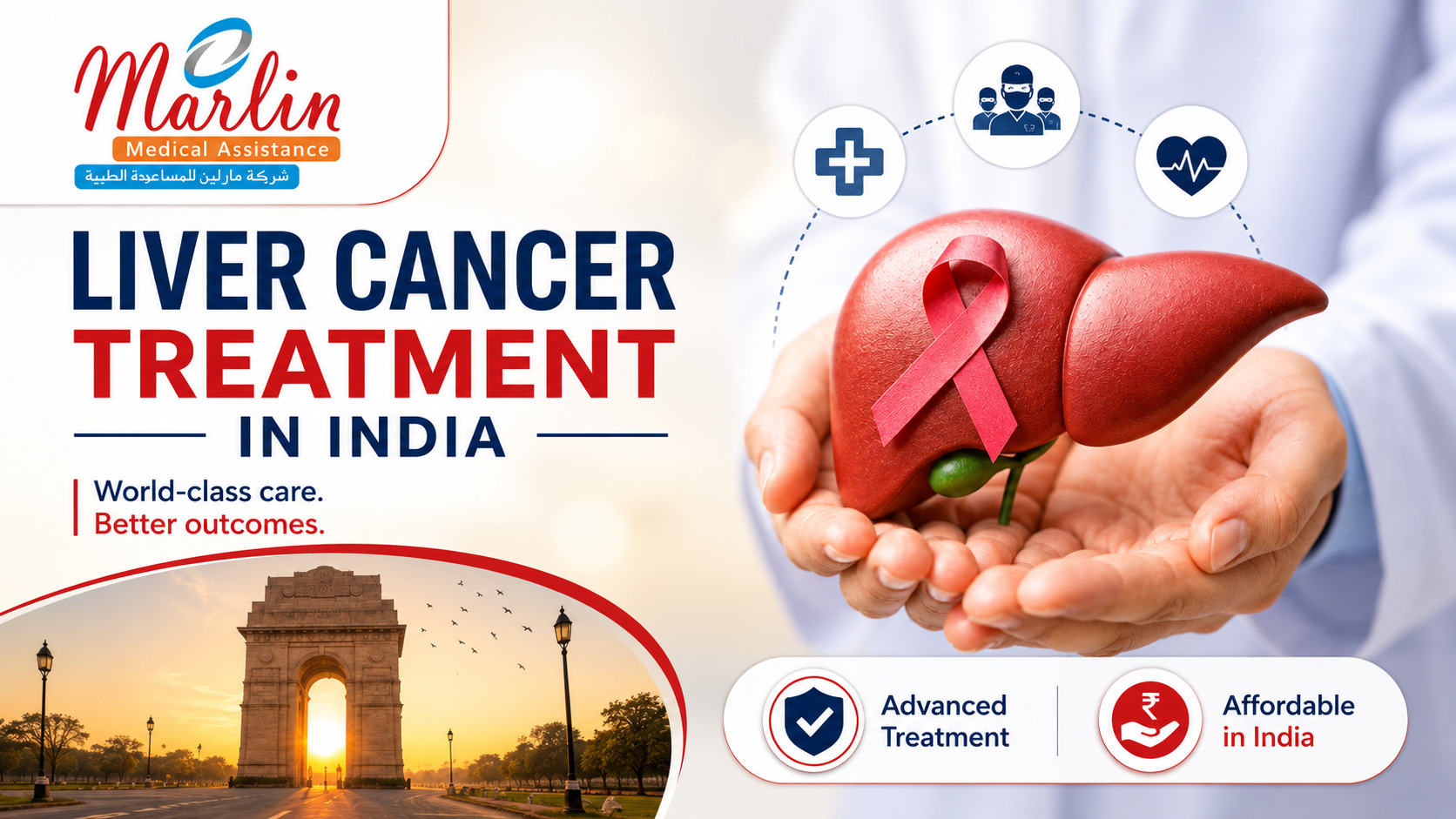
The oncology environment across the globe is being threatened by a rising burden in the form of primary liver cancers, especially HCCs. According to IARC GLOBOCAN 2022 database, liver cancer is ranked sixth in incidence rate and ranked third in mortality rate, with a total of 866,136 new liver cancer cases per year and 758,725 deaths. Demographic trends predict that the number of liver cancer cases per year will continue to rise until the year 2040 reaching 1.4 million cases per year . There is an urgent need for new treatment strategies.
By 2026, India will be recognized as one of the world’s top complex liver cancer care and for liver cancer treatment India international patients. Being diagnosed with primary liver cancer can be intimidating but the country’s medical infrastructure offers a potent combination of world-class expertise and structural affordability. Leading private health systems in India provide cutting-edge clinical care comparable to that in the West at a fraction of the cost.
India provides a very optimized patient pathway through multi-modal treatment approaches that include highly precise interventional oncology treatments such as TARE as well as highly complicated operations such as Living Donor Liver Transplant (LDLT) combined with the use of high quality generics. It offers the most advanced surgical oncology, best-in-class survival rates, and unmatched cost-efficiency at its NABH and JCI-accredited facilities for both foreign and Indian patients.
Types of Liver Cancer: HCC, Cholangiocarcinoma & Metastatic Liver Tumours
The diagnosis of the type of liver cancer is definitely the most critical initial step in order to form a treatment approach.
- Cholangiocarcinoma (bile duct cancer): A cancer that develops from the epithelium lining the bile duct. The anatomical classification of cholangiocarcinomas involves intra-hepatic, peri-hilar, and distal extra-hepatic pathways. Unlike HCC, this cancer is not related to the structure of cirrhosis and it is highly invasive and involved lymph nodes.
- Hepatocellular carcinoma (HCC): This is a form of cancer that emerges from primary causes in about 85%-95% of all cases of adult liver cancers. These are mainly triggered by inflammation resulting from the epithelial cells in the process. The common factors responsible for this cancer include hepatic cirrhosis, hepatitis B and C infections, excess alcohol intake, and recently MASLD.
- Metastatic Liver Tumors: The incidence of secondary tumors of the liver is much greater than that of primary tumors. As the principal organ of filtration through the portal venous system, the liver tends to get secondarily involved with malignancies from the colon, rectum, stomach, pancreas, breasts, and lungs; this is due to the fact that the circulating malignant cells tend to become embolized into the liver.
When is Liver Cancer Curable?
Total cure of liver transplant India cancer is possible to achieve, depending on the time of diagnosis and functioning of the liver. In oncology, cure is a process that requires complete removal of the tumor burden and consequent disease-free survival. However, if total removal of the tumor burden is not achievable because of the development of the disease, then a purely palliative approach to the treatment is applied to slow down the tumor progress and maintain bile flow.
In this context, surgical resectability marks the first line of curative treatment. Thus, for a tumor to be surgically removed through partial hepatectomy, it should be confined to one place without invasion into large vessels such as the trunk of the main portal vein. Additionally, the remaining portion of the liver, referred to as the Future Liver Remnant (FLR), should remain capable of sustaining its physiological functions after surgery. In a healthy person, FLR of 20% to 30% suffices while in case of underlying liver cirrhosis the FLR percentage should be at least 40%.
Parameters of Early Diagnosis Significantly Impact the Clinical Scenario. In cases where small lesions (either a single lesion <5 cm or up to three lesions <3 cm) are detected in early stage using selective ultrasound screening combined with AFP determination twice a year, treatment options change drastically:
- Surgical Resection: The excision of the affected lobe of the liver leaving intact borders devoid of any tumour mass.
- Hyperthermia Ablation: The use of percutaneous techniques like RFA to cause hyperthermic necrosis (>60°C) in tumours smaller than 3 cm.
- Liver Transplantation (LT): The ultimate cure for HCC in cases with concomitant decompensation of the cirrhotic background. Liver transplantation allows the removal of both the mass and the cirrhotic background, thus making the "field effect" impossible.
| Intended Outcome | Primary Modalities | Ideal Patient Criteria | 5-Year Survival Expectation |
|---|---|---|---|
| Curative Intent | Surgical Resection, RFA/MWA, Living Donor Liver Transplant (LDLT) | Solitary tumors ≤5 cm or ≤3 nodules ≤3 cm; preserved hepatic reserve (Child-Pugh Class A). | 60% – 80% when strict early criteria are met. |
| Palliative Intent | TACE, TARE (Yttrium-90), Systemic Immunotherapy, TKIs | Multinodular disease, portal vein invasion, extrahepatic spread, or compromised liver reserves. | 10% – 30% depending on systemic treatment response. |
Importance of BCLC Staging for Treatment Choice
It should be noted that because liver cancer is an extremely complicated case, meaning it is a disease within a disease, since the aggression of the tumor actively competes with the structure failure of the liver itself, existing staging systems do not fit this condition. The Barcelona Clinic Liver Cancer (BCLC) staging system updated for 2024–2026 is the algorithm for specific clinical procedures.
This algorithm includes three key parameters: tumor burden (tumor size, quantity of nodules, vascular or extrahepatic metastases); baseline liver function, measured by either Child-Pugh score or Albumin-Bilirubin grade; and patient performance status measured by Eastern Cooperative Oncology Group scale.
BCLC Staging System Workflow
Breaking down the specific stages demonstrates how the BCLC system dictates exact clinical pathways:
- Stage 0 (Very Early) & Stage A (Early): They have either one nodule or a maximum of three nodules that do not exceed 3 cm, good liver functionality (Class A/B Child-Pugh criteria), and excellent performance status (ECOG 0). The procedures listed for these patients are purely curative – surgery, thermal destruction of tumor tissue, or listing for liver transplantation. Their average life expectancy exceeds 60 months.
- Stage B (Intermediate): Features multiple nodular distribution of tumors without evidence of vascular invasion and metastasis. Liver functions still work properly. BCLC categorizes these patients into locoregional interventional oncology such as Transarterial Chemoembolization (TACE) and downstaging. Average lifespan varies between 20 to 36 months.
- Stage C (Advanced): The stage is characterized by the involvement of segmental or main portal vein invasion, or metastases outside the liver (like those in bones or lungs), with a decline in patients’ physical fitness levels (ECOG 1-2). It is not appropriate to conduct any curative surgery procedures at this point. The treatment protocol calls for the use of systematic treatments such as immunotherapy (Atezolizumab plus Bevacizumab).
- Stage D (Terminal): The condition is defined by advanced stage liver failure (Child-Pugh class C) and very poor performance status (ECOG 3-4), regardless of the actual size of the physical tumor mass. Given their inability to withstand the toxicity associated with anticancer therapies, the BCLC algorithm steers them strictly toward Best Supportive Care (BSC) treatment alone.
Liver Cancer Treatment Modalities in India
The strength of the liver cancer management framework in India is evident in its multidisciplinary strategy. Instead of depending on one clinical procedure, tumor boards that are experts in interventional radiology, surgical oncology, and hepatology come up with customized treatment pipelines based on each individual’s physiology.
TACE (Trans-Arterial Chemoembolisation)
The Transarterial Chemoembolization (TACE) technique, which serves as the gold standard for locoregional therapy of BCLC Stage B (Intermediate) multinodular, non-invasive hepatocellular carcinoma, takes advantage of a physiological weakness of the anatomical structure of the hepatic artery. While the healthy liver tissue derives its blood supply at 75 percent from the portal vein, the liver cancer tissue derives its blood supply at more than 90 percent from the hepatic artery.
In the context of a TACE procedure India cost and process, an interventional radiologist would insert a microcatheter through the femoral or radial artery in order to reach superselectively the targeted branches supplying blood to the tumor. A therapeutic cocktail would be injected directly into the cancer cells as follows:
1. Locoregional chemotherapy – a high concentration of a drug used in chemotherapy (like doxorubicin or cisplatin) would be used;
2. Embolization – immediately after the chemotherapy drug injection, some embolic substances (gelatin sponges or lipiodol) will be injected in order to block completely the tumor's blood supply.
TACE leads to the development of ischemic necrosis by confining the anti-cancer drugs within the nodules while depriving them of blood supply and nutrition. The application of TACE is common practice in India, both as a first-line treatment method for inoperable intermediate cancer as well as an excellent bridging modality to ensure that patients don’t fall off the waiting list for transplantation.
Ablation Therapies: RFA and Microwave
Thermal ablation techniques can be used successfully on those liver cancer patients at stage 0 or A whose liver function is below normal and cannot undergo a surgery due to their weak condition. It uses the technology of applying heat energy to the tumors using imaging technology like ultrasound or CT scan, which works best on the localized tumors that measure less than 3 cm.
• Radiofrequency Ablation (RFA): Radiofrequency ablation has always been considered the gold standard for heating therapies. RFA involves the use of high frequency electric current from an electrically insulated needle or probe that produces heat due to friction. As a result, the body temperature can be raised to anywhere between 60-100 °C, causing instant necrosis of cancer cells. The major disadvantage of RFA treatment is that it suffers from a "heat sink effect" as the heat produced gets dissipated owing to the movement of blood through nearby liver veins.
• Microwave Ablation (MWA): This technology is considered to be a huge advancement in technology and has gained popularity in India. Unlike RFA, microwave ablation uses electromagnetic waves instead of electric currents.
Compared to RFA, MWA can generate higher temperatures, create larger and more predictable areas of tissue necrosis, and operate rapidly enough to be effective in overcoming the heat sink effect close to large vessels.
| Parameter | Radiofrequency Ablation (RFA) | Microwave Ablation (MWA) |
|---|---|---|
| Mechanism | Frictional heat via alternating electrical current. | Tissue heating via electromagnetic field rotation. |
| Target Temp | 60°C – 100°C | Exceeds 100°C rapidly. |
| Susceptibility | High vulnerability to the heat-sink effect. | Highly resistant to the heat-sink effect. |
| Ideal Lesions | Solitary tumors <3 cm away from large vessels. | Larger, multiple, or vascular-adjacent lesions. |
Targeted Therapy: Sorafenib and Lenvatinib
When liver cancer advances to BCLC Stage C (advanced), with features like portal venous invasion and extra-hepatic metastases, local treatment is not enough anymore and systemic therapy should be used instead. During the last ten years, the introduction of Oral Tyrosine Kinase Inhibitors (TKIs) has completely changed the outlook for patients with advanced HCC because such drugs prevent the specific molecules' receptors (VEGFR and PDGFR) that cause tumor angiogenesis and proliferation from functioning.
- First-Line Options: Lenvatinib and Sorafenib serve as principal TKI options. Large-scale clinical trials have demonstrated that Lenvatinib is non-inferior to Sorafenib in overall survival and offers significantly better progression-free survival and tumor response rates.
- Second-Line Options: For patients whose disease progresses despite first-line therapy, secondary TKIs such as Regorafenib or Cabozantinib are deployed to maintain systemic control.
Liver Transplant for HCC: Eligibility Criteria
For example, in case the individual has previously been afflicted by hepatocellular carcinoma along with decompensation cirrhosis, then the best approach that can be adopted for treating this particular individual would be conducting surgery through which there can be transplantation of the liver. This is due to the fact that this procedure cannot be conducted since organs are difficult to come by.
- The Milan Criteria: Established in 1996 and strictly followed by transplant boards across India, this model selects patients with:
- A solitary HCC nodule ≤5 cm in diameter, OR
- Up to three separate nodules, each ≤3 cm in diameter.
- Absolute absence of macrovascular (portal vein) invasion and zero extrahepatic metastasis.
Observance of the Milan Criteria results in outstanding 5-year survival statistics surpassing 70% to 85%, along with recurrence-free survival rates of about 92%. This is similar to transplant surgery in cases of purely non-oncological liver failure.
- The UCSF Criteria: Recognizing that the Milan guidelines are highly conservative, many high-volume Indian transplant centers selectively utilize the expanded University of California, San Francisco (UCSF) model for qualified patients. The UCSF criteria safely expand eligibility to:
- A solitary tumor ≤6.5 cm, OR
- Up to three nodules, with the largest measuring ≤4.5 cm and a total cumulative tumor diameter not exceeding 8 cm.
Current guidelines in India have incorporated advanced serum markers like AFP (where patient selection is limited to AFP of ≤500 ng/mL) and PET-CT using 18F-FDG before surgery for assessing tumor biology.
Cost of Liver Cancer Treatment in India (2026)
It is essential to maintain financial clarity as far as cancer cases that are highly complex are concerned. The country of India continues to stand out due to its uniqueness in terms of the ratio between cost and value in hepatobiliary medicine, offering top-notch medical facilities at a significant saving for the patient. The following list shows the costs associated with various treatment methods.
TACE Procedure: $3,500 – $6,000
Cost of each TACE treatment in India typically ranges between $3,500 and $6,000, which can be estimated at 290,000 to 500,000 Indian Rupees. As TACE is a localized surgery carried out using a catheter, the charge for each TACE surgery depends on how complicated the blood vessel mapping is around the tumor site.
The projected cost range is very broad, usually including:
• Presurgery blood tests and coagulation studies.
• High dose chemotherapy drugs (e.g., doxorubicin) and special embolic microspheres.
• Cath lab time and angiography.
• 1 to 2 days of hospitalization after embolization, along with specialist fees.
Liver Resection Surgery: $10,000 – $18,000
Partial hepatectomy is one of the main treatment procedures that are carried out for localized, resectable tumors with good liver functioning capabilities. The total price in India for an invasive liver resection procedure falls between USD 10,000 and USD 18,000 (INR 8,30,000 to INR 15,00,000).
The total price within this range is dependent on the segment to be operated on and whether an open surgery or a robotic-assisted surgery will be performed by the medical team. The cost comprises:
• Theater fees, anesthesia, and surgical materials (e.g., modern parenchymal liver transection machines).
• Five to seven days of inpatient care, which should include mandatory observation in the Surgical Intensive Care Unit (SICU).
• Costs related to the surgical team, the assisting surgeon, and the anesthetist.
Liver Transplant for Cancer: $25,000 – $40,000
If the HCC is accompanied by cirrhosis, then a Living Donor Liver Transplantation (LDLT) is considered as the only way out. In India, the whole process of transplant takes around USD 25,000 to 40,000, which is INR 21,00,000 to 33,00,000. This constitutes a savings of about 90 percent as compared to the Western world, where similar processes easily cost above USD 550,00
In this complete package, maximum clarity is achieved in terms of finances through the consolidation of donor and recipient requirements under one package cost. These include:
• Complete Pre-Op Evaluation: Comprehensive evaluations in terms of anatomy, cardiology, and psychology of the patient as well as the live donor.
• Two Surgeons and Operations Fee: Two surgeries at once (live donor’s hepatectomy and the transplant to the recipient) as well as graft preservation fluids and intra-op ultrasound.
• Patient Stays: Complete patient stays of 14-21 days, including five-seven days in the Transplant Intensive Care Unit and recovery period in the private transplant ward.
• Drugs: Induction medications for immunosuppression and critical care monitoring.
Global Cost Comparison: High-Quality Care at a Fraction of Western Pricing
To illustrate the significant financial arbitrage available to international families, the table below contrasts the average treatment costs in India against other major global healthcare systems in 2026.
| Treatment Modality | India Cost (USD) | United States Cost (USD) | United Kingdom Cost (GBP) |
|---|---|---|---|
| TACE (Per Session) | $3,500 – $6,000 | $15,000 – $35,000 | £11,000 – £26,000 |
| Partial Hepatectomy | $10,000 – $18,000 | $45,000 – $80,000 | £35,000 – £62,000 |
| Liver Transplantation | $25,000 – $40,000 | $550,000+ | £150,000 – £220,000 |
Top Liver Cancer Hospitals in India
The very important factor that is considered to have made India an important player in the oncology domain can be credited to the fact that there are different private healthcare centers available. Such healthcare centers have been properly monitored by bodies such as the National Accreditation Board for Hospitals & Healthcare Providers (NABH) and Joint Commission International (JCI). The practice of all surgeries and treatments in these healthcare centers follows the Western approach.
Medanta — The Medicity, Gurgaon
Medanta is considered the finest private hospital in India by Newsweek Magazine, with claims that it operates one of the world’s busiest liver transplantation and hepatobiliary oncology centers. The center, under the stewardship of the famous surgeon Dr. Arvinder Singh, has executed over 4,400 liver transplants in India.
Medanta is equipped with high-end facilities like a state-of-the-art liver transplant surgery suite, special sterilized ICU units, and robot-assisted surgery setup. The success rate of 1-year survival after liver transplantation at Medanta is phenomenal with more than 95% for normal cohorts. In case of difficult liver transplantations, the center is highly proficient in performing ABO-incompatible transplantation and portal inflow modulation for low GRWR grafts.
There is a dedicated international patient desk for patients traveling abroad for their treatment.
Global Hospitals, Mumbai
Located in the healthcare hub of Mumbai, Global Hospitals (which is the best hospital of Gleneagles Hospital chain) is well-known for its capability to treat patients suffering from cancer in the liver or the bile duct region. The Global Hospitals have got accreditation from NABH & NABL.
Global Hospitals possesses cutting-edge facilities including a unique interventional radiology suite for conducting TACE and TARE (Yttrium-90). Global Hospitals has achieved a success rate of 90% for surgeries of HPB systems and a survival rate of 85%-90% in the first year after a living donor transplant.
Global Hospitals also has an international desk where they assist patients from abroad. Multi-lingual administrative coordination, embassy clearance, and logistics arrangements are some of the services offered by the hospital.
Artemis Hospitals Liver Oncology Programme
Artemis Hospitals is the first-ever super-specialty hospital in Gurgaon that received prestigious dual JCI/NABH accreditation and thus set very high standards in patient safety. Being backed by specialist oncologists like Dr. Durgatosh Pandey, the Artemis Liver Oncology Program makes use of the best in interventional oncology and minimally invasive surgery.
The highly advanced facility has a state-of-the-art radiation wing that allows Stereotactic Body Radiotherapy (SBRT). It also has highly specialized pure laparoscopy and pure robotic donor hepatectomy facilities. The hospital claims its success rate for advanced treatment of liver cancer is quite high, ranging from 88% to 93%, with its specialty being down-staging of intermediate stage cancers using RFA/MWA and super-selective TACE.
Frequently Asked Questions
Plan Your Care with Strategic Savings
Dealing with a complicated diagnosis of liver cancer means you have to act fast and not allow any concerns about finances to hamper your quest for proper treatment. Now, with the unique oncology alliance with Marlin Medical Assistance, it is possible for international and local clients to get a 35% discount on all liver cancer treatments packages.
These comprehensive programs bring your multiple modality treatment pathways ranging from highly precise interventions in interventional oncology including TACE and TARE to curative surgical treatments such as living donor liver transplants under one roof. This is achieved by combining Marlin’s world-class hepatobiliary medical professionals, its adherence to strict THOTA regulations, and considerable generic drug pricing advantage.
Take the definitive step toward optimized recovery and long-term graft survival today. Learn more about custom surgical inclusions, step-by-step embassy clearances, and transparent pricing structures by visiting the Marlin Liver Cancer Treatment Packages portal to coordinate your medical itinerary with a dedicated international patient coordinator.