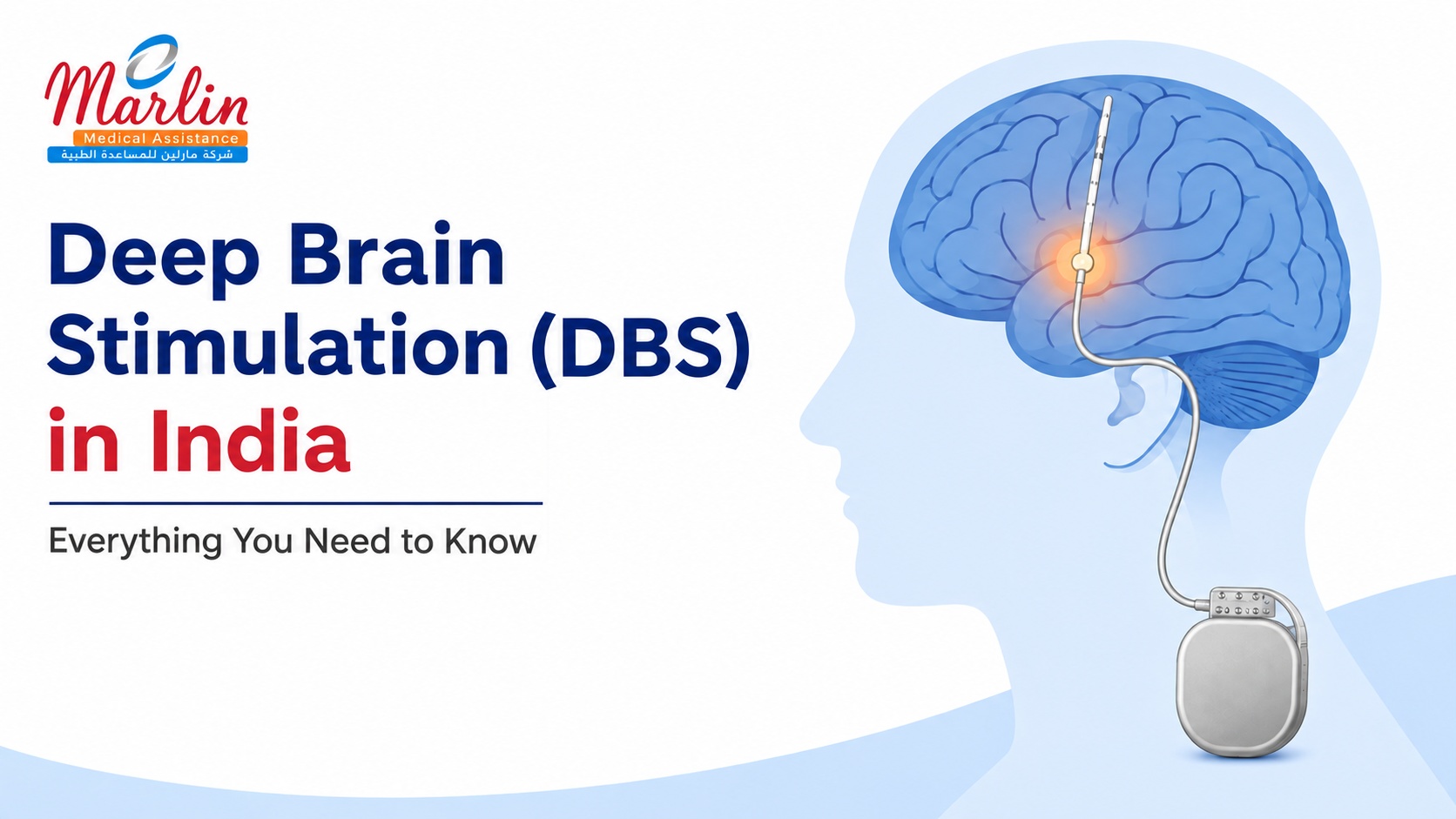
Deep brain stimulation cost in India is considerably lesser than at other locations in the world. It is a life-changing neurosurgical procedure for selected patients with Parkinson's disease, dystonia and essential tremor. India's popular and high class functional neurosurgery centres provide DBS at about 70% lower cost and it applies the same globally recognised and approved Abbott and Medtronic devices.
DBS surgery in India for Parkinson's disease is becoming highly popular. This content will mainly function on the diagnosis, treatment, cost comparison and recovery after the medical procedure. Here we dive deep into the content:
WHAT IS DEEP BRAIN STIMULATION (DBS)?
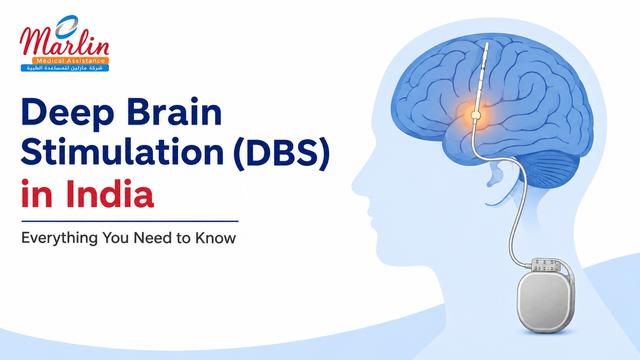
Deep brain stimulation or DBS is a neurosurgical procedure in which thin electrodes are installed into particular brain targets like the globus pallidus internus (GPi) or subthalamic nucleus (STN) to treat Parkinson's disease. These thin electrodes are linked via a wire to a pulse generator or as popular by the name neurostimulator. These are installed under the skin of the chest to treat the disease at its root. Deep brain stimulation cost in India is lower than at western locations.
Electrical impulses from the device modulate abnormal brain circuit activity and it helps in reducing the motor fluctuations, tremor, and dyskinesias. DBS is a powerful technique to treat numerous brain related abnormalities. It is often referred to as a "pacemaker for the brain." It is not a real cure for the disease but it significantly enhances the quality of daily life. The deep brain stimulation cost in India is a matter of attraction for international patients due to its affordability.
TYPES OF DEEP BRAIN STIMULATION (DBS)
There are numerous types of deep brain stimulation in India. Let us have a look at the bulleted list of the types of deep brain stimulation:
- STN DBS (Subthalamic Nucleus) — most recommended for Parkinson's disease.
- GPi DBS (Globus Pallidus Internus) — preferred when dyskinesias are active.
- DBS for Dystonia — GPi target
- VIM DBS (Ventral Intermediate Nucleus of Thalamus) — for essential tremor.
- DBS for OCD — Anterior limb of internal capsule target available at some centres.
- DBS for Epilepsy — ANT (anterior nucleus of thalamus) target
CAUSES & SYMPTOMS
There are numerous conditions causing the health situations needing a proper Deep brain stimulation treatment. Let us know about the causes and symptoms of these conditions :
|
CAUSES REQUIRING A DBS
|
SYMPTOMS REQUIRING A DBS
|
DIAGNOSIS
The diagnosis of the condition needing a proper DBS surgery in India for Parkinson's disease follows a protocol. Here are some of the most popular techniques of diagnosis that confirm the requirement of a DBS :
|
Psychiatric Evaluation |
Psychiatric Evaluation is a popular diagnostic method related to DBS that helps in confirming the prevalence of a psychosis, active major depression and impulse control disorders. Post-operative psychiatric changes are also called DBS complications. This method of diagnosis helps in identifying the real cause behind the need for a thorough Deep brain stimulation. This is actually a baseline evaluation that helps in the perfect analysis of the issue. |
|
MRI Brain (DBS Protocol) |
High-resolution MRI with particular DBS sequences that FGATIR and MPRAGE are compulsory for trajectory planning and surgical target identification. Some centres in India now perform MRI-guided asleep DBS treatment too. However the diagnostic team should be careful in the case of any metallic implants and should discuss and take actions accordingly. |
|
DBS Candidacy Assessment |
A DBS Candidacy Assessment is a formal multidisciplinary diagnostic evaluation that includes a neurologist review that is a confirmed PD diagnosis for 5 years and more with robust levodopa response. It even consists of a neuropsychological battery and neuropsychological testing that is a cognitive screening — MoCA. This diagnosis even confirms the psychiatric issues, depression and other neurological problems. |
|
Neuropsychological Testing |
Neuropsycholic al testing is also a prominent diagnostic technique helping to confirm about a condition needing a DBS. It utilizes a comprehensive cognitive battery to know about dementia and establish baseline cognitive function. Results support target selection that is GPi preferred when mild frontal issues prevail. In this method language, processing speed, Frontal lobe function, and memory are assessed. |
|
Levodopa Challenge Test |
Levodopa Challenge Test makes use of UPDRS motor scores are recorded in the worst OFF-medication state. It is used after a proper levodopa dose. A more than 30% improvement highly predicts an optimum DBS response. Poor levodopa responders are unlikely to benefit from Deep brain stimulation with an exception of an essential tremor. |
RISK & COMPLICATIONS
There are certain risks and complications related to a Deep brain stimulation. Let us know about it :
⚠ Haemorrhage : Haemorrhage is the intracerebral bleeding that happens during lead placement with a risk association between 0.5 to 1%.
⚠ Lead migration or fracture : Hardware complications needing revision is also a common complication linked to a DBS treatment.
⚠ Infection : Infection also carries about 2 to 5% of risk in the case of a Deep brain stimulation mainly during device removal.
⚠ Stimulation-induced side effects : Stimulation induced side effects like speech changes, eyelid opening apraxia and balance changes are also associated to a DBS.
⚠ Neurological side effects : Dysarthria, paresthesias and mood changes are some neuropsychological side effects linked to a DBS.
⚠ Battery depletion : A battery associated to a DBS needs replacement every 3 to 5 years.
All risks are discussed with you in detail during pre-operative consultation.
PREPARATION FOR TREATMENT
Here is how you will prepare for your DBS treatment :
1. You should finish DBS candidacy assessment including levodopa challenge before the treatment. Marlin helps in remote review of assessment reports.
2. Nextly you should even share MRI brain or DBS protocol and complete neuropsychological testing results with Marlin.
3. Later you need to confirm device brand preference from a number of options like Abbott St Jude Infinity, Medtronic Activa, or Boston Scientific Vercise.
4. Do not forget to plan your stay in India for about a period between 14 to 21 days.
5. You should even arrange for a companion visa throughout the entire treatment period.
6. Finally you need to stop anticoagulants as directed. However you should continue antiparkinsonian medications until the day of surgery.
TREATMENT OPTIONS
There are a number of treatment options under a deep brain simulation treatment. MRI DBS with micro electrode recording, initial device programming and Asleep DBS under CT Scan or MRI guidance. India has a variety of ranges to choose from for a DBS. There are certain modern and certain traditional techniques of a deep brain simulation. DBS surgery in India for Parkinson's disease comes with several options. Let us get into the details:
|
Awake DBS with Microelectrode Recording |
This is a traditional method wherein the patient is kept awake during the lead placement. Microelectrode recording ensures the correct brain target by finding out the neuronal firing patterns. Real-time clinical testing helps in ensuring the tremor suppression. It even helps in confirming the side effects. It is widely available in India at Medanta, AIIMS and Apollo. |
|
Asleep DBS under MRI or CT Guidance |
Asleep DBS under MRI or CT Guidance is a technique of DBS in which a patient is fully anaesthetised. It includes a lead placement guided by CT imaging or intraoperative MRI integrated with robot-assisted surgery. It doesn't need patient cooperation during the procedure. It is becoming popular all around India. |
|
Initial Device Programming |
Initial Device Programming is also another popular method of a DBS treatment. The programming starts anytime between 2 to 4 weeks after surgery once any brain swelling is done away with. Parameters like frequency, amplitude, pulse width, contact configuration are measured individually. Initial programming needs 5 to 7 days in India. Subsequent adjustments can be done by telemedicine using the Abbott myDBS remote programming systems or Medtronic BrainSense. |
COST OF TREATMENT — Comparison Table (India vs USA vs UK vs UAE) Procedure
Deep brain stimulation cost in India is a matter of attraction for foreign patients due to high affordability. We will share Deep brain stimulation costs in India Vs USA and other locations. Let us know in detail about this cost comparison in a tabular manner :
|
PROCEDURE |
COST IN INDIA |
COST IN USA |
COST IN UK |
COST IN UAE |
|
DBS Surgery (Unilateral) |
$12,000–$16,000 |
$50,000–$70,000 |
£35,000–£50,000 |
$30,000–$45,000 |
|
DBS Surgery (Bilateral) |
$18,000–$25,000 |
$80,000–$120,000 |
£55,000–£80,000 |
$45,000–$70,000 |
|
DBS Battery Replacement |
$4,000–$7,000 |
$15,000–$25,000 |
£10,000–£18,000 |
$8,000–$15,000 |
⚑ All prices approximate in USD as of 2025. Actual cost depends on tumour/condition complexity, hospital category, room type, and length of stay. Marlin provides a full itemised quote within 48 hours of report submission.
RECOVERY
Hospital stay after DBS surgery is about 4 to 7 days long . However a further 7 to 14 days stay period is needed in India for initial device programming sessions before flying home. DBS benefit is normally not experienced immediately. The healing procedure is actually gradual in nature and can take up to weeks or months. DBS doesn't work like a miracle but follows a consistent pattern to treat the issue.
Remote programming capability like Medtronic BrainSense, Abbott DBS app permits certain parameter adjustments even from home. Marlin will arrange telemedicine programming follow-up with the India functional neurosurgeon after you are back home.
BEST HOSPITALS FOR DEEP BRAIN STIMULATION (DBS) IN INDIA
Apollo Hospitals Delhi / Chennai
AIIMS New Delhi — largest functional neurosurgery programme
Bombay Hospital, Mumbai