
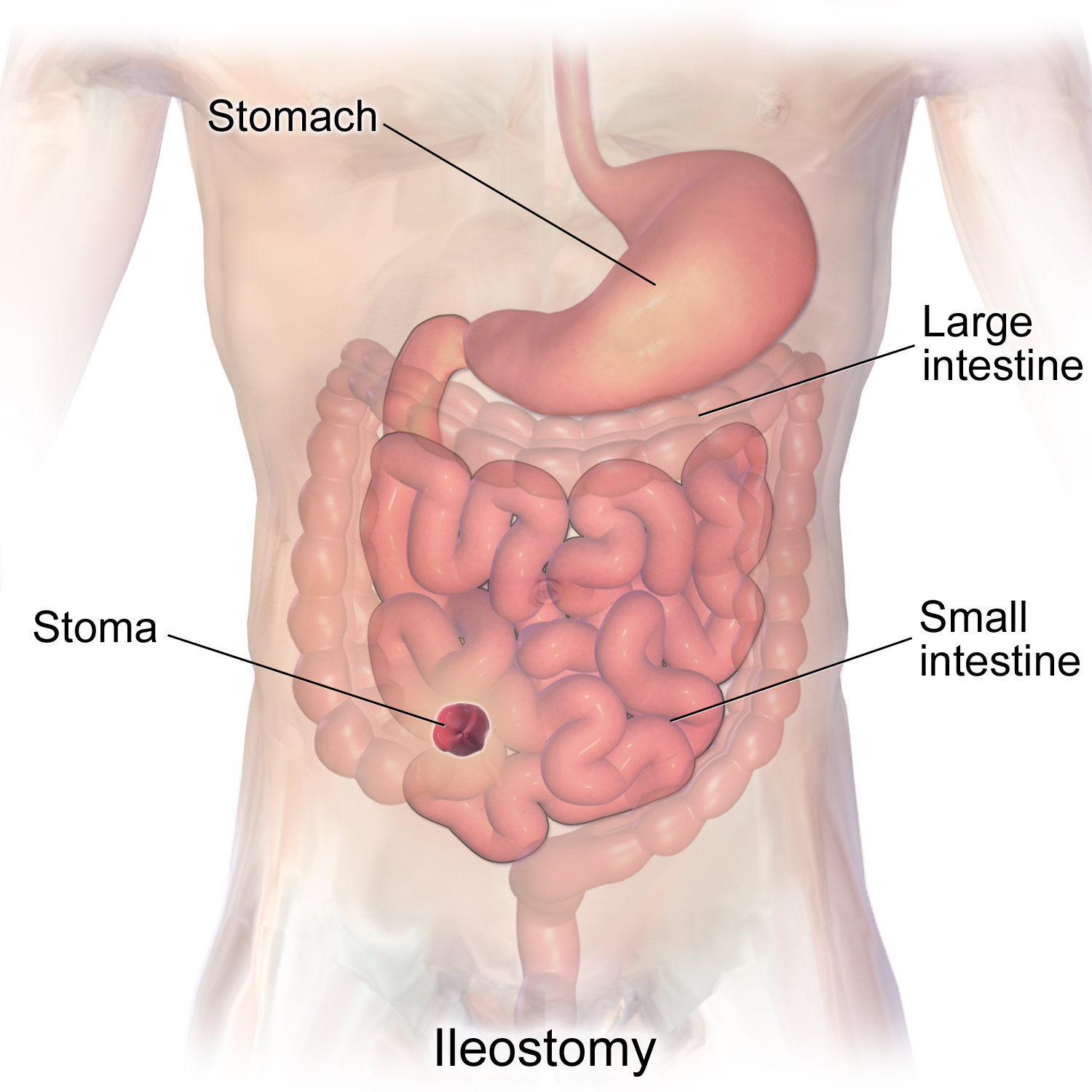
Ileostomy is a surgical procedure where the doctor removes the damaged part of the ileum. This leads to the formation of the opening in this area. The primary purpose of the procedure is to remove the respective waste from the body. The stool is allowed to pass through the opening, also known as a stoma. Then the stool gets collected in the external collection device. Often, ileostomy and colostomy are considered similar to each other. But, in reality, the ileostomy is related to the small intestine, and a colostomy is associated with the large intestine.
Types of Ileostomy:
There are mainly two types of ileostomy:
- Standard Ileostomy:
This is the most common type of ileostomy. The end part of the ileum is focused on here. The ileostomy bulges out up to 2.5 cm which is evident after the procedure is completed.
- Continent Ileostomy:
This type of ileostomy is performed less when compared to the standard one. Here, the catheter is used to drain out the waste from the patient’s body.
Stoma reversal surgery is performed under the expertise of surgeons. Here, the surgeon rejoins the stoma with the colon or small bowel depending on the earlier procedure performed on the patient. The ileostomy reversal surgery is recommended and performed only after the doctor confirms that the patient is healthy. Before opting for the reversal procedures, it is important to check that if the patient needs to undergo treatments like chemotherapy. In the case of such a requirement, the treatment needs to be completed. After this, the patient can go for the ileostomy reversal surgery. The patient needs to stay in the hospital for a week depending on his overall condition.
Thus, the ileostomy is a useful procedure for patients who have damaged parts of the ileum left in their body. Patients must prioritize consulting a medical specialist to find out the right treatment for their condition before it’s too late. Therefore, one must search for an experienced surgeon and understand the case to receive the treatment that yields the best results after the completion of the ileostomy and its reversal procedures.