
Do you know why some people feel perfectly fine while resting, but develop symptoms as soon as they start walking or climbing stairs?
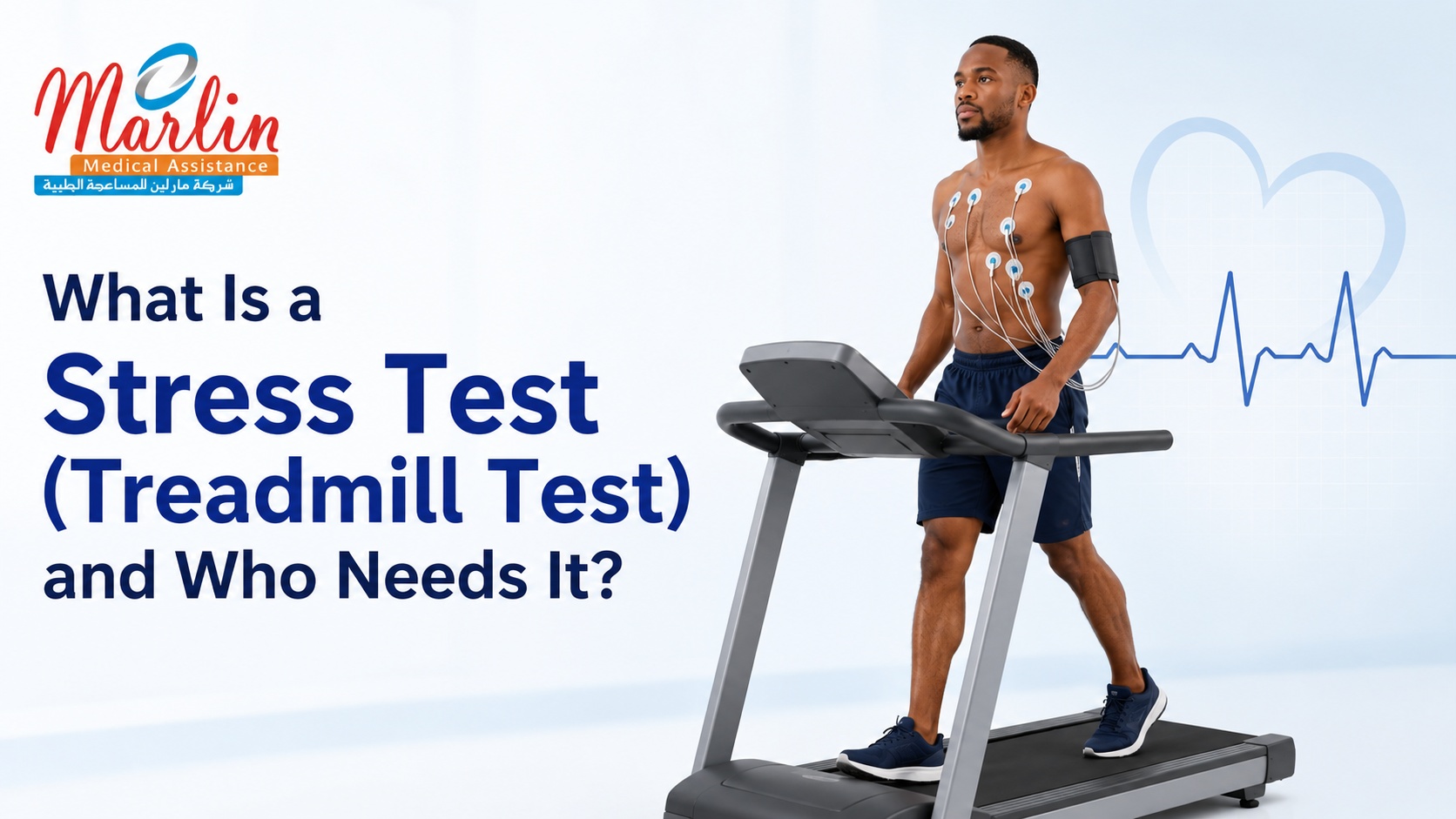
A “cardiac stress test” helps doctors find the answer. During this “treadmill test cardiology” procedure, your heart is monitored while you walk on a treadmill at different speeds.
Many people wonder who needs a cardiac stress test and when doctors recommend one. This article is all about that. In this guide, we'll explain how the test works, what the results mean, and where people in Kenya and Tanzania can have the test done.
What Is a Cardiac Stress Test? - The Basics
Simply, a stress test results interpretation shows how your heart responds to physical activity. When you’re doing exercise, your heart needs more oxygen-rich blood.
If the arteries supplying your heart are narrowed, the test may reveal signs that are not visible when you're resting.
The most common type of test is the “exercise ECG test”. In this test, when you walk on a treadmill, small electrodes are attached to your chest, which record your heart's electrical activity. Plus, your blood pressure and heart rate are monitored at the same time.
Doctors use this test because it provides useful information without the need for surgery. In many cases, it is the first step before ordering more advanced heart imaging.
A treadmill test can help identify:
- Reduced blood flow to the heart muscle
- Irregular heart rhythms (called “arrhythmias”)
- Exercise-related chest pain
- Your heart's ability to handle physical activity
- Recovery of the heart after treatment or surgery
Although many people call it a treadmill test, some patients may pedal a stationary bicycle instead if that is more suitable to them.
Why Do Doctors Order a Stress Test?
A cardiac stress test is not only for people with diagnosed heart disease. It is also used to investigate symptoms and assess future heart risk.
Your doctor may recommend a stress test if you experience:
- Chest discomfort during activity
- Shortness of breath (unexpectedly)
- Fast or irregular heartbeat
- Dizziness during exercise
- Unexplained “fatigue”
The “stress test” is also useful for people who already have heart disease. It helps doctors see how well the treatment is working and whether the heart can safely tolerate exercise.
In some cases, people need this test before even having a major surgery. Others undergo the test before starting a structured exercise program after recovering from a heart condition
People with several cardiovascular risk factors may also benefit from testing. These include:
- Diabetes
- High blood pressure
- High cholesterol
- Smoking
- Obesity
- A strong family history of heart disease
In a few countries, such as Kenya and Tanzania, heart disease is becoming more common because of changing lifestyles and increasing diabetes rates. That’s why early heart screening is very important to prevent any serious complications.
What Happens During a Treadmill Test - Step by Step
A “treadmill test” is quite simple, and the entire procedure usually takes less than an hour.
Step 1: Your doctor reviews your medical history and checks your blood pressure and heart rate.
Step 2: Small electrodes are attached to your chest to record your heart's electrical activity.
Step 3: You start walking slowly on the treadmill while the speed and incline increase gradually.
Step 4: Throughout the exercise ECG test, doctors monitor your heart rate, blood pressure, and any symptoms, such as chest pain or dizziness.
Step 5: Once the test ends, your heart activity continues to be monitored during recovery time.
Step 6: Finally, the cardiologist analyses the results and prepares a report. In many cases, patients receive their results on the same day.
This helps doctors decide whether additional tests are necessary.
What Do Stress Test Results Mean?
Many patients worry about stress test results interpretation, however, the results are not simply classified as "pass" or "fail."
Rather, doctors analyse several factors together and then they give results.
# Normal results
A normal result generally means that the heart is receiving enough oxygen-rich blood during exercise.
# Abnormal results:
Abnormal findings may suggest:
- Reduced blood flow
- Narrowed arteries
- Heart rhythm abnormalities
- Previous heart damage
# Inconclusive results:
Sometimes the findings are unclear. In those cases, doctors may recommend additional tests.
These may include:
- CT coronary angiography
- Echocardiography
- Cardiac MRI
- Coronary angiography
A single abnormal result does not necessarily mean a patient has severe heart disease.
Stress Test vs Nuclear Stress Test vs Stress Echo — Differences
Patients always ask about the difference between a standard treadmill test and other types of stress testing. Let’s see a simple comparison, and understand how they work and their purpose.
| Test | How it works | Main purpose |
|---|---|---|
| Treadmill stress test | ECG monitoring during exercise | Detects rhythm abnormalities and reduced blood flow |
| Stress echocardiogram | Ultrasound images before and after exercise | Evaluates heart muscle function |
| Nuclear stress test | Uses a radioactive tracer to assess blood flow | Detects blocked arteries more accurately |
When comparing nuclear stress test vs treadmill procedures, the nuclear test generally provides more detailed information.
However, it is also more expensive and may not be necessary for every patient.
So, keep in mind that your cardiologist will recommend the most suitable option based on your symptoms, medical history, and overall risk.
Stress Test in Kenya - Where to Get One and What It Costs
People searching for stress test heart Kenya services can usually find them in major cities such as Nairobi, Mombasa, and Kisumu. Several hospitals and specialist cardiac centres offer treadmill ECG Nairobi services through their cardiology departments.
Although the exact price depends on the hospital and their facilities, the average stress test cost estimates in Kenya are shown below:
| Location | Estimated cost |
|---|---|
| Nairobi | KES 10,000-22,000 (USD 77-169) |
| Mombasa | KES 8,000-18,000 (USD 62-138) |
| Kisumu | KES 7,000-16,000 (USD 54-123) |
| Dar es Salaam | KES 7,700-18,100 (USD 60-140) |
| Arusha | KES 6,500-12,900 (USD 50-100) |
In many hospitals, the total cost covers the consultation, ECG monitoring during exercise, and the doctor's interpretation of the results. Some centres also include a written report that patients can share with another specialist (if necessary).
By chance, if doctors notice anything unusual during the test, they may recommend additional investigations. You may need to bring test such as exercise ECG test, and:
- Echocardiogram,
- Stress echocardiogram, or
- Nuclear stress test
Patients should also remember that prices change from one facility to another. Private hospitals in cities like “Nairobi” usually charge more than public hospitals and smaller regional centres.
Disclaimer: This article is for informational purposes only and does not constitute medical advice.
Get your consultation from Marlin today