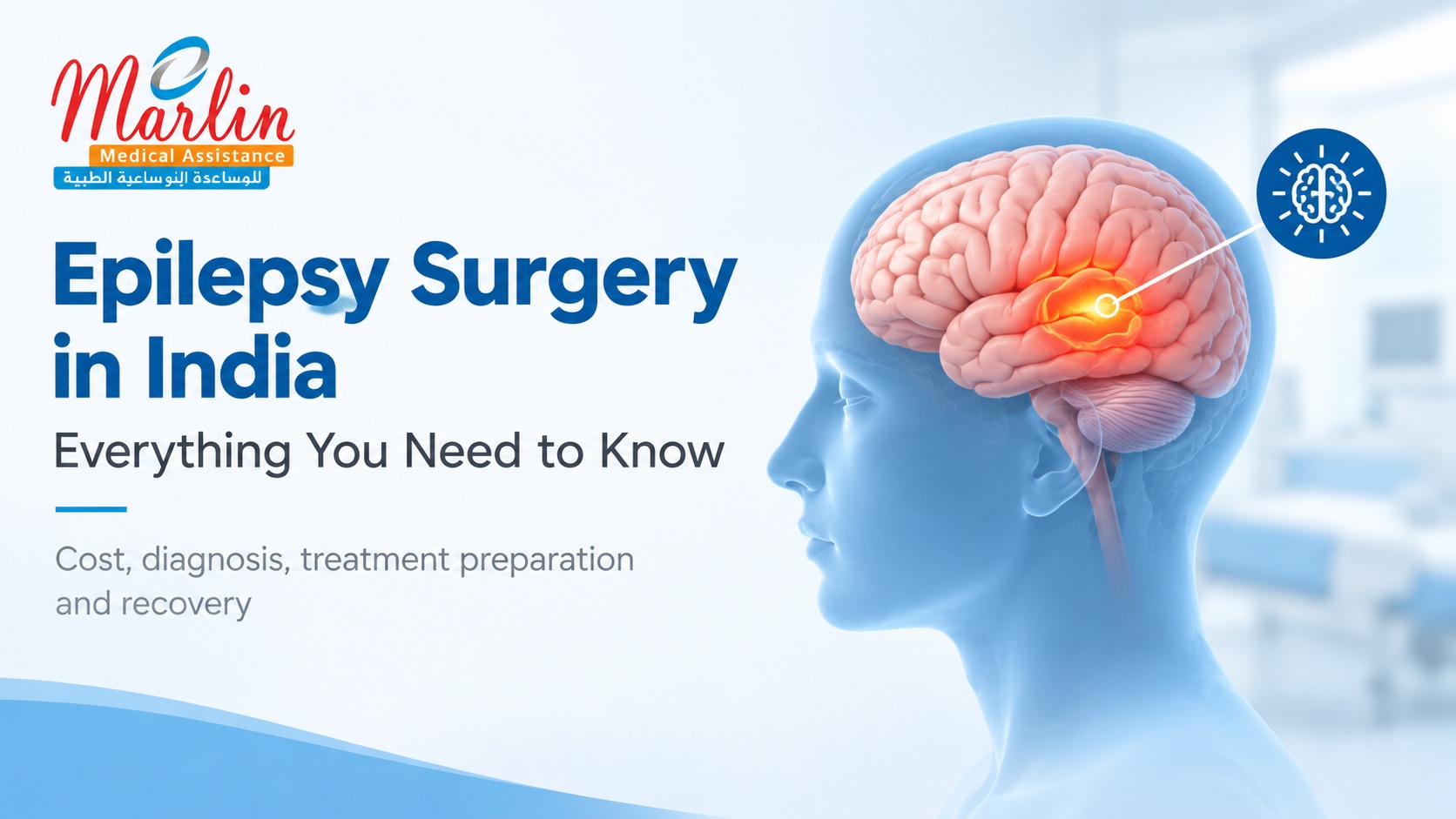
The Epilepsy surgery cost in India is quite lesser than in the USA or UAE. The Epilepsy surgery happens to be amongst the most popular surgeries to treat brain related problems in India. It is mainly a surgery to treat uncontrolled seizures happening in the brain. This page includes the content related to the types and diagnostic techniques to confirm if an epilepsy surgery is required.
The Epilepsy surgery cost in India is always between the range of $2,400 and $10,000. Do not miss the information regarding the treatment options for brain seizures available at various locations in India. This page even contains information regarding the preparation for epilepsy surgery and supportive treatment along with risk and complications associated with the surgery. Let us dive into the details of the page.
WHAT IS EPILEPSY SURGERY?
Epilepsy surgery is a brain surgery performed to control or decrease seizures after the consistent failure of two anti-seizure medications. The main aim is to support and enhance the patient's quality of life by safely extracting, disconnecting, or controlling the part of the brain where seizures begin. This is among the most popular and affordable surgeries for brain related issues and seizures in India.
There are a number of types of surgeries for drug resistant epilepsies in India including Temporal lobectomy, Lesionectomy, Corpus callosotomy and Hemispherectomy. These surgeries are tried and tested to be highly helpful and supportive against constant seizures. The Epilepsy surgery cost in India generally includes most of the adjacent expenses.
TYPES OF EPILEPSY SURGERIES
There can be various types of epilepsy surgeries in India. These types are mainly based on the part of the brain to be treated and the overall cause of the issue. Let us know about the types of epilepsy surgeries:
- Temporal lobectomy (most common)
- Lesionectomy (cortical dysplasia, cavernoma)
- Corpus callosotomy (drop attacks)
- Hemispherectomy (paediatric)
- Vagus Nerve Stimulation (VNS)
- DBS for epilepsy (ANT target)
- SEEG (stereo-EEG) for complex cases
CAUSES AND SYMPTOMS
It is extremely important to know about the causes and symptoms of epilepsy. This makes things like the factors responsible and exact signs of the condition clearer to us. Let us know about these details :
Causes of Epilepsy
- Genes are highly responsible for the condition of epilepsy in humans.
- Head trauma from sports injuries or severe hits over the head is also another common cause of epilepsy.
- Brain tumors, strokes bleeding or abnormal blood vessel formations also lead to epilepsy issues.
- Another common cause behind the development of epilepsy is infection including viral encephalitis, meningitis, or parasite attacks.
- A deprivation of oxygen and birth infections also damage the brain function leading to epilepsies.
- Immune issues leading to brain inflammation are also known to cause epilepsy issues.
Symptoms of Epilepsy
- Among the most noticeable symptoms of epilepsy are short term confusions and blank staring spells.
- There are possibilities of stiff muscles or loss of awareness during this condition.
- Shaking of arms and legs are also common symptoms of epilepsy.
- A sudden loss of balance and body control also signals to an epilepsy condition in humans.
- There are chances of strange sounds or other senses during this condition.
- Déjà vu or sudden fear can be another common symptom of an epilepsy.
- Hand rubbing or epetitive Repetitive body movements also happen to be symptoms of epilepsy.
- Dizziness is another important symptom of epilepsy to be considered.
DIAGNOSIS
Let us now have a look at the diagnostic techniques that can help in the confirmation of an epilepsy:
| Video-EEG monitoring (3–7 days inpatient) | A 3-to-7 day inpatient video-EEG monitoring stay in an Epilepsy Monitoring Unit or EMU is among the most common diagnostic techniques to confirm the prevalence of epilepsy issues. This method of epilepsy diagnosis uses video and other details of the real time brain functioning to reach a conclusion. |
| MRI brain (epilepsy protocol — 3T) | An MRI brain epilepsy protocol on a 3-Tesla scanner makes use of a high-resolution and thin-slice imaging to study the brain structure. This method of diagnosis even helps in finding the small tumors, scars and tiny malformations that cannot be detected by other tests. |
| FDG-PET scan (hypometabolism identifies seizure focus) | Another common technique of an epilepsy diagnosis is an FDG-PET scan. This method helps in knowing about the glucose metabolism between the seizure period. This is among the most important diagnostic techniques to confirm an epilepsy condition. This method is highly useful when MRIs do not provide a clear picture. |
| SPECT ictal scan (blood flow during seizure) | An ictal SPECT scan makes use of a safe radioactive tracer to find minute details of the brain functioning. Blood flow increases at the exact point where a seizure begins. This scan displays a bright "hot spot" making the picture of the problem clearer. |
| SEEG (depth electrode implantation) — for non-lesional cases | Stereo-electroencephalography or SEEG is a minimally invasive surgical procedure that fixes thin depth electrodes into certain brain structures to find out about 3D electrical networks. This method of diagnosis is helpful when MRI results are not structurally accurate. |
| Neuropsychological battery | A neuropsychological battery is also used in the diagnosis of epilepsy. This technique is another common diagnostic technique to confirm the prevalence of epilepsy. This method is useful in knowing in detail about cognitive powers, seizure focuses and important brain functions. |
| Wada test (language lateralisation — selected cases) | The Wada Test, or intracarotid amobarbital procedure, temporarily puts half of the brain to sleep to detect the side that manages memory and language. This technique of diagnosis helps in planning the surgery in an efficient manner. |
RISKS AND COMPLICATIONS
It is highly essential to know in detail about the negative side of an epilepsy surgery. However these risks can be efficiently managed in a medically professional manner. Let us know about these risks and after effects in detail :
⚠ Bleeding : Intracranial hemorrhage is a common after effect of a drug resistant epilepsy in India.
⚠ Anesthesia Reactions : There can be anesthesia reactions like breathing problems associated to an elilepsy surgery.
⚠ Infection : Deep brain tissue problems or skull flap is also linked to the complications of an elilepsy surgery.
⚠ Visual Field Loss : Partial loss of side vision based on the optic pathway effects is a common side effect of this surgery.
⚠ Motor Weakness: There are rare chances of permanant or temporary one side body weakness after these surgeries.
⚠ Persistent Seizures: Permanent seizures are also linked to the epilepy surgeries.
All risks are discussed with you in detail during pre-operative consultation.
PREPARATION FOR TREATMENT
Preparing for your epilepsy surgery in India for international patients is quite an important thing to do. Here is how you will prepare for your epilepsy surgery and treatment.
1. Firstly you need to share your MRI, Wada test and SEEG files along with other reports to Marlin for treatment recommendation and neurosurgeon feedback or review in about 48 hours.
2. Nextly you even need to stop blood thinners, pain killers and herbal supplements before the epilepsy surgery.
3. Thirdly you should plan a proper post surgery plan to enhance your recovery process.
4. The next step in the preparation for an epilepsy surgery is consuming plenty of water and nutritious foods along with getting proper sleep.
5. Do not forget to arrange for your stay in India for a period of 7 days after the surgery. This is a minimum stay period after the surgery to get sufficient post surgery medical care.
6. Finally you should even get your medical visa and attendant visa other documentation process duly done. Malin will handle all your visa documentation.
TREATMENT OPTIONS
Here we understand about the treatment options and cost for them in detail:
| Temporal lobectomy (70–80% seizure freedom) | A temporal lobectomy in India is among the most popular epilepsy surgeries in the country. The operation and surgical care often happens in certain phases. This surgery is known to offer a high success rate of about 70 to 80% in the long run. This Epilepsy surgery cost in India is about $3,500 to $8,500. |
|---|---|
| Lesionectomy for MRI-visible lesion | This surgical procedure to treat epilepsy is a precise surgical removal of a specific structural brain abnormality including focal cortical dysplasia, cavernous malformation or low-grade tumor. A Lesionectomy is among the most affordable treatments for epilepsy. This surgery costs anywhere between $3,500 and $8,500 in India. |
| Corpus callosotomy (atonic/drop attacks) | The third treatment option for epilepsy in India is Corpus Callosotomy. This palliative neurosurgical operation cuts the nerve fibers linking the parts of the brain to control the spread of drop attacks. This surgery is helpful in reducing physical injuries. This Epilepsy surgery cost in India is about $2,500 to $7,500. |
| VNS implantation (50% responder rate) | Vagus Nerve Stimulation of VNS implantation in another prominent surgical treatment for epilepsy. This treatment option is highly affordable and is conveniently available at centres in India. This surgery has a success rate of about 45% to 65%. This epilepsy surgery costs anywhere between $5,000 to $13,000 in India. |
| DBS for epilepsy (ANT stimulation) | Deep Brain Stimulation or DBS aiming at the Anterior Nucleus of the Thalamus is a latest neuromodulation treatment for drug-resistant epilepsy. DBS is also a prominent treatment for epilepsies in the country. This treatment generally costs about $7,500 to $33,000 in India. |
| SEEG + resection for complex non-lesional epilepsy | Stereo-electroencephalography or SEEG integrated with resective surgery for certain non-lesional drug-resistant epilepsy in India is among the most common treatment options for the issue. This is the latest surgical treatment making use of robotic or stereotactic SEEG electrode placement techniques. This Epilepsy surgery cost in India is between $4,200 and $12,000. |
COST OF TREATMENT — Comparison Table (India vs USA vs UK vs UAE) Procedure
The Epilepsy surgery cost in India is lesser than in the USA. It is extremely essential to know about the cost comparison between India, USA, UK and UAE. We will mainly aim at cost comparison for temporal lobectomy in India and other locations. Let us get into the details of the cost comparison:
| PROCEDURE | COST IN INDIA | COST IN USA | COST IN UK | COST IN UAE |
|---|---|---|---|---|
| Pre-surgical evaluation (video-EEG + PET) | $4,000–$8,000 | $20,000–$50,000 | £12,000–£30,000 | $10,000–$20,000 |
| Temporal lobectomy / Lesionectomy | $8,000–$14,000 | $60,000–$120,000 | £35,000–£70,000 | $25,000–$50,000 |
| VNS implantation | $8,000–$12,000 | $40,000–$70,000 | £25,000–£45,000 | $18,000–$35,000 |
⚑ All prices approximate in USD as of 2025. Actual cost depends on tumour/condition complexity, hospital category, room type, and length of stay. Marlin provides a full itemised quote within 48 hours of report submission.
RECOVERY
Recovery after epilepsy surgery needs a period of weeks to months. It all begins with a 3 to 7-day hospital stay followed by early healing at home for a period of 4 to 6 weeks. Seizure control is the most important aim of drug resistant epilepsy in India. You should take special care of your physical and mental health during the entire recovery procedure.
There is a special monitoring in the hospital for a period of a week to keep a proper watch over the recovery development. There can be immediate side effects like tiredness, headaches and nausea. However one can surely tackle these side effects with proper medical management. Do not lift heavy objects during the post surgery phase as this can pose pressure over the nerves. Proper follow up and gradual return to normal chores help during the recovery process.
BEST HOSPITALS FOR EPILEPSY SURGERY IN INDIA
- Fortis Memorial Research Institute, Gurgaon
- Indraprastha Apollo Hospital, Delhi
- Medanta – The Medicity, Gurgaon
- Max Hospital Saket, Delhi