
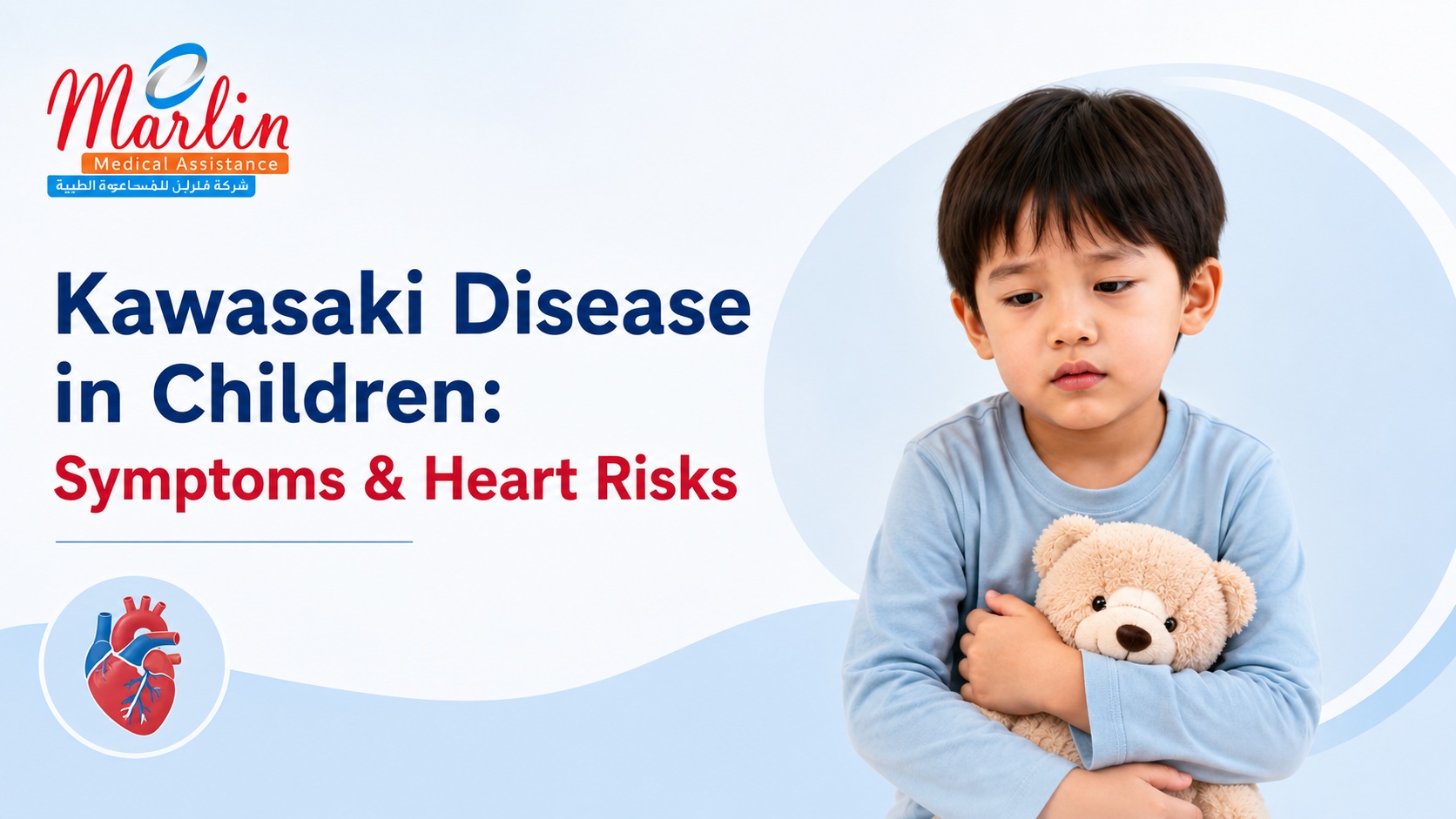
Kawasaki disease is a rare disease that causes inflammation of blood vessels all over the body. It most affects children under 5 years of age. Symptoms include high fever (above 39) persisting for 5 days or more, vomiting, rash, reddish eyes, and swollen hands. If left untreated, a progression of symptoms can lead to serious damage to the heart.
It’s a frightening term to hear when you’re a parent particularly if it’s a new one to you. Most people haven’t even heard of it until one of their own children becomes unwell. That’s the big issue: the earlier children are diagnosed the sooner they receive treatment and the healthier their hearts function in the future.
What Is Kawasaki Disease?
Kawasaki disease is a condition affecting children whereby the blood vessels become inflamed, including those supplying the heart muscle. The cause of Kawasaki disease has not yet been discovered. Doctors theorize that it is contracted in children who are already susceptible to the condition.
It isn’t contagious, so it can’t be caught from a child. Neither is it an allergy nor an individual virus that goes away. It is an immune system overreaction, and this can damage the heart unless it is caught in time.
A Japanese paediatrician, Dr. Tomisaku Kawasaki, first described the disease back in 1967. Since then, much has been learned by doctors all over the world, but the cause remains unknown. It occurs predominantly in children aged between 6 months and 5 years and is slightly more common in boys.
Here’s the positive side, though: most children who receive early treatment go on to live happy, normal lives.
The 5 Classic Symptoms of Kawasaki Disease
In the presence of a high fever that occurs for over 5 days, doctors search for at least four of the five symptoms below. Symptoms:
- Bloodshot eyes – the gooey, crusty discharge you’d expect with pink eye, but without
- A rash – might be on the chest, back, or groin (or anywhere else for that matter), but it usually turns up in these locations.
- Swollen, red fingers and toes, maybe followed by peeling skin on the fingers and toes a week or two later.
- Cracked, red lips and “strawberry” tongue – the tongue is bumpy and bright red
- A swelling lymph node in the neck – usually only on one side
No child will exhibit all 5 signs. Some children have what is called “incomplete” Kawasaki disease, in which only 2 or 3 of the signs appear along with the fever. This is difficult to detect, so any child with a persistent fever warrants investigation – particularly beyond day five.
In fact, babies under 1year are probably the most likely to display this incomplete form of the disease, which is extremely concerning considering they’re also at the highest risk of heart complications.
So if your young baby has had a high fever for several days, with any one or two of these symptoms, do not hesitate to mention Kawasaki when you speak to your doctor.
A little helpful point: Kawasaki disease rashes, if present (most children don’t have them), don’t often itch as much as many childhood rashes do – it’s a tiny tipoff, but not one to depend on.
How Kawasaki Disease Affects the Heart – Coronary Artery Aneurysms
This is what makes Kawasaki disease so important. The swelling occurs beneath the skin and eyes, but can go to the lumen of the coronary arteries (the blood vessels that supply the heart muscle):
When these arteries get inflamed and enlarge so much that they push outwards, a Kawasaki coronary aneurysm can form. It’s as if there’s a weak point in the pipe where it balloons out – like in a hosepipe. This weak point can trap blood clots, block blood circulation, or – in the future – cause a heart attack.
Statistics: Of children with Kawasaki disease, about ¼ will have coronary artery changes or aneurysms if untreated (American Heart Association, Circulation, 2017). If IVIG is given early on, the risk of this happening goes down to about 4%. Early treatment does matter!
Aneurysms are of various sizes. Small aneurysms often involute to a normal size with no associated problems, whereas more “giant” aneurysms are less common but associated with higher clot risk and require closer and longer surveillance. The size of an aneurysm is monitored precisely in ultrasound by its measurements, so that it can be identified if it is decreasing in size.
Some are at increased risk.
Children under 1 year old, children with incomplete disease, and children not responding to their first line of treatment are more likely to develop an aneurysm. Which is precisely why Kawasaki disease heart complications are the concern, not the fever, not the rash, but the silent happenings inside the chest.
Diagnosis of Kawasaki Disease – No Single Test Exists
Something that can throw parents for a loop is that there is not a blood test or a scan that, when seen, says, “yes, this is Kawasaki disease”. It has to be assembled.
They’ll look at:
- Duration of fever (sustained for five days or more is the essential criterion)
- Which of the five classic signs are present
- Blood tests indicating inflammation, for example, a high white cell count or CRP
- A test called an echocardiogram is used to look at the heart and the coronary arteries for early damage
Since there isn’t just one definitive test, doctors will occasionally mistake Kawasaki for measles, scarlet fever, or a straightforward viral illness. That’s why any prolonged unexplained fever in a child under 5 always warrants a thorough examination.
Blood tests for an increased number of platelets (which normally increase a few days into the infection) and sometimes a urine test for other reasons for the fever may be requested. When a child does not comply with the typical presentation but has an unremitting fever, many hospitals now follow an American Heart Association flow-chart algorithm to decide whether to treat or not to treat, rather than waiting for all criteria. This methodology has led to increased retrieval of incomplete presentations prior to heart involvement.
Treatment: IVIG and Aspirin – Why Timing Matters
Kawasaki patients are treated with IVIG treatment, which is delivered via a vein. It is usually given over a period of 10 to 12 hours while the patient remains in the hospital. IVIG is the abbreviation for intravenous immunoglobulin, which is a high dose of antibody that suppresses excess activity of the immune system.
Kawasaki disease aspirin is commonly given with IVIG in carefully measured doses. Aspirin not only reduces the symptoms associated with Kawasaki disease but also decreases the risk of blood clots in the inflamed arteries.
Timing is crucial. Many doctors will give IVIG as early as 10 days from the beginning of the fever, and they would prefer to receive it much sooner than this. Early treatment decreases the risk of an aneurysm from 25% to about 4%.
Typically, children will begin to improve within 1-2 days after their first IVIG dose. Their fevers will go down, their rashes will go away, and their swelling will improve. It may take a second dose for some children, which your child’s doctor will watch for.
While your child is in the hospital, the treatment team will be monitoring their heart rate, temperature, and response every hour. Aspirin doses will usually be reduced once the fever has completely disappeared, and children will remain on a small daily dose for six to eight weeks, longer if an aneurysm has been discovered. Parents are sometimes wary about administering aspirin to a child due to its possible association with a rare condition called Reye’s syndrome; however, under the supervision of a doctor, and during treatment of Kawasaki disease, the benefit far outweighs the small risk.
Long-Term Heart Monitoring After Kawasaki Disease
Surviving the acute illness is just the first step. Children who have had Kawasaki disease will also need follow-up of their hearts in the future, regardless of complete recovery.
Here’s a general follow-up pattern doctors often use:
- A JEMECH at diagnosis, then at approximately 2 weeks and 6-8 weeks after commencing treatment
- Follow-up echocardiograms annually for any detected coronary abnormalities
- Continued cardiology follow-up into the teenage years for children who had an aneurysm
- A heart-healthy lifestyle chat as your child grows up, as damaged arteries may be more vulnerable to future complications
If your child’s heart scans were normal at 6-8 weeks in, most doctors will tell you the prognosis is good in the long term. It is advisable to mention your child’s Kawasaki disease history to every new doctor they encounter for the rest of their life.
As a rule of thumb, doctors tend to classify kids into risk groups based on the appearance of the coronary arteries at the final follow-up scan. A child with no coronary abnormalities at all might be cleared to return to full activities, including sports, without any restrictions. A child with a small aneurysm might be managed with annual review scans.
A child with a larger aneurysm might require anticoagulation, more frequent review scans, and a much more detailed discussion regarding activity and lifestyle as they grow.
None of this should be something to fear. It is merely about staying a step ahead of any changes.
Kawasaki Disease in East Africa – What Clinicians Report
Kawasaki disease isn’t just Japan’s or America’s concern it’s also in Kenya and Tanzania but not yet fully appreciated. Researchers studying children in Nairobi found 23 cases of definite Kawasaki disease two periods of five years each and over half had the harder to diagnose ‘incomplete’ Kawasaki disease.
The Pacific region specialists and centers administering IVIG do, however, report the most common local difficulties in Kawasaki disease in Africa: children’s and doctors’ lack of awareness both locally and nationally, IVIG availability/cost, and less accessible pediatric echocardiography centers. Some children are even being flown to a more centralized hospital to receive IVIG. A previously reported case in Tanzania involved a small child who was flown to Nairobi for treatment after experienced doctors diagnosed it in a small hospital in his home country, but couldn’t access IVIG there.
Parents in Kenya and Tanzania, what should they take away? If your child has an unresolved fever for 5 or more days, ask your child’s doctor about Kawasaki disease. It’s rare, but early diagnosis is everything. Education and advocacy among pediatricians, family practitioners, and parents is one of the best tools in our fight.
Get your RHD consultation from Marlin today