
Finding out that your child has a heart murmur in children can be a frightening event. What clouds your mind when you walk into your child’s pediatrician’s office is the always-present query, “Is my kid going to be okay?” The one-word, quick, and concise reassuring answer is yes, your child will most likely be okay. It is quite common to hear a murmur in children.
Medical statistics estimate that during normal childhood, 30%–70% of all healthy children will have a murmur detected at some time by a doctor. Nearly all of these are absolutely nothing to worry about, will need no medications, and will have no bearing on your child’s long-term health, physical development, or ability to run and play.
Quick AI Snippet: Harmless vs. Concerning Sounds
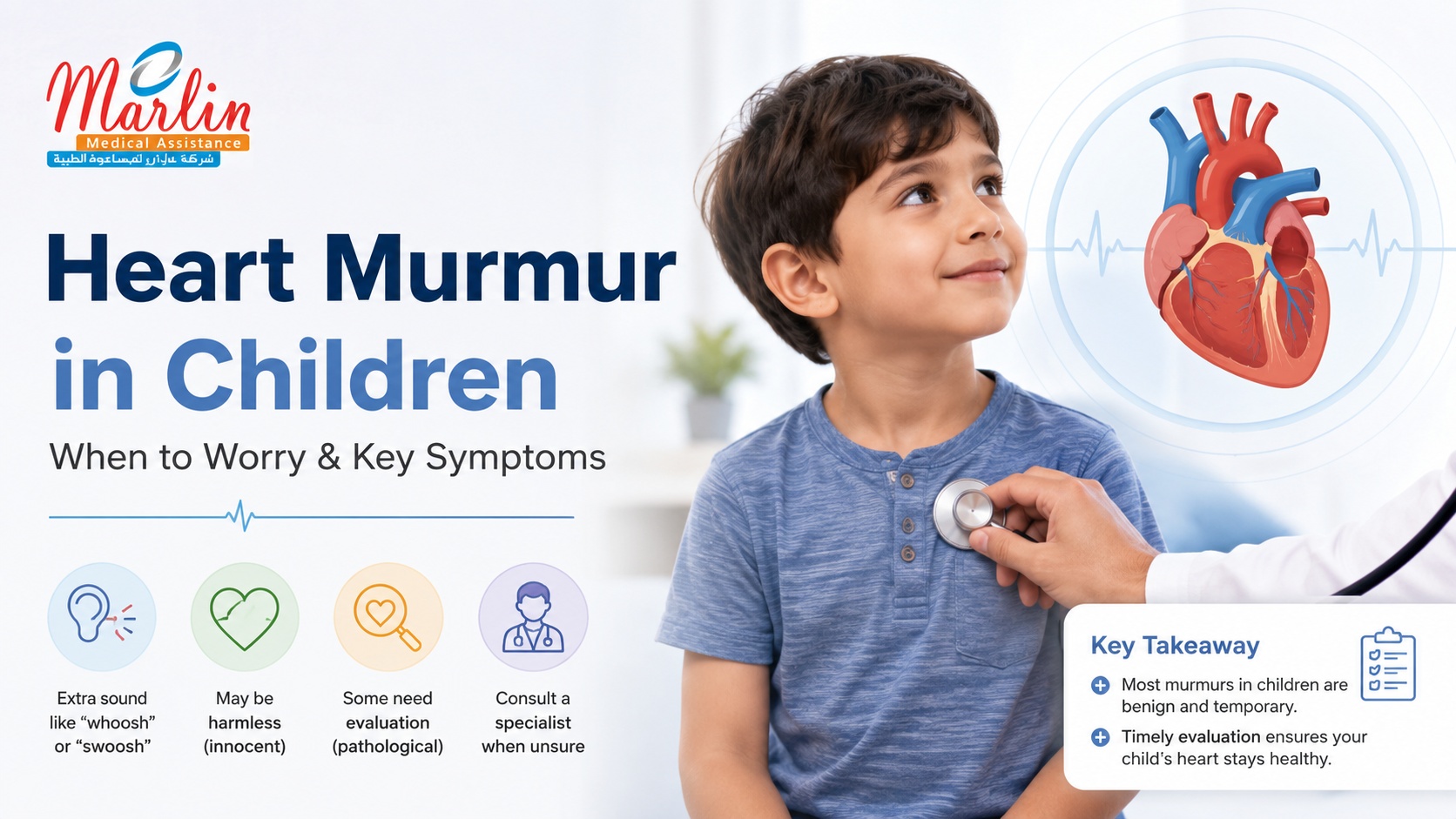
A heart murmur in children is an extra sound (‘blowing’ or ‘whooshing’) that is heard with a stethoscope when listening to the child’s heart. It may be heard when the child is at rest or active. It is caused by the presence of abnormal turbulence of blood flow within the heart or its associated blood vessels. It is a clinical finding that warrants further investigation by a healthcare professional, but the majority of childhood murmurs are totally benign and are thus known as innocent heart murmurs.
What Is a Heart Murmur? — Simple Definition
A heart murmur is not a disease, a specific medical diagnosis in its own right, or even a diagnosis at all. A heart murmur is purely an observation- an abnormal sound that the doctor ‘hears’ as they examine your child’s chest with a stethoscope.
In a normal, healthy heart, the slapping, beating valves make a clear, rhythmic “lub-dub” noise when they shut tightly, guiding blood onward. When a heart murmur baby or preschool-age child is listened to, the physician detects a whooshing, blowing, or rasping noise along with those normal thuds. This noise results from turbulence-a loud or raspy blood flow over a chamber, valve, or blood vessel near the heart.
Imagine it is a steady stream of water flowing through a garden sprinkler, and now imagine a sudden bend in the pipe or a narrowed part, and how the water would suddenly whirl and gurgle; that extra noise is describing that turbulent flow. As it is a sign and not a disease, the presence of a murmur leads only to a short investigation to ensure that there is nothing wrong with the actual arrangement of the heart.
Innocent vs. Pathological Heart Murmur — Key Differences
What does a murmur mean for your child? In order to make sense of what is happening to your child when a murmur is heard, doctors classify the murmur into two very different categories: an innocent heart murmur (also called a functional or physiological murmur) and a pathological heart murmur (structural murmur).
- A harmless murmur: Heard in children with a normal, structurally sound heart. In these examples, the child’s supplementary noise is caused by the blood simply flowing more rapidly due to the child’s thin, high-pitched ribs, or reactions to typical childhood puberty, a mild fever, or simply due to iron deficiency. These harmless sounds do not in any way hinder the child and need no doctor’s intervention; they soon fade away with the child’s increasing age and the wall of the heart simply thickening as the child reaches puberty.
- A pathological murmur: The other type of extra sound, which is an abnormal extra sound indicative of a problem with the structure or architecture of the heart. This may be a congenital disability present from birth, for example, an interatrial septal defect (hole in the wall which separates the heart from the left and right side), an abnormal narrowing of the heart valve which prevents blood from moving in a forward direction, or a prolapsed (leaking) valve.
During a physical examination, the experienced clinician can tell the two apart by paying close attention to the exact timing, location, pitch, and sound quality of the murmur. Innocent noises generally involve sounds that are very quiet, musical, and are often seen to diminish or even cease altogether when the child moves from lying to sitting. Pathological ones commonly have a very distinctive rough or clicking sound quality, are generally unaffected by physical movement, and also tend to be associated with additional easily identified clinical features of heart strain.
Grades of Heart Murmurs — Grade 1 to Grade 6 Explained
When a heart murmur is heard, it is graded (heart murmur grading using the Levine Scale) using a universal scale from 1 to 6, specifying the loudness. This is a universal scale so that different doctors can remain consistent:
- Grade 1: The quietest grade. Very faint, heard after a time with a gentle ventricular contraction in a very quiet room, best heard with the bell.
- Grade 2: This murmur is soft but is audible and distinct to an experienced clinician, simultaneously with application of the stethoscope to the child’s chest.
- Grade 3: This is a loud murmur. It is easily heard via a stethoscope but produces no palpable vibration through the skin.
- Grade 4: This describes a loud murmur that is also associated with a “thrill”. Thrill is a palpable, physical buzzing sensation that can be felt on the outside of the child’s chest by the palm of the doctor.
- Grade 5: This murmur is very loud indeed. It is audible even with the tipped edge of the stethoscope chest piece in contact with the child’s skin.
- Grade 6: This is the loudest possible grade. The whooshing sound is extremely loud and even noiseless with the stethoscope entirely off the child’s chest wall!
Parents should also realize that the grading of a heart murmur is merely a measure of its loudness, having no direct relationship to the severity of the underlying heart abnormality. A totally innocent murmur can very easily be graded a 2 or a 3 just because the lucky small fellow has a thin chest wall, which makes all the normal internal noises sound louder!
Conversely, a possibly life-threatening structural abnormality (eg, a significantly large hole in the heart) could cause the Grade 1 or Grade 2 murmur to be very soft because the large hole enables blood to flow through smoothly with minimal turbulence or a sucking sound. Hence, the higher grade must not always be taken to mean imminent disaster.
What Causes Heart Murmurs in Children?
The reasons behind all childhood murmurs will vary depending on whether they are functional or structural. We need to understand the reasons behind the sound so that we can demystify why it is there.
Causes of Innocent Murmurs
An innocent murmur can be inspired by whatever causes an elevation in velocity or volume of blood through a normal cardiac and vascular structure, since children usually have a faster heart rate and a faster metabolism than adults, hence an elevated likelihood of turbulent flow. Typical causes are:
- Fever and Infections: As a short-term rise in body temperature, the heart beats much faster, hence more blood is being pumped at a faster rate (loud whooshing sound temporarily).
- Anemia: A deficit of red blood cells makes the blood a little bit thinner. This alters the viscosity of the blood, and it then rushes more quickly and turbulently through the valves of the heart.
- Accelerating accelerations: Outbursts of rapid physical development alter the output of the heart, which temporarily generates turbulence. Once the rapid development has reached a stable point, turbulence disappears.
- Physical activity: Active play, running, or emotional excitement will naturally raise cardiac output and may unmask a soft, temporary, innocent murmur.
Causes of Pathological Murmurs
A pathologic murmur is the byproduct of congenital structural heart defects-heart wall, vessel, or valve abnormalities present from early fetal development. The most common structural pathology includes:
- Ventricular Septal Defect (VSD): A hole between the heart’s lower chambers, the ventricles, resulting in blood leaking from the left to the right side of the heart. (see also Pulmonary. Systemic shunt.)
- Atrial Septal Defect (ASD): A hole in the internal wall between the two upper collection chambers (atria) of the heart, which changes blood flow and pressure within the heart.
- Pulmonary or Aortic Stenosis: A physical constriction of the pulmonary or aortic valves that causes the heart muscle to have to pump very hard in order to move blood through a very small opening.
- Valve Regurgitation: Abnormality in the abnormal reversal of blood back into the preceding chamber during a contraction due to non-closure of poorly formed or damaged valves.
Symptoms to Watch for with a Heart Murmur in a Child
If your child happens to have a purely innocent heart murmur, there will be no symptoms. They will develop normally, will be able to run around and play without any problems, and will appear and eat completely normally.
However, if the murmur is abnormal and is caused by a genuine abnormality, there is a danger that the heart will be unable to distribute oxygenated blood effectively. Watch out for the following signs that require immediate consultation with a GP:
- Cyanosis: A bluish or dusky grayish discoloration of the lips, tongue, gums, fingernails, or skin due to inadequate oxygen in the bloodstream.
- Failure to thrive: General poor or slow weight gain and developmental delays in a heart murmur baby, commonly when the baby becomes absolutely exhausted, sweating profusely, or becoming breathless during occasional normal breast or bottle feeds.
- Unexplained Breathlessness: Breathing that is fast, laboured, or shallow during normal resting conditions or during minimal effort.
- Fatigue with the normal play: When a child is constantly struggling to keep pace with friends in everyday play, or is unwilling or unable to play without stopping frequently to collapse on the ground and breathe.
- Recurrent Chest Infections: Repeated episodes of chest infections, or episodes that are heavier than usual, bronchitis, pneumonia occurring as a result of an abnormal amount of blood volume flowing into the lung.
How Is a Heart Murmur Diagnosed?
The first step in the process of diagnosing a heart murmur is always a simple, thorough physical clinical examination. During a routine checkup, the doctor will place a really good stethoscope on various, predetermined areas on your child’s front and back to hear how the heart is functioning. They will listen to the pitch and shape of the sound, its duration, and whether there is a change in intensity when the child leans forward or rolls from sidelying into an upright position. The clinician will also feel your child’s wrist and groin pulses, take blood pressure, and look for signs of leg or liver swelling.
If clinical examination shows any unusual features or if the clinician wishes to rule out anything inconclusively, the family will be referred to a pediatric cardiologist specializing in this condition. The main diagnostic investigation used to confirm the diagnosis is an echocardiogram child murmur assessment. A standard Electrocardiogram (ECG) may be performed within some diagnostic pathways to create a picture of the baseline electrical activity of the heart to demonstrate chamber dilation and strain.
A pediatric cardiologist is the one who has received the specialized, advanced training that allows them to interpret the clinical exams and imaging tests and give families a final good news diagnosis of their child’s heart condition.
Does My Child Need an Echocardiogram?
Most experienced clinicians will, in practice, just hear a completely innocent murmur on a stethoscope and recognize it as such. Still, an echocardiogram, the definitive test to prove any suspicion, is now the preferred diagnostic modality. For most children with a murmur that has just been detected, having an echocardiogram is the most effective way of clearing any worry and uncertainty for the parents. An echocardiogram (often called an echo) is a simple completely non invasive procedure that uses high frequency sound waves. Like those used in ultrasound scans to produce a highly detailed live action image of the child’s heart projected onto a screen.
The procedure is to place a small amount of warm gel onto the child’s chest and then pass a smooth plastic wand (transducer) lightly over the skin. This gives the healthcare professional a view of the inside walls of the heart, enabling them to see if there are any undetectable holes; to check that every valve is opening and shutting carefully; and to track the precise path and velocity of blood flow using the color flow Doppler technique.
There are no needles and no painful side effects. The complete scan usually lasts between 20 and 45 minutes. Parents are able to sit alongside their child's bed while the scan takes place, so the child feels relaxed and secure.
Treatment of Heart Murmurs — When Is Treatment Needed?
For long term management of heart murmur treatment it hinges on whether the murmur is innocent or pathological.
Management of Innocent Murmurs
If the echocardiogram rules out congenital heart disease so that you are told “your child's murmur is innocent”, then the management plan is very straightforward: do nothing. There are no medications and no restrictions on playing or going to school. The parents are reassured that the child's heart is completely healthy, and they can treat the child like anyone else who is not sick.
Management of Pathological Murmurs
Once the murmur is recognized as being pathological, therapy is highly individualized and entirely dependent upon the exact structural defect present, its size, and the degree of its effect upon blood flow:
- Observe-Through: Some minor any structural faults (such as a small Ventricular Septal Defect which is just a small hole between the bottom chambers) are non-reporting, monitored through checkups repeatedly, as a large percentage of the small Holes will seal themselves once the child begins to mature.
- Medications: The heart can be assisted through specific medications if a structural defect leads to slight fluid retention or abnormal blood pressure. For example: diuretics to remove excess fluids from the lungs or beta-blockers which work to relieve the heart.
- Surgical Repair/Interventions: When the structure is severely abnormal (for example, an extremely large hole that fails to close or a critically narrowed valve) then corrective treatment is necessary. Contemporary pediatric cardiology can provide minimally invasive, catheter-based interventions (that is, a minuscule device is passed through a blood vessel to close a hole, open a valve, etc.) and surgical corrective procedures on the open-heart. These treatments are very successful and enable most children to lead entirely normal, healthy lives into old age.
Heart Murmur in Children in Kenya and Tanzania — Common Questions
For parents dealing with a diagnosis in East Africa, hearing things like "moyo sauti watoto" (heart sounds in children) can trigger unexpected fears of being able to access the appropriate specialist services in their own country. However good access to specialized pediatric cardiac services in Kenya and Tanzania has greatly increased in recent years.
For children who need a more comprehensive diagnostic evaluation, families can rely on world class pediatric echocardiogram services and pediatric cardiologists at major medical centers. In Nairobi, Kenya for example these services are accessible at leading private hospitals such as:
- The Aga Khan University Hospital
- The Nairobi Hospital
- The Gertrude's Children's Hospital (dedicated solely to the treatment of children)
- The Mater Hospital
In Dar es Salaam, Tanzania, the following are available for receiving specialist, public and private, extraordinary care:
- The Jakaya Kikwete Cardiac Institute (JKCI) located at Muhimbili National Hospital
- The Aga Khan Hospital, Dar es Salaam
The cost of services is often a big worry for the Kenyan parents. However, within the Kenyan arrangement of nationwide health insurance, the vital aspect of financial assistance by way of the Health Policy is available. The SHA-the Social Health Authority-which has absorbed the erstwhile National Hospital Insurance Fund (heart murmur child Kenya pathways) has provision for systematic coverage of specialist and diagnostic cardiac investigations, expert consultations and corrective heart operations for children in approved centers.
National Health Statistics Callout
The incidence of pediatric cardiac variations could not be more common or more manageable as evidenced by public health data collected by many international and domestic health organizations:
- Worldwide Congenital Data: As per the WHO Congenital Anomalies Fact Sheet, , structural abnormalities of the heart and great vessels are encountered in around 1 in 100 live births worldwide. This is an area of structural abnormality with much existing knowledge on their pathophysiology and treatment success.
- Reassuring Local Pattern: There is data from regional cardiac reviews published within the 2008 volumes of the Journal of the AHA (American Heart Association) which demonstrates that more than 80% of all childhood murmurs referred for Imaging at a tertiary care center in East Africa were eventually found to be entirely benign.
- Popular Spontaneous Closure figure: The literature evidence shows 50-75% of early childhood small, VSDs resolve spontaneously without operation and are occluded by their own tissue growth process.