
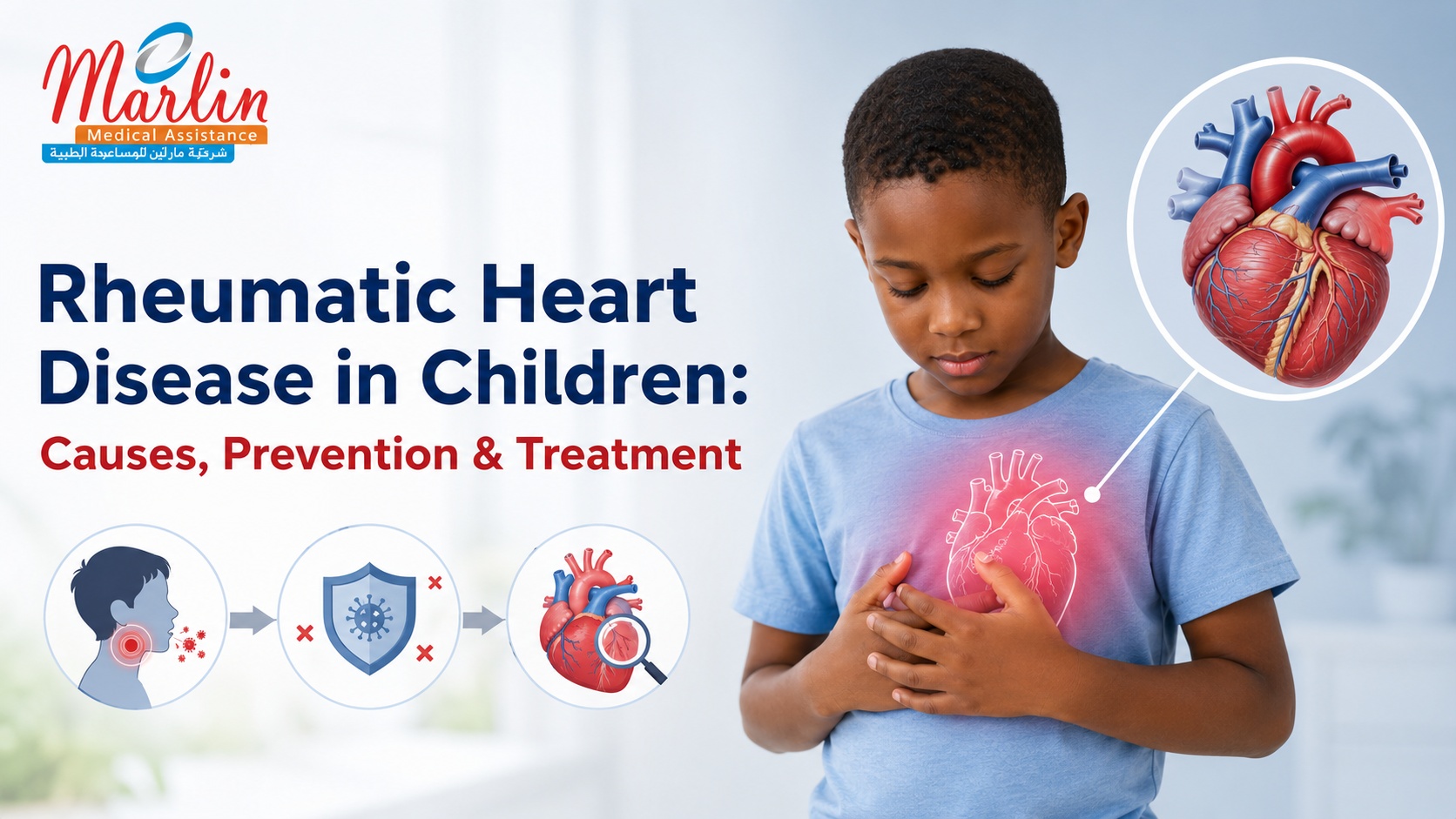
RHD is not inevitable, Rheumatic heart disease in children is amongst the most avoidable and preventable diseases in children. Most cases can be prevented by treating strep throat promptly. Rheumatic heart disease has to be treated at the right time before the issue spreads and affects the health greatly.
Here you will know about the definition, causes, risk factors, symptoms, treatment options and preventive care of Rheumatic heart disease in children. Remember, recognising early signs and treating it saves you from further complications and disease advancement. Let us dive into the blog.
What Is Rheumatic Heart Disease? — Definition
Rheumatic heart disease in Kenya or RHD is a long term damage to the heart valves that is caused by rheumatic fever. It happens when the body's immune response to an improperly treated scarlet fever and strep throat damages its own heart tissue.
Let us know what causes Rheumatic heart disease in children. RHD is truly treatable but is a challenge before the authorities especially in the East African region. RHD is nothing but a permanent valve damage from persistent autoimmune attacks caused by Group A Streptococcal infections.
This permanent heart condition is generally caused by Streptococcus pyogenes infection and Rheumatic fever. However a proper medical evaluation and support helps in preventing the disease. Treatment options like lifestyle changes, medications and surgical procedures help in treating the problem later but prevention is always better than cure. RHD prevention is always a better option.
How Strep Throat Leads to Rheumatic Fever and Heart Damage
An improperly treated Group A Streptococcus infection or strep throat causes rheumatic fever. The body's immune system generates antibodies that mistakenly damage healthy tissues in the brain, heart and joints. This is the exact cause of Rheumatic heart disease in children. Here is how the entire damage happens :
- When a Streptococcus pyogenes is not treated well it causes bacterial infection. This causes the immune system to misdirect an attack on the bacteria. This happens within a window of 4 weeks from the beginning of the infection.
- The strep bacteria have similar proteins present in the natural healthy tissues of the body. Antibodies get confused and attack the healthy tissues in the body instead of the strep throat bacteria. The strep throat heart disease stems from this problem.
- Rheumatic fever leads to an inflammation in the outer lining, the heart muscle and the inner lining of the heart. This condition ultimately leads to regurgitation and stenosis causing narrowing of the blood vessels. This ultimately leads to a blood leak backwards.
- The problem and its gravity increases when the condition repeats consistently. With each episode of strep throat the damage accumulates and the heart valves get damaged on a permanent basis.
Group A Streptococcus → Rheumatic Fever → Rheumatic Heart Disease
A Group A Streptococcus leads to the condition of a Rheumatic heart disease in children if left untreated or mistreated. There is a chronological connection between the strep throat heart disease and the following conditions.
- Group A Streptococcus : The Group A Streptococcus condition leads to Rheumatic fever. Here is where the problem actually begins.
- Rheumatic Fever : The immune response many times attacks the healthy tissues of the body leading to weakened heart valves. This happens when the strep throat is not treated in the initial stage.
- Rheumatic Heart Disease : The progression of the problem leads to a fully developed Rheumatic heart disease in children. The disease develops due to long term and repeated sessions of Rheumatic fever.
Every strep throat infection doesn't lead to this condition. This is because certain strep throats go away naturally while others respond well to antibiotic treatments. However, individual immune response and repeated exposure matters too.
Who Is at Risk? — Why RHD Is a Major Problem in East Africa
Children and Adolescents between the ages 5 and 15 suffer the most from Rheumatic heart disease. The disease affects children due to numerous causes including higher vulnerability and rapid development.
The disease is even known to progress in girls and women mainly during pregnancy. This is mainly because of the increased blood flow throughout the body. The East African region constantly shows higher frequencies of the condition in pregnant women and girls.
The rate of RHD and RHD prevention techniques are needed more in the rural communities. This is due to improper housing, lack of nutrition and unhygienic surroundings.
Let us now understand why RHD is a major issue in the East African region :
High Frequency of Disease
The prevalence of Rheumatic heart disease in young adults and children in countries like Uganda, Ethiopia and Tanzania is greater. The rate of the disease is about 15% in certain places. This point displays why RHD is a major issue in the region.
Delayed Diagnosis
One of the most important causes of an RHD is delayed diagnosis. People often seek medical care after the symptoms seem severe. Basically the time and tide never waits and the damage is already done.
Improper Healthcare Infrastructure
The region doesn't have health experts and diagnostic facilities like echocardiograms and MRIs. Also rural areas do not have sufficient hospitals and clinics offering RHD treatment. This is also why strep throat heart disease is a major problem in the East African region.
RHD Statistics in Kenya and Tanzania — The Scope of the Problem
Approximately 14 million people are affected by RHD in Sub-Saharan Africa as per the Lancet data. Kenya and Tanzania are among the most affected countries in the region. Rheumatic heart disease in children is a serious cause of concern in the region and even in the entire world. There are about 5 to 7 cases of the condition out of 1000 individuals. The RHD statistics in sub Saharan Africa is a matter of concern.
Pregnant women are the most vulnerable with 70 % cases of cardiac diseases. About 64% of the total cardiac cases of people below the age of 50 are of Rheumatic heart diseases. The fatality rate of the disease is as high as 27% in countries like Kenya and Tanzania.
Poverty, Overcrowding, and Limited Healthcare Access as Risk Factors
Countries like Kenya and Tanzania are overcrowded. The poor economic conditions of the Eastern African region are not high standard especially in the rural areas. Poverty leads to improper housing and healthcare facility management. This ultimately leads to the increase in bacterial infections including strep throat diseases and rheumatic fever. Lack of proper sanitation and unhygienic living conditions largely lead to Rheumatic heart disease in children.
Limited access to health care facilities is also another important risk factor that leads to an increase in RHD in the region. Lack of diagnosis, treatment and proper management of the disease is found to be common in the East African region. The RHD statistics in sub Saharan Africa clearly highlights the situation.
However the story doesn't end here. People from Kenya and Tanzania can certainly overcome the situation if proper housing planning and health safety is prioritized. Communities can come together and demand the best healthcare facilities in the region. Unity is always strength and they can surely demonstrate the power of unity in such situations. Ultimately health is truly wealth.
Symptoms of Rheumatic Fever and Rheumatic Heart Disease in Children
SYMPTOMS OF RHEUMATIC FEVER
Rheumatic fever in children in Africa is an autoimmune response where the body attacks its own healthy tissues instead of attacking strep throat bacteria. Here are the symptoms of Rheumatic fever in children :
Carditis
Carditis is among the most common symptoms of Rheumatic fever. Carditis is nothing but the inflammation of the heart valves and heart muscles. The inflammation of the heart leads to shortness of breath, fatigue and palpitations.
Joint Pain and Swelling
Joint pain and swelling is also another recognizable symptom of a Rheumatic fever. This pain is normally felt in elbows, knees and wrists. The pain transfers from one joint to another.
Involuntary Movements
Involuntary movements are also signs of a Rheumatic fever. Signs like shaky or jerky feet, face and hands. Sudden laughing or crying can also be an alarming signal. You should be alert if your child shows such symptoms and seek immediate medical assistance.
Skin Changes
Children suffering from Rheumatic fever even experience skin changes like a pink, painless rash over skin. The skin changes are more often seen near the joints.
Other Symptoms
Other symptoms of Rheumatic fever include weight loss, malaise, nose bleeds and abdominal pain.
SYMPTOMS OF RHEUMATIC HEART DISEASE
Rheumatic Heart Disease in Tanzania happens when rheumatic fever advances leading to serious heart valve damage. There are noticeable symptoms of this condition. Here are the symptoms of Rheumatic heart disease in children:
Dyspnea
Breathlessness can be among the most important symptoms of RHD. This breathlessness is mainly during a flat lying or when active.
Chest Pain
Chest tightness or chest discomfort too can signal a Rheumatic heart disease in children. Chest pain can be severe in certain cases due to disease progression.
Palpitations and Swelling
Heart palpitations too are a noticeable symptom of this disease. A pounding heart and joint swelling can signal an RHD.
Weakness and Fatigue
If your child is going through weakness and fatigue then you should book an appointment with a doctor. This is because such symptoms can signal towards a prevailing heart disease.
How Is Rheumatic Heart Disease Diagnosed?
The diagnosis of an RHD is important to confirm the treatment procedure and further remedies. Rheumatic heart disease in children needs immediate diagnosis to do away with other health related complications. Let us know about the diagnosis options available for an RHD:
Echocardiogram
Echocardiogram is the most basic diagnostic tool that helps in the diagnosis of an RHD. Echocardiogram makes use of ultrasound waves to generate true images of the heart's valves. Echocardiogram is easily available at heart care hospitals in East Africa.
Physical Examination
A doctor can even check for heart murmur, improper heart rhythms, unusual heart movements, palpitations and other audible symptoms. A physical examination is an important part of the diagnosis of this health condition.
Blood Tests
Blood tests can be used to diagnose a strep throat infection in the child. Blood tests help in ensuring the presence of antibodies like ASO in the body. Blood tests have long been an important part of a disease diagnosis. Blood tests are available at most of the heart care centres in Tanzania and Kenya.
Other Tests
Tests like Chest X-rays and Electrocardiogram are also useful in diagnosing the problem at the root. These methods are proven to confirm the prevalence of an RHD. Chest X-rays are readily available at hospitals in Kenya and Tanzania.
Treatment of Rheumatic Heart Disease
When RHD prevention becomes impossible, treatment comes into the picture. Treatment for Rheumatic heart disease in children can be categorised into various types including medications, surgical procedures and antibiotics.
1. Medications for Heart Health
When valve damage causes heart failure, doctors recommt diuretics, ACE inhibitors and beta-blockers. This helps in fluid management and to reduce the pressure over the heart. Even anti-inflammatory drugs help in treating RHD. Anti-inflammatory drugs like corticosteroids or aspirin also help in reducing the inflammation in the heart.
2. Long-term Antibiotic Treatment
Secondary prophylaxis with benzathine penicillin G injections every 3-4 weeks helps in RHD treatment. This helps to manage the symptoms of Rheumatic fever. It even helps in reducing the severity of the condition. Doctors even suggest a lifelong prophylaxis after a valve surgery. Antibiotic treatment is necessary to treat the cause at its roots.
3. Surgical Procedures
Surgical valve repair or replacement for advanced RHD is highly essential. Catheter procedures, Balloon Valvuloplasty and Replacement surgeries are necessary to do away with the problem. Many times even an open heart surgery helps the treatment of Rheumatic heart disease in children.
Penicillin Prophylaxis — The Most Important Treatment in RHD
Penicillin prophylaxis for RHD is among the most important treatment options during rheumatic heart disease in Tanzania. It helps in stopping the recurrence of strep throat infection in children and in adults. Penicillin Prophylaxis is proven to reduce the effect of heart valve damage. It doesn't allow the disease to advance any further. Penicillin prophylaxis is conveniently available and even affordable in countries like Kenya and Tanzania and the monthly cost ranges between $0.15 and $3.00. Penicillin Prophylaxis is truly a boon for people living in Kenya and Tanzania. Here is how it actually helps :
- It helps in the form of oral penicillin that has a long term impact against the disease. It is prescribed at 250 mg per day. Various institutions like the American Heart Association suggest oral penicillin for a powerful attack on strep throat heart disease.
- Benzathine Penicillin G is also helpful to fight the issue. It can be used according to the medical history and capacity of the patient. It is always among the top most recommended solutions against an RHD.
Monthly penicillin injections for 10 years or until age 25 minimum stops further recurrences. However, adherence is the key to fighting against the problem. It is often recorded that some patients including children experience mild allergies while taking this treatment. Macrolides like clarithromycin and azithromycin can help in this regard.
Valve Surgery for RHD — When Is It Needed?
Valve surgery for Rheumatic heart disease in children is needed when valve damage reaches a stage of severe leakage and narrowing. RHD is responsible for stiffness and fusion of the heart valves. This is the condition when a surgical intervention becomes necessary.
- Symptom Appearance : A valve surgery for RHD is required when the symptoms become severe and damage the walls of the heart. Symptoms like chest pain, pulmonary edema and shortness of breath require immediate medical attention and surgical care. Surgery is necessary if the damage is expected on a large level.
- Severe Mitral Stenosis: If the heart valve area is highly limited that is lesser than 1.5 square centimetres then a heart valve surgery is essential.
- Severe Regurgitation: When the ejection fraction falls below 60% then the surgery happens to be the only treatment. This condition leads to a severe backflow of blood.
- Prevalence of Blood Clots or Atrial Fibrillation : RHD-related valve changes cause the left atrium to blow. This condition leads to Atrial Fibrillation. Surgery is necessary to correct the issue to stop further damage.
Heart valve surgery availability in Kenya is limited. However Marlin helps in medical evacuation during complex cases. The team helps you in finding the best heart valve surgery availability in Kenya, Tanzania or abroad.
Prevention of Rheumatic Heart Disease — The Role of Early Treatment
Preventing a strep throat heart disease is always the best option. Cure can solve the problem but preventing the disease is and should always be preferred over curing. The role of early treatment is important in such matters. The root of the disease is in an untreated or mistreated strep throat infection. Health problems arise as small seeds but can rise up to greater heights if immediate action and treatment doesn't follow.
- RHD prevention is not at all difficult. This is mainly because your child will not get the disease directly without showing symptoms. You should be alert enough to recognise the symptoms and act accordingly. Firstly do not consider a strep throat infection too lightly. An untreated RHD leads to the condition. Complete the courses of antibiotics and medications as per physician's recommendation.
- Pay attention to recurrences of strep throat diseases. Generally an RHD hails from repeated sessions of strep throat infections and connected conditions. Heart damage gets severe as strep throat infections occur and recur after time intervals.
- Treating every sore throat appropriately with antibiotics and educating the entire community regarding the condition will also help in preventing Rheumatic heart disease in children.
How to Prevent RHD: Treat Strep Throat Early
By the time it is clear that Rheumatic heart disease stems from an untreated or mistreated strep throat infection. RHD Prevention is always better than its cure. Strep throat heart disease has a cure but preventing the root cause of the condition is always better than curing the disease. Treating your strep throat early is the key to prevent any further complications including rheumatic heart diseases. Here is how you can stay away from the condition of RHD :
Test yourself
You should immediately visit your local healthcare provider for a strep throat diagnosis. You should visit the doctor within 48 hours of symptoms like sore throat and fever in children. Testing will help you understand the gravity of the condition and take immediate actions to stop further complications from occurring.
Begin Antibiotics
Doctors in Kenya and Tanzania normally prescribe Penicillin or Amoxicillin that is easily available in the region to do away with the bacteria. You should begin taking proper doses of antibiotics as prescribed by the medical professional.
Complete the Entire Prescription
Remember to complete the entire course of the prescription. It is observed that Rheumatic heart disease occurs when a strep throat is untreated or mistreated. Your child can suffer the condition if the doses are not taken as per the prescription and doctor recommendation.
Marlin's Role in RHD Management and Medical Access in East Africa
Marlin Medical Assistance is well known for the best patient support in the case of Rheumatic heart disease in children. The team is well equipped with the best experts and accessible treatment options for the condition. Here is how Marlin medical assistant helps in managing the disease and providing medical excess in East Africa :
International Referrals and Co-ordination with Specialist Centres
Marlin helps in connecting East African patients to a well organised network of professional cardiac surgeons in East Africa and even abroad. The treatment options are vivid with a number of alternatives to choose from. MMA is well versed and well known for the best international co-ordination with specialist centres.
RHD Case Management and Medical Evacuation
Patients can submit inquiries through the Marlin Medical Assistance Contact Form. You will get a dedicated relationship manager who manages case histories, offers medical help, collects budget estimates, and supports surgical tourism.
Planning of The Treatment and Patient Support
Marlin Medical Assistance offers end-to-end concierge services, second opinions, cost estimates and proper treatment plans. The team is always ready to offer the best patient support for RHD prevention.
Get your RHD consultation from Marlin today.