
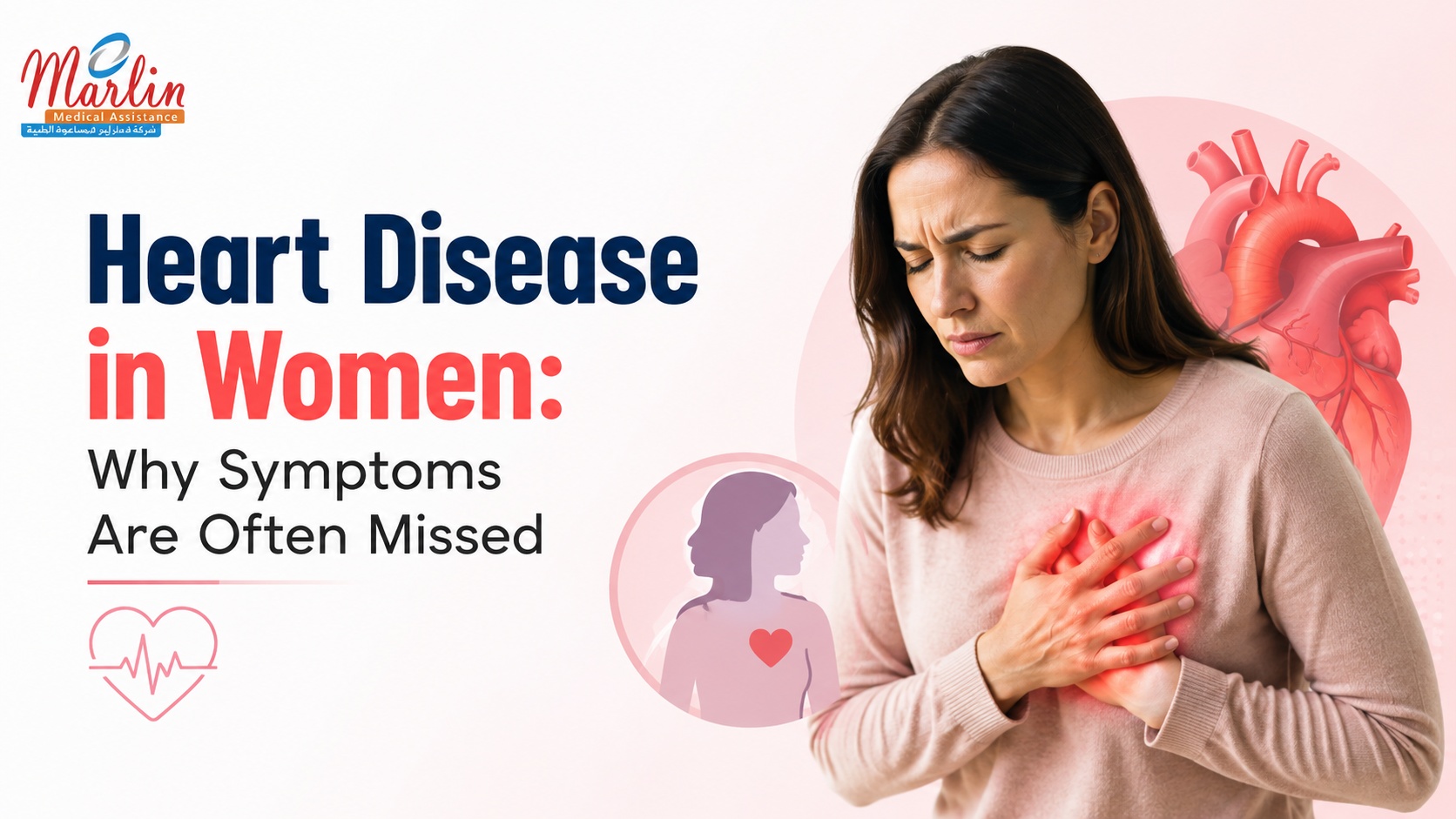
In contrast to common misunderstandings in clinical studies, heart disease symptoms women are not a second-order problem; CVD is not a men's disease and takes the largest number of female lives worldwide compared to other diseases. Based on data provided by the World Health Organization (WHO, 2024), CVD leads to approximately 35% of all female deaths worldwide, resulting in more than 9.3 million deaths among females each year. This indicates that cardiovascular diseases cause more than two times more deaths of female heart disease than all types of cancer annually.
It is important to note the fact that women face a greater likelihood of dying after their initial episode of acute myocardial infarction as compared to men. The disparity in mortality rates among female patients is largely attributed to the fact that there is a general failure to appreciate the clinical characteristics of females, hence leading to huge bias during diagnosis. When women seek help in the ER, they are not properly assessed for possible cardiac causes and hence delays in diagnosis and treatment.
Such diagnostic bias is even further compounded in developing healthcare systems in East African countries where young women experiencing signs of ischemia are regularly misdiagnosed as suffering from either anxiety or non-cardiac conditions based on the false clinical belief that females are immune from heart-related problems. It would take a huge paradigm shift for such fatalistic bias to be addressed in terms of prioritizing the cardiovascular health of women with the same importance as other diseases.
How Women's Heart Attack Symptoms Differ from Men's
Women heart attacks present a very strong deviation from conventional models of heart attacks that were seen primarily in men. While the standard book description for myocardial infarction is characterized by a sudden attack of severe pressure-like pain that is located in the center of the chest and radiates to the left arm, women suffer from an altogether different set of symptoms.
Instead of chest pain, the of atypical heart attack symptoms in women include sudden extreme fatigue, shortness of breath, lightheadedness, nausea, and pain in the jaw, neck, back or shoulders. Upper abdomen burning sensation or indigestion happens almost twice as often in women as in men.
In addition, these symptoms present themselves weeks before the heart attack occurs. It is found that about 80% of women have at least one symptom which is an odd symptom, like sleep disruption or severe tiredness, before four weeks of having a heart attack, but very few have any chest pain symptoms beforehand.
The different heart attack women vs men symptoms are biologically based. While males are highly vulnerable to macrovascular obstructive coronary artery disease caused by the rupture of one large plaque of cholesterol in the major epicardial artery, females are usually affected by other forms of pathology:
- Coronary Microvascular Dysfunction (CMD): This term refers to damage in the coronary arterioles having a small size of less than 200 micrometers. The small-sized vessels do not dilate during metabolic stress and hence cause diffuse ischemia, which is completely missed by routine diagnostics such as angiography.
- Plaque Erosion: Instead of a rapid rupture of plaque, the female body prefers the development of plaque erosion, in which the thin layer of a fibrous plaque is stripped off. This causes the formation of a non-occlusive thrombus, resulting in the gradual onset of ischemia and nonspecific chest pains.
The 'Silent Heart Attack' — More Common in Women
Silent heart attack women involves myocardial infarction that occurs without any recognized, minor or totally undetected symptoms. In the absence of typical, obvious crushing chest pain, this condition does not prompt immediate consultation and yet it is the leading cause of coronary events among females.
The major threat associated with silent heart attack includes systematic misunderstanding of symptoms by both patients and medical specialists. Severe active cardiac pain may be overlooked for:
- Panic Attacks and Psychological Stress: Breathlessness, dizziness and constricting sensations are perceived as anxiety disorders and panic attacks.
- Somatization during Menopausal Period: Sweating, problems with falling asleep and heartbeat irregularities are characteristic to this transitional period.
- Musculoskeletal Strain: Upper back, neck and shoulder pain are believed to be caused by poor posture and exercise.
In case when a heart attack remains undetected, the lack of any medical interventions leads to ischemic cascade and development of extensive, irreversible tissue damage and fibrosis. Even the smallest area of ischemia results in remodeling, heart impairment and increased risks of lethal heart failure.
Risk Factors Unique to or More Significant in Women
Although risk factors such as hypertension, smoking, and dyslipidemia may have an effect on everyone, their effect on women is usually heightened due to the physiology of women. On the other hand, there are non-traditional risk factors unique to female heart disease that cannot be accounted for in traditional risk calculators of medicine.
The Menopause Transition and Estrogen Loss
In their reproductive years, women take advantage of the beneficial properties of estrogen for vascular protection. This is an endogenous female hormone called 17 beta estradiol. The estrogen hormone works to keep the blood vessels healthy by stimulating the enzyme endothelial nitric oxide synthase.
However, the normal shift to menopause heart disease risk factors involves the abrupt fall of estrogen levels. The decrease leads to hardening of the arteries, fat deposits in the visceral area, high low-density lipoprotein cholesterol (LDL-C), and high levels of systemic inflammation. Based on data collected by the American Heart Association (AHA) Go Red for Women initiative, premature menopause that happens at ages below 40 poses a 55% increased risk of experiencing nonfatal cardiac events.
Pregnancy-Related Vascular Stress Tests
Pregnancy serves as a physiological stress test of the cardiovascular system in females, necessitating an extensive 50% blood volume increase. Conditions occurring during this period are clear indicators of vascular weakness, hastening postpartum damage, resulting in heart disease pregnancy Africa surveillance programs and other worldwide monitoring activities:
- Preeclampsia: Preeclampsia is a gestational hypertensive condition causing major damage to the endothelium. The occurrence of preeclampsia results in twice the chances of suffering stroke and ischemic episodes, as well as triple the chances of experiencing chronic hypertension.
- Gestational Diabetes Mellitus (GDM): GDM becomes an important predictor of developing metabolic conditions in future life, with the risk of developing type 2 diabetes increasing seven times, which, in turn, increases cardiovascular mortality threefold.
- Spontaneous Coronary Artery Dissection (SCAD): This atherosclerotic tear of the coronary artery wall is the main reason for heart attacks among pregnant and postpartum women due to hormonal changes making the arteries weak.
Autoimmune Disease and Endocrine Disorder
The following autoimmune disease exhibits female preponderance and causes fast progression of atherosclerosis due to systemic inflammation:
- Systemic Lupus Erythematosus (SLE): Young females with SLE aged 35 to 44 suffer a sky-high increase in myocardial infarction risks by 50 times that of healthy controls due to systemic vascular inflammation and endothelial cell death.
- Rheumatoid Arthritis (RA): RA raises the risk of having a heart attack by 50%, where the chronic systemic joint inflammation causes damage to macrovascular walls in ways similar to those of type 2 diabetes.
- Polycystic Ovary Syndrome (PCOS): This common endocrine disease affects 5% to 10% of reproductive-age women by virtue of their insulin resistance, hyperandrogenism, and dyslipidemia causing early-onset coronary calcification.
Mental Health and Psychosocial Stressors
Women suffer from depression and anxiety disorder two times more often than men. They serve as a very powerful indicator of future heart diseases. Constant psychological pressure triggers an endocrine system response that causes an influx of such hormones as cortisol and catecholamines.
Such hormonal imbalance results in endothelial dysfunction and continuous coronary constriction and increases heart attacks and strokes by 35 percent.
Why Women's Heart Disease Is Under-Diagnosed in East Africa
In terms of caring for the cardiac well-being of women, the difficulty of diagnosis and treatment is exponentially heightened when we consider low- and middle-income countries such as those that exist in East Africa. Countries like Kenya and Tanzania have the unfortunate situation wherein a perfect storm of cultural tradition, constraints in their healthcare system, gender roles in society, and the complete absence of any local research makes this a lethal combination.
Cultural Perceptions of Body Image and Risk Alignment
One of the most significant barriers to the primary prevention of cardiovascular events in East Africa is the cultural perception of body mass and health. In many urban and rural sub-Saharan African communities, higher body mass, abdominal adiposity, and a high Body Mass Index (BMI) are culturally valued as outward symbols of physical beauty, health, happiness, and economic prosperity.
This deeply ingrained cultural standard directly alters the self-perception of cardiovascular risk among overweight and obese women. Clinical studies conducted in urban Tanzania reveal that even when female participants present with severe, clinical obesity, over half perceive their body weight as entirely healthy or normal.
Furthermore, a substantial percentage of clinically obese women express absolutely no intention of undertaking weight loss or weight management strategies. Because high body weight is not viewed as a medical warning sign locally, a massive portion of East African women living with progressive metabolic syndrome, unmanaged systemic hypertension, and advanced dyslipidemia never seek out early cardiovascular screenings.
The Burden of Caregiver Prioritization and Altruistic Delay
In terms of socio-cultural dynamics in the households of East Africans, women are subjected to the burden of undertaking manual domestic activities, farm work, and caregiving of the family members. Socialization of the female population begins in childhood when the primary consideration is to ensure that their family is taken care of with utmost priority over their health.
Such a preoccupation of a woman in meeting the needs of her family members results in an important clinical scenario called "altruistic delay". The initial symptoms such as fatigue, breathlessness associated with activities or epigastric burning related to cardiac distress are ignored by the woman because she doesn't want to interrupt daily activities and waste the limited funds in conducting tests for herself.
At the time when such patients report to a tertiary care center for evaluation, the underlying condition becomes advanced, terminal disease like decompensated heart failure or massive myocardial infarction, which have very high mortality rates.
Systemic Clinician Bias and Infectious Disease Overlap
Primary care centers throughout Kenya and Tanzania are poorly resourced, experiencing extreme numbers of patients, poorly trained clinicians, and a paucity of diagnostic equipment, including a 12-lead ECG and highly sensitive cardiac troponin tests. Where an East African female goes to a busy primary care physician with nonspecific complaints of backache, nausea, and fatigue, her complaints are regularly ignored, chalked up as exhaustion from hard labor.
Besides that, due to the high burden of communicable diseases in East Africa, non-specific signs and symptoms are frequently misdiagnosed as being malaria, typhoid or pulmonary tuberculosis. At many distant clinics, myocardial infarction in HIV positive females is easily missed under the misconception that the cause of their heart disease is the adverse reaction to their medications.
The Missing Piece: Lack of Gender-Disaggregated Data
The protocols that have guided treatments of heart diseases in East African populations for many years have been those obtained through studies done in high income Western nations, where there was poor representation of females and consideration of sub-Saharan disease risks. This problem has necessitated creation of local heart registries such as the Kenya Heart Registry.
As this study shows, patients with heart disease in East Africa are younger compared to patients with similar diseases in Western populations, typically in their 50s, and are more likely to experience heart failure with preserved ejection fraction and rheumatic heart disease, rather than coronary artery disease.
Prevention and Heart Health for Women — What You Can Do
Improvement of the global statistics related to deaths from cardiovascular diseases necessitates an active and individualized strategy for both primary and secondary prevention. Women have for too long been passive bystanders in their cardiovascular health. With the ability to take charge of clinical measurements, modifying lifestyles, and insisting on comprehensive testing, women can completely transform their future health status.
The Diagnostic Blueprint: 'Know Your Numbers'
Risk assessment for cardiovascular disease should always follow clinical markers based on scientific data and not be guided by subjective physical assessment of health. All women have to collaborate very closely with their medical team in order to control and optimize the following four clinical markers:
- Blood pressure (BP): The American Heart Association Go Red for Women guidelines suggest that women have to keep the goal of less than 130/80 mm Hg. Hypertension management remains the single most effective strategy to prevent coronary microvascular dysfunction and risk of a hemorrhagic stroke.
- Low-Density Lipoprotein Cholesterol (LDL-C): This form of cholesterol constitutes the major substance for formation of arterial plaques. In terms of primary prevention for all patients, women are supposed to maintain an LDL-C level below 100 mg/dL (2.6 mmol/L). Still, women who have gone through menopause and have established risk factors for CVD have to keep this number below 70 mg/dL or even less.
- Blood Glucose (HbA1c): It is important for a woman to have proper blood glucose readings as she does not have the natural protection from heart diseases due to diabetes. The fasting HbA1c levels should be less than 5.7%. In case of diabetic patients, maintaining the HbA1c less than 7.0% is important.
- Body Mass Index (BMI): While there may be different local cultural norms when it comes to having a bigger size body, a good clinical range for BMI is 18.5-24.9 kg/m². It is also important to measure the waist circumference as visceral fat around the abdomen secretes inflammatory cytokines and damages the blood vessel lining.
Life-Stage Surveillance: Menopause and Post-Pregnancy Tracking
The risk profile of the woman is always changing as she goes through life stages. After the woman passes menopause stage, her estrogen secretion from the ovaries is no more and the natural protective shield is removed. The postmenopausal woman should realize that after passing this stage, her risks of suffering from ischemic heart disease increase rapidly to become equivalent to those of a man.Similarly, pregnancy complications must be viewed as an early, natural vascular stress test. Conditions like preeclampsia, gestational hypertension, and gestational diabetes are not temporary issues that vanish at delivery; they leave permanent, underlying vascular changes. Women who experience these complications require lifelong cardiovascular surveillance, starting with detailed clinical evaluations six to twelve weeks postpartum, followed by annual blood pressure checks, lipid testing, and glycemic screenings for the rest of their lives.
Core Lifestyle Modifications
Dynamic day-to-day decision-making is still the absolute cornerstone of future cardiovascular health and arterial plaque stability:
- Regular Aerobic Exercise: Undertaking 150 minutes of moderate-intensity aerobic activity such as brisk walking, biking, and swimming each week greatly reduces blood pressure throughout the body, promotes vascular compliance, and increases peripheral insulin sensitivity.
- Cardiovascularly Protective Eating: Adopting a diet abundant in fruits, vegetables, whole grains, beans, and lean meats provides active protection against lipid peroxidation. Women must consume less than 2 grams of sodium daily, cut down on added sugar content, and avoid any man-made trans fats.
- Totally Stop Using Tobacco Products: Not using tobacco products is still the most influential step that can be taken in favor of heart health. The use of tobacco products drives acute myocardial infarctions in women much more than in men because it leads to blood vessel constriction and platelet clumping. It is impressive that within one year of total cessation, a woman's additional coronary heart disease risk decreases by half.
Take Control of Your Heart Health Today
Your health is in your hands, and you have the power to protect your future. Heart disease is highly preventable, but staying safe requires moving beyond old assumptions and actively tracking your body’s unique clinical signals. Do not wait for a medical provider to bring up your cardiovascular health—take the lead at your next appointment.
- Bring Your 'Know Your Numbers' Guide to Your Doctor:
- Print or screenshot the checklist above.
- Schedule a dedicated wellness visit to establish your current baseline numbers for blood pressure, LDL cholesterol, HbA1c, and BMI.
Discuss your life-stage history: If you have experienced premature menopause or pregnancy complications like preeclampsia, explicitly advocate for a comprehensive, long-term vascular assessment.
You know your body better than anyone else. If something feels wrong, trust your intuition, demand a thorough evaluation (including a 12-lead ECG and troponin assay), and refuse to let your symptoms be dismissed. You are your own best health advocate—step into your power and protect your heart today.