
Around the world, improvements in cancer diagnosis and treatment have made this specialty and high-tech cancer treatments available internationally. For many families with a difficult diagnosis it can be a struggle to achieve the right balance of clinical effectiveness with affordability and manageable payment plans. Going to seek advanced treatment on modern cutting-edge technology can be daunting when local waiting times and costs seem unmanageable.
Over the last decade, medical travel has grown from an alternative and beginning to turn into a very strategic approach of managing global health. Now, patients seeking radiation therapy India international patients look for choices offering world-class infrastructure, internationally certified oncologists, and highly efficient access to care.
Types of Radiation Therapy Available in India
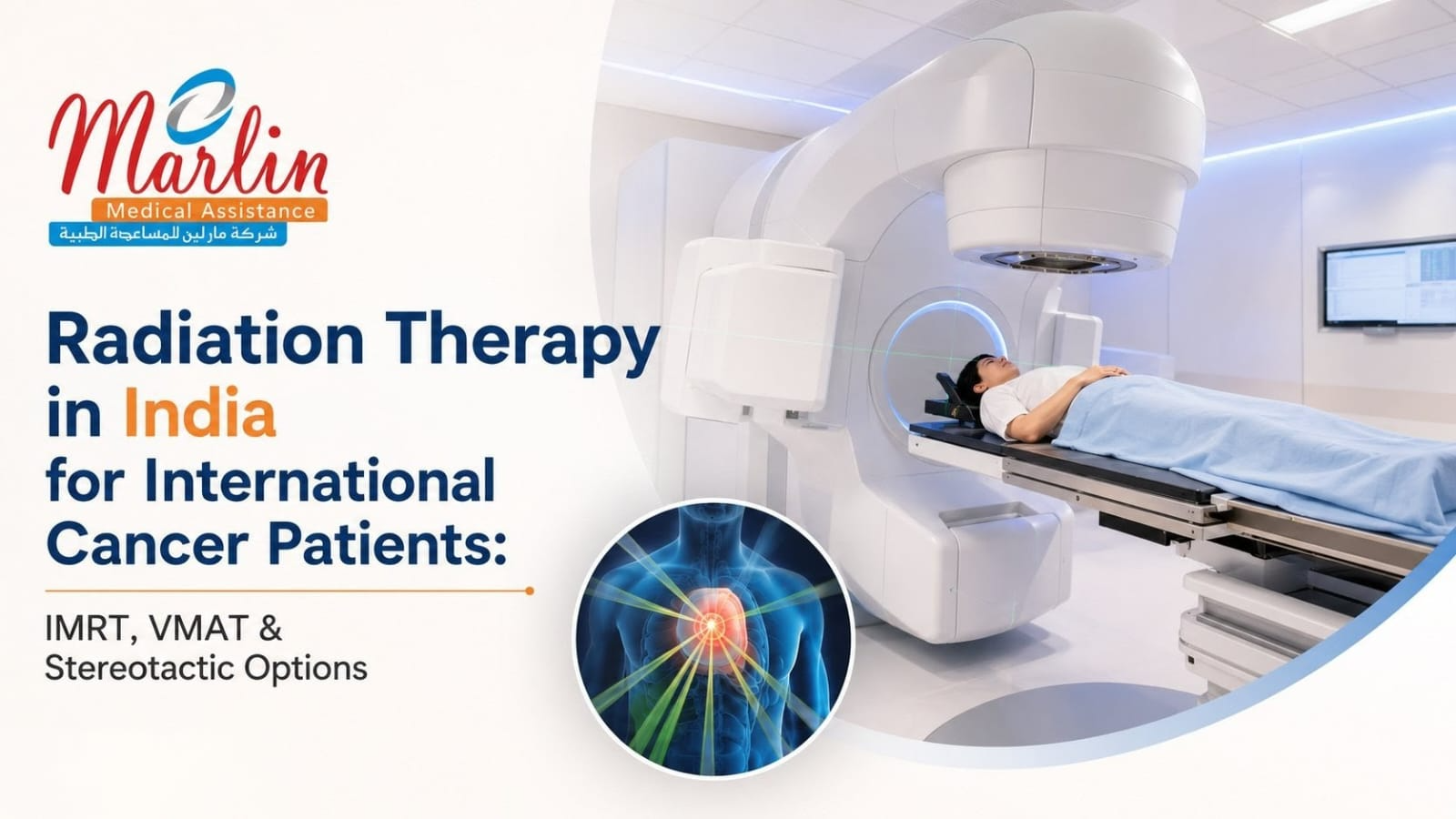
The main goal of current radiation oncology is to cause the destruction of cancer cells without damage to the adjacent uninvolved tissues. As the standard of medical LINAC is identical to that of the Western world's largest centers, any Indian health network employing them can deliver the ionizing radiation within a fraction of a millimeter accurately. This enables the clinical team to treat the complicated, deeply placed or difficult positioned lesions with such fine control.
IMRT, VMAT, International Standards Explained
Three foundational technologies form the core of modern external beam radiation therapy, each offering distinct advantages in spatial targeting and treatment delivery:
- Intensity Modulated Radiotherapy (IMRT): It modulates the intensity of each beam in multiple small, individually modifiable segments. It allows the radiation dose profile to be tailored and shaped specifically in three-dimensional space to match the shape of the tumor [Cleveland Clinic, 2024]. This is especially useful when the tumor is close to two more delicate structures like the head and neck cancers near the eye nerve or the salivary glands.
- Volumetric Modulated Arc Therapy (VMAT): An exciting development of the IMRT family, VMAT radiation India protocols administer a constantly conformed dose of radiation via a machine that's continuously rotating around the patient in a 3600 circle. Since the intensity of the beam is modulated precisely during each arc, an entire treatment fraction can sometimes be administered in a single two- to five-minute arc, dramatically reducing the time spent perfectly still and thus reducing the risk of movement-related targeting errors.
- Image-Guided Radiation Therapy (IGRT): Tumors are somewhat dynamic; they do not stay perfectly still. They can move a few mm in response to the normal processes of breathing, digestion, and patient weight change. With IGRT, this is accomplished by using techniques such as cone-beam CT scans, on-board imaging techniques, and added-on equipment to the treatment machine that beams in MRI images right before the initial treatment beam. This allows the radiation oncologist to precisely identify the tumor's location and target with computer-guided accuracy.
The use of these advanced systems is underpinned by international safety and quality standards. It is the clinician who guides the use of each tool depending on the tumor's staging, cell composition and distance to the major blood vessels.
Stereotactic Body Radiotherapy (SBRT)
As there are many focused small-to-medium size tumors outside the head, in India, stereotactic radiosurgery India programs frequently use Stereotactic Body Radiotherapy(SBRT). While conventional regimens issue small daily doses over five to eight weeks, SBRT administers highly concentrated, ablative doses of radiation over one to five dedicated sessions, using an intricate body-immobilization cocoon and advanced respiration-tracking technology that matches the radiation beam with the patient's natural breathing cycle.
Based on the data, SBRT appears to be very successful in the treatment of early-stage non-small cell lung cancer, localized prostate cancers and areas of isolated liver/bone metastatic sites as an alternative to surgical treatment in patients who otherwise may not be candidates for large operative procedures.
The targeted targeting of a beam reduces X-ray scatter radiation leaving the target unaffected and minimizing dose to the surrounding tissues.
Cyber Knife & Gamma Knife Radiosurgery
When managing intracranial lesions, vascular malformations, or deep-seated spinal tumors, specialized robotic radiosurgery platforms provide non-invasive options that eliminate the need for traditional open surgery:
- CyberKnife Cancer Care Treatment: The CyberKnife India cancer care infrastructure of the world has an unconventionally designed, small, portable accelerator moving the same as common linear accelerators but it is mounted on a 'highly sophisticated' robotically controlled equipment arm. The system, with the ability to observe cancer any time during a session through X-ray, continuously follows and readjusts to the movement of the cancer. Where traditional radiotherapy systems depend on an anchoring, bulky metal frame fixed to the skull to keep the head still, the CyberKnife system permits painless treatment of the brain, spine, lung, liver or prostate in three or fewer outpatient visits.
- Gamma Knife Radiosurgery: tailored exclusively for intracranial therapy, a Gamma Knife system focuses as many as 192 separate beams of cobalt-60 radiation onto one precise location inside the brain. Each beam delivers a very benign dose of radiation traveling through various healthy areas of tissue; however they converge with a very high dose at a specific location, destroying an abnormality in the process. This has been a traditional clinical piece in the management of acoustic neuromas, pituitary adenomas, arteriovenous malformations (AVMs) and trigeminal neuralgia.
Radiation Therapy Costs in India
Perhaps the most interesting feature in the setting of a hospital experience in India is the structural affordability of robotic and high technological care such as many Western countries.
With a choice of many health providers doing this the variable of risk for the healthcare user is made attractive by a combination of relatively cheap domestic operational overhead, domestic pricing for procurement of drugs and equipment for maintenance, and the simple effect of good exchange rates. This does not come at the expense of quality where private hospital networks compare to the world's clinical norms.
Full IMRT Course: $4,000–$8,000 in India vs. $30,000+ in the US
In terms of evaluating healthcare costs, global families discover that state-of-the-art radiation treatments in India are extremely affordable.
A full, multi-week, standard IMRT India cost course of treatment in India will generally cost anywhere between USD4,000–USD8,000 by 2026 depending upon the treatment plan and total number of sessions involved. The same course of IMRT can cost well over USD30,000–USD80,000 in the US or Western Europe.
The table below outlines the approximate cost ranges for various advanced radiation modalities available in India for international patients as of 2026:
| Radiation Therapy Modality | Approximate Cost Range (USD) | Typical Number of Sessions |
|---|---|---|
| Intensity-Modulated Radiation Therapy (IMRT) | $4,000 – $8,000 | 25 – 35 sessions |
| Volumetric Modulated Arc Therapy (VMAT) | $4,500 – $9,000 | 25 – 35 sessions |
| Image-Guided Radiation Therapy (IGRT) | $5,000 – $9,500 | 25 – 35 sessions |
| Stereotactic Body Radiotherapy (SBRT) | $5,500 – $11,000 | 1 – 5 sessions |
| CyberKnife Robotic Radiosurgery | $6,000 – $12,000 | 1 – 5 sessions |
| Gamma Knife Radiosurgery | $5,500 – $10,000 | 1 session |
As can be seen in the table, these numbers represent the baseline costs of the core treatment process, including the initial simulation CT scans, physics involved in complex treatment plans, daily machine setup fees, and weekly treatment reviews with the attending radiation oncologist. Patients should also consider possible preparation costs associated with pre-treatment workups (PET-CT/MRI scans), special molds or immobilization masks, and supportive pain or anti-nausea medications. For information on how technological innovations are reshaping diagnostics before treatment, see the New AI Technology Revolutionizing Early Cancer Detection.
Combining Radiation With Other Treatments
In fact, in current Oncology Practice even the sole use of radiation therapy, without any other complementary therapies, is extremely uncommon. Generally speaking, it represents an important part of a multi-factorial therapeutic approach, established according to a multidisciplinary tumor board, whose members are surgeons, medical oncologists, radiation oncologists and radiologists. The therapies are scheduled in an optimal order.
Concurrent Chemoradiation Protocols
In the majority of clinical cases where radiation is administered, it is concurrent with a low dose of chemotherapy. In this regimen, the chemotherapy drugs serve primarily as radiosensitizers, crippling the cells chemical defense mechanisms and rendering the cancer cells immensely more susceptible to the harsh radiation beams.
This dual modality is often used as first-line, non-surgical therapy for locally advanced cancer of the cervix, esophagus, lung, and head and neck. Concurrent therapy may enhance the short-term toxicity of treatment (such as fatigue or localized tissue inflammation), however, studies indicate that concurrent therapy still provides a higher chance of sustained local control of tumors rather than using a single modality of therapy alone.
Radiation After Surgery (Adjuvant) — What to Expect
When radiation is indicated as a post-operative treatment after tumor resection, this is known as adjuvant radiation therapy. This step intends to kill any residual microscopic tumor cells across the resection margins in order to prevent a local recurrence.
The radiation treatment must start once the actual incisions are healed (usually in three to six weeks). As the patient moves into the adjuvant radiation stage, he or she should expect an initial simulation procedure to take place (in which a custom-made thermoplastic mask or body frame is formed) to ensure the same position for each therapy.
The daily treatments are painless and non-invasive, as simple as getting a normal diagnostic X-ray, and will generally last no more than 10 to 20 minutes in duration. To find out what progress future immunology will be able to make without departing from these traditional treatment methods, refer to the new breakthrough in cancer vaccine research.
Technical Standards & Quality Assurances in India
If seeking oncology treatment outside of the U.S., the safety and regulatory protocols of the hosting country's medical infrastructure should be considered. The highest quality centers in India are subject to a strict domestic and international regulatory framework that authorises machine calibration, radiation safety and clinical workflow.
The main body regulating such practice in the country is the Atomic Energy Regulatory Board (AERB). It imposes a strict regime of rigorous safety audits structural shielding verifications and year round calibrations and certification for each of the medical linear accelerators in operation in the country.
In addition, large private hospital groups often seek accreditation by the Joint Commission International (JCI) and the National Accreditation Board for Hospitals & Healthcare Providers (NABH). For accreditation, strict compliance with global patient safety objectives is required, infection control standards observed and treatment protocols followed.
International guidelines (American Society for Radiation Oncology - ASTRO, European Society for Radiotherapy and Oncology - ESTRO) are strictly adhered to by all clinical teams in order to achieve the best possible dose delivery and to optimize the target accuracy. State-of-the-art treatment planning system platforms such as the Eclipse or Monaca, function in all of the major metropolitan centers.
They are coupled with high definition linear accelerators (Varian TrueBeam, Halcyon and Elekta Versa HD linacs)that allow one of the dosimetrists or medical physicists to determine the optimal dose distribution within the specific anatomy and confirm the prescribed dose to the target (tumor volume) while minimizing the dose to the surrounding organs at risk.
1. Cost of Radiation Therapy in India
Radiotherapy costs in India encompass a very wide range of variables, such as depending upon the place of treatment (Private/Government); technology used and the number of patients required. The range of costs/patient for radiation therapy overall study is from 60 000 to 4 500 000 but there is always an above-average proportion for advanced patients.
Cost Breakdown by Technology Type
| Radiotherapy Type | Typical Cost Range (INR) | Best Used For |
|---|---|---|
| Conventional Radiotherapy | 50,000 - 2,00,000 | Standard, widespread tumor targeting |
| IMRT / IGRT (Intensity-Modulated / Image-Guided) | 1,50,000 - 4,00,000 | Shaping the radiation so as not to affect the healthy tissue |
| Brachytherapy (Internal Radiation) | 70,000 - 1,50,000 | Localized cancers (cervical, prostate) |
| Proton Beam Therapy | 10,00,000 - 25,00,000 | Challenging intra-abdominal pediatric or deep-lying tumors. |
Public vs. Private Tiers: The costs of advanced treatments at large public hospitals (eg, Tata Memorial) is generally in the range of 2.5 to 8 Lakhs for a full course of treatment, but there are longer waiting lists. With private hospital networks, costs are higher and range from 8 to 25 Lakhs. However, quick access for treatment is assured.
2. CyberKnife Treatment in India
Indeed, CyberKnife treatment is available in India. It can be found at leading oncology centers and secondary lower-tier 2 private hospital networks situated in all tier-1 cities (viz. Delhi NCR, Mumbai, Chennai, Bangalore and Hyderabad).
CyberKnife is a state-of-the-art, non-invasive, robotic localized radiosurgery device providing high dose radiation using accuracy at submm levels by precisely focusing the radiation beams in real time as the tumor moves. There is no requirement for anesthesia or incisions
CyberKnife Availability & Estimated Cost
For the Indian approximation, the cost of treatment with CyberKnife usually varies from 4, 00,000to 10, 00,000. On the contrary, the cost of treatment in Western countries being higher, usually exceeds $30,000-$50,000 easily.
- Brain & Spine Tumors: 4,00,000 - 8,50,000 (usually series of 3 to 5)
- Prostate Cancer: 5,00,000 - 10,00,000 (most of the time 5+ sessions)
- Lung & Liver Tumors: 3,50,000 - 7,50,000 (usually 2-5 sittings)
Key Factors Influencing the Final Cost
- Tumor intricacy and position: If the tumor near vital organs, close to the brain inner core, much more mapping and diagnostic examinations (high-resolution PET-CT/MRI) are needed, thus the costs of setup is higher.
- Number of Fractions: A greater number of fractions does not push up the price as much as decreased treatment time; however, it does make it more costly. The use of the CyberKnife system reduces treatment time substantially; nevertheless, when it increases the total number of fractions, it can still be costly. (A very low total number of fractions is also usually undesirable.)
Get a Radiation Oncology Plan from India in 48 Hours
Have to have a senior radiation treatment? Send your records to the best JCI-accredited oncology departments in India through EaseMyCure and skip local queues. Get a comprehensive medical opinion, recommended technology and clear cost estimates in 48 hours.
→ Request Your Personalized Radiation Plan on Marlin Medical Assistance
Frequently Asked Questions
The Verdict
The decision to seek cancer treatment overseas is complex and requires robust data, advanced technology and simplified processes. India, under the current Cancer care infrastructure, not only provides easy access to state-of-the-art radiation treatment options like IMRT, VMAT, Robotic CyberKnife systems at a fraction of the cost, but also ensures them to International patients without the hassle of an island of technology and complexity.
When partnered with uncompromising quality standards and expert, internationally trained clinical teams, these treatment centers provide a nurturing, world-class setting where your family can confidently proceed through the recovery process in the clearest way possible.