
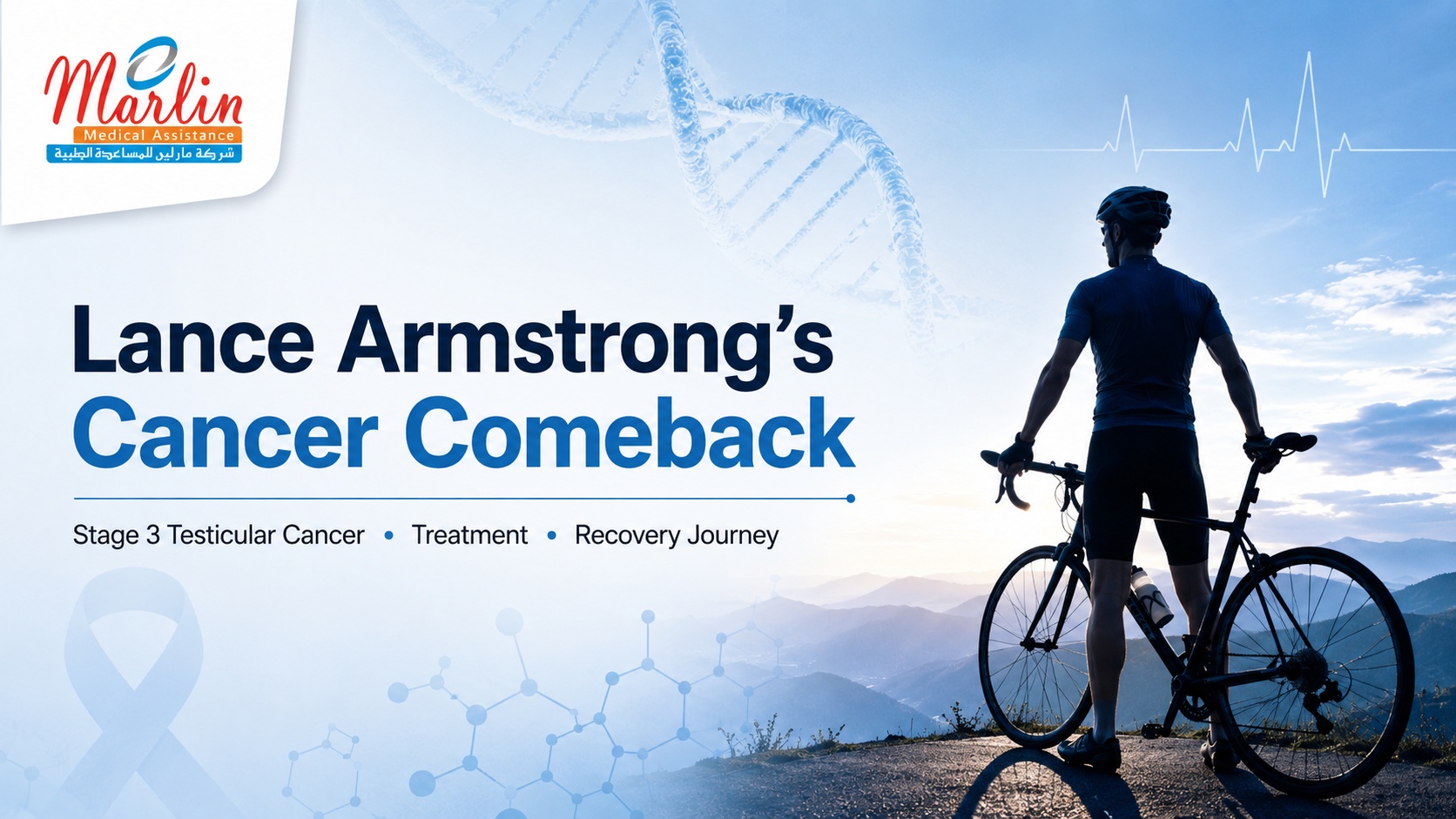
Lance Armstrong cancer treatment recovery story begins at a time that no elite athlete ever expects. At an age when he should have been preparing for the biggest races of his career, he was instead told he has advanced testicular cancer. What made things more complicated was the further diagnosis that revealed that it actually had spread to his lungs and brain too.
For many, such news would not have been easy to deal with. Instead, it became the beginning of an extraordinary fight against one of the most advanced forms of testicular cancer. Lance Armstrong not only won over it and came back to professional cycling but achieved things that seemed impossible.
Le Boss’s testicular cancer survivor story from a cancer patient to world champion continues to inspire people. He became a global attention and remains a powerful reminder that even advanced staged cases may be treated when managed with timely care.
October 1996: A 25-Year-Old Athlete's Stage 3 Diagnosis
Before diving into Lance Armstrong cancer treatment recovery story, it’s important to know how it all began. Lance Armstrong was at the peak of his career, in October 1996. Hard to believe, but he had, at just 25 years old, already established himself as one of America’s most promising professional cyclists. He earned recognition as the “Golden Boy of American Cycling.”
Yet, in the midst of all this, Lance started to notice symptoms that were just becoming difficult to ignore.
What first looked like just some discomfort from long hours on the bike soon increased. Lance was facing pain in one testicle, which later followed by a far more alarming symptom. He coughed up blood! Upon realizing something was truly wrong, Le Boss decided to go for medical evaluations, helping reveal devastating news. It was found out that he has testicular cancer, which is already in stage 3, spreading to other areas too.
Making it one of the most serious forms of the disease, doctors confirmed that the cancer had actually metastasized to his lungs and brain as well. For any young athlete in their peak physical condition, the diagnosis would surely come as a total shock.
What stage 3 testicular cancer means — spread to lungs and brain
Testicular cancer begins in the tissues of the testicle, most commonly in the germ cells that produce sperm. Doctors, in Lance’s case, found him with a non-seminomatous germ cell tumor. It is specifically an embryonal carcinoma, which is an aggressive subtype known for spreading more rapidly than seminomas.
Talking about the Lance Armstrong cancer treatment recovery story, at the time of the diagnosis, his disease actually had already reached Stage 3, known as the most advanced stage of testicular cancer.
As the cancer cells have travelled through the blood stream or lymphatic system, they may form tumors outside the original site.
The reason why Lance Armstrong started to cough up blood was found to be due to the spread of the cancer to the lungs, while, needless to mention, the tumors in his brain made his condition especially more critical than ever. Relatively, brain metastases are uncommon in testicular cancer, requiring urgent treatment because they can affect vital neurological functions if left untreated.
The prognosis he was given — and defied
However, if we’re to consider the extent of the disease, Lance’s prognosis was comparatively serious. Due to the lungs and brain cancer, it placed him in a high-risk category. Moreover, the diagnosis raised genuine concerns about the possibilities of the treatment and cure, let alone compete professionally again.
Initially going through overwhelmed feelings of disbelief and fear, Lance Armstrong cancer treatment recovery story also includes that he was forced by the diagnosis to confront his own mortality for the first time.
Metastatic cancers are usually difficult to cure, advanced testicular cancer is among the few exceptions as they may respond properly to aggressive treatment. Lance’s willingness to go through intensive therapy, along with the chemotherapy and surgery, eventually helped him overcome odds that once seemed difficult.
To this date, celebrity cancer survival story like Le Boss’s remain a powerful reminder that diagnosis of Stage 3 doesn’t always mean hope is lost.
The Treatment That Saved His Life: BEP Chemotherapy
Le Boss’s stage 3 testicular cancer recovery was made possible through a carefully planned combination of surgery, chemotherapy, and brain surgery. Instead of relying on a single treatment, though, his doctors decided to have a multidisciplinary approach to eliminate the primary tumor, destroy cancer cells that had spread throughout his body and remove metastatic tumors in the brain.
As said before, in the Lance Armstrong cancer treatment recovery story case, the cancer had reached Stage 3C already, immediate and aggressive care offered the best chance of survival. Although the procedure was quite physically demanding, thanks to the advances in testicular cancer care, what was once considered a fatal diagnosis turned into wonderful testicular cancer treatment success.
Bleomycin, Etoposide, Cisplatin — why he chose aggressive treatment
Radical orchiectomy was the first step in Lance’s treatment, as it’s the standard procedure for testicular cancer. Doctors, during this operation, removed the affected testicle, helping eliminate the primary tumor and obtain tissue for better and accurate diagnosis. Only surgery, however, might not have been sufficient, as the cancer has already spread to distant organs.
Later, Lance was advised to start chemotherapy with the BEP regimen. This combines:
- Bleomycin
- Etoposide
- Cisplatin
Each drug attacks cancer cells differently. For example, bleomycin damages tumor DNA, etoposide prevents cancer cells from dividing, and cisplatin, one of the most effective drugs against germ-cell tumors, destroys rapidly growing cancer cells.
Upon the completion of the first cycle of BEP, though, Lance Armstrong’s medical team decided to make a crucial adjustment. In particular, because bleomycin can cause permanent lung damage, in some cases, they were concerned that continued exposure might reduce his lung capacity significantly, reducing the possibilities of returning to professional cycling again.
Thus, to lower such risks, his remaining chemotherapy cycles were changed to the VIP regimen.
According to leading oncologists like M. Raheel Khan, for good-prognosis metastatic germ-cell tumors, 3 cycles of BEP remain the preferred regimen because of offering better cure rates. On the other hand, VIP is usually for patients in whom bleomycin needs to be avoided.
Brain metastasis surgery alongside chemo
Chemotherapy was only one part of the treatment because his cancer has already spread to the brain. Two metastatic brain lesions, with the imaging, were found. This made surgical intervention necessary alongside chemotherapy.
Both tumors were successfully removed, before he continued his remaining of the cycles, helping ensure that any microscopic cells that might still have been left are destroyed. Combining surgery with chemotherapy turned out effective in giving the best opportunity for long-term disease control.
Such types of multimodal treatments are generally provided for someone with advanced forms of cancers, spreading beyond their original area. While chemotherapy may be effective in destroying cancer cells throughout the body, surgery may be helpful in removing isolated metastatic tumors, particularly the ones posing immediate threats to organs, like the brain.
Together, these approaches significantly improved health, leading to the unparalleled Lance Armstrong cancer treatment recovery story.
Why testicular cancer has one of the best survival rates of all cancers
Despite being diagnosed with one of the most advanced stages of testicular cancer, however, Le Boss sought benefits from an important characteristic of germ-cell tumors. These are reportedly effective for platinum-based chemotherapy, especially cisplatin. So, from many other solid tumors, this is what actually makes testicular cancer different which may often be resistant to treatment once they have metastasized.
Many individuals may still achieve long-term remission or even, even when the disease has spread to vital organs, like to one’s lungs or brain. Not to say, due to this effectiveness of chemotherapy, it’s among the reasons why many regard testicular cancer among the most curable forms of cancer.
However, outcomes can vary for each patient. It can actually depend on many factors, such as,
- Tumor subtype
- Extent of metastasis
- Overall health
- Above all, how quickly treatment begins
Testicular Cancer & Male Oncology Care in India - Free Consultation
From Patient to Champion: The Road Back
Surviving cancer, for Lance Armstrong, was actually the first step only. Why? The months after treatment were crucial for him, dedicating to rebuilding a body that had endured major surgery, intensive chemotherapy, and brain surgery. Returning to professional sport after Stage 3 testicular cancer seemed almost unimaginable.
Despite all that, he made his return, becoming one of the most popular athletes in cycling.
Though, it was not about reclaiming athletic success. For thousands of people all around the world, he became a symbol of inspiration. Not to say, his recovery from metastatic testicular cancer remains one of the most remarkable examples of what modern cancer can achieve.
How fitness aided his recovery
Many believe that Lance Armstrong’s year of elite athletic training was among the key reasons for how he coped with the physical demands of treatment and rehabilitation. Helping recover more effectively than many, strong cardiovascular fitness and overall conditioning may have allowed him to tolerate aggressive chemotherapy.
Although not just Le Boss made his comeback by regaining his strength, he learned a new perspective as well. Winning this battle against cancer is a victory higher than any form of races and the understanding that one shaped by gratitude and perseverance is a completely different experience.
Returning to professional cycling 18 months post - treatment
After completing treatment, Lance made his return to professional cycling again. Before he could compete against the other riders, his recovery needed to rebuild strength, endurance, and confidence once again. However, the comeback exceeded nearly everyone’s expectations.
Interestingly, his story reached way beyond cycling through his memoir It’s Not About the Bike, leading to the establishment of the Livestrong Foundation in 1997. Through the growing public platform, Lance worked his best to spread cancer awareness, encouraging everyone for regular screenings and funding institutions for better research and care.
Le Boss didn’t stop here. He won the Tour de France seven times, a record very few have been able to set. Inspiring people globally, in many ways, this achievement turned him into a sports icon. He’s an extraordinary example that life doesn’t just stop at cancer.
While things did get complicated with the news that the athlete had been involved in performance drugs during his career, however, they do not change the medical reality of his recovery.
Testicular Cancer Today: What His Story Teaches Us
More than just personal resilience, Lance Armstrong cancer treatment recovery story is actually a reminder of how far actually testicular cancer treatment has advanced over the past few decades. While every patient’s journey is different, Armstrong’s recovery highlights the importance of recognizing symptoms early, seeking prompt medical attention, and receiving specialized care.
Perhaps, the biggest lesson is that taking even a serious diagnosis, like this one, as the end of the road is no good. With modern care options, testicular cancer is among the most treatable forms of cancer, particularly if they are diagnosed early.
95%+ cure rate when caught early
Excellent prognosis is one of the most helpful, encouraging findings about testicular cancer. Studies suggest that the five-year survival rate, when detected before it spreads beyond the testicle, actually exceeds ninety five percent. This is why it is referred to as one of the most curable cancers in young men.
Even for advanced cases, many patients achieve long-term remission or cure, thanks to the effective treatments like surgery and platinum-based chemotherapy.
Although, it may be wrong to assume that the results will be similar for every person, as no treatment works equally. What worked for one may be ineffective for the other. In addition, the survival rates show overall population outcomes. Factors, say age, cancer type, stage, etc., may influence prognosis.
BEP chemotherapy cost in India vs. the US
Varying from one country to another, the treatment cost for diseases like advanced testicular cancer may vary. And when it comes to comparing comprehensive care like BEP chemotherapy cost in India from a western nation like the US, the difference may be too significant.
As of 2026, the total BEP chemotherapy cost in India can be around USD 1,500 to 6,000, whereas the same may cost approximately USD 25,000 to 100,000 or more in the United States.
Not just on geography, but the cost may also depend on a few other factors, like the cancer stage, hospital stay, and management of treatment-related side effects. Because of these differences, India has also become a recognized destination for international patients seeking high-quality yet comparatively affordable cancer care.
| Treatment | Cost in India (USD) | Cost in US (USD) |
|---|---|---|
| 1 cycle of BEP chemotherapy | 240 to 1000 | 15000 to 30000 |
| Total BEP chemotherapy | 1500 to 6000 | 25000 to 100000 |
Why young men ignore symptoms - and shouldn't
One reason why testicular cancer is sometimes diagnosed late is that many young men overlook its early warning signs. Several symptoms may indicate this, like,
- A feeling of heaviness in the scrotum
- Swelling
- A painless lump
- Mild discomfort
For many, these may seem insignificant, especially in otherwise healthy and active individuals. And so, in the Lance Armstrong case too, a similar issue was diagnosed. He himself attributed his testicular discomfort, in the beginning, to the physical demands of professional cycling. Only as more serious symptoms appeared, he went for medical evaluation.
What one can learn from Lance Armstrong cancer treatment recovery story is that prompt medical attention is crucial. If something doesn’t feel right, having it examined by a medical expert won’t cause any harm. Therefore, it’s important to bear in mind. Just never ignore changes in your body, whether big or small, because early action and timely care could save your life.
Frequently Asked Questions
Disclaimer: This article is for informational purposes only and should not be considered medical advice. The celebrity’s health and treatment details are based on the publicly available information. Please consult a qualified doctor before making any decision regarding diagnosis or treatment.