

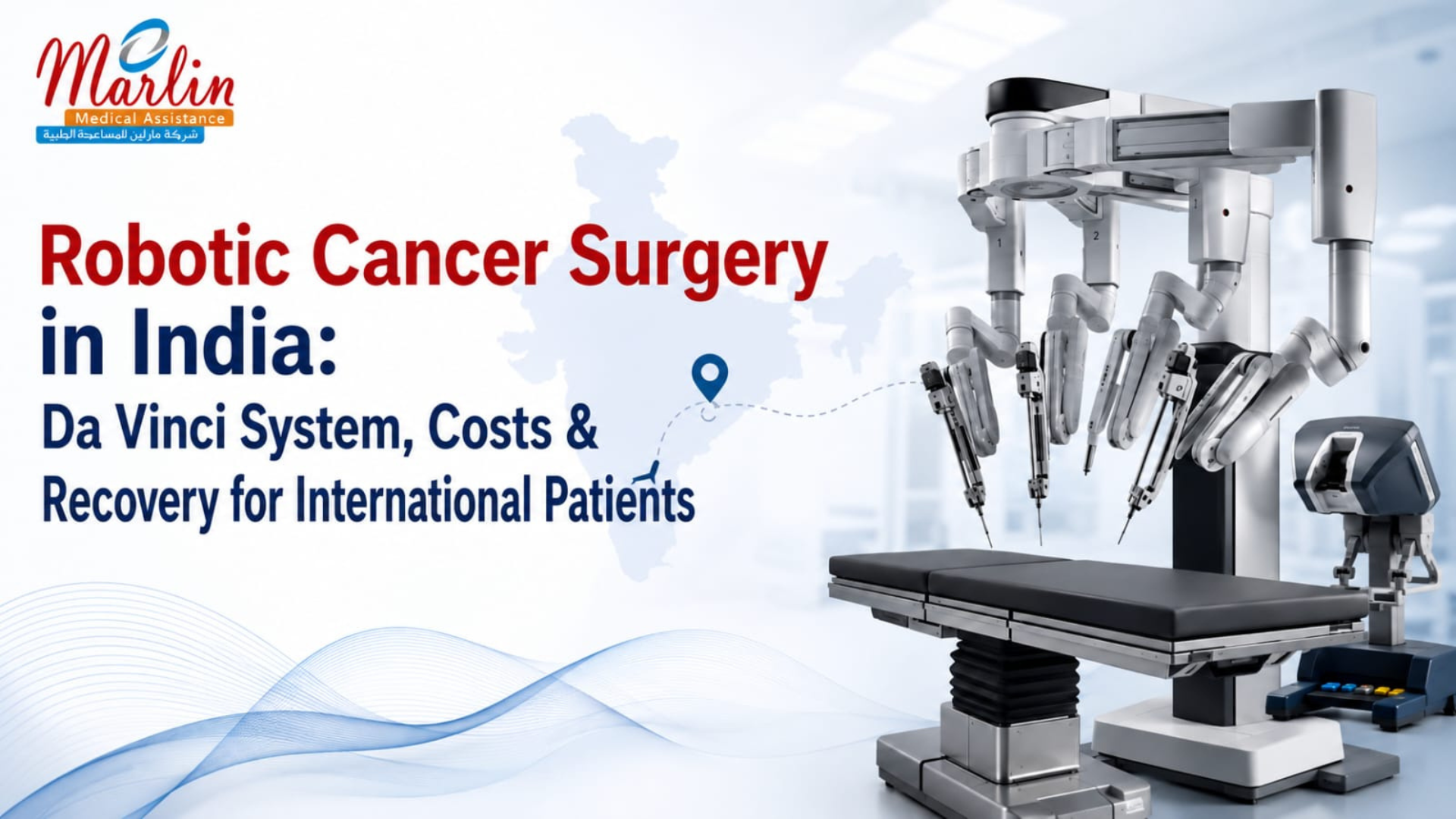
No doubt, cancer treatment is way too expensive. However, a few destinations like India are emerging as popular choices. Even robotic cancer surgery India cost international patients, which is one of the most advanced treatments, significantly less than the Western nations such as the USA.
Especially when one has to travel abroad for procedures like robotic cancer surgery, the overall cost can go beyond what most patients and families could afford. Such hurdles often make it more complicated for them to plan better and find suitable care.
Thankfully, not anymore.
Access to cutting-edge technologies, including the Da Vinci surgical system is now possible at a fraction of what may be charged in other countries. With highly experienced oncologic surgeons, internationally accredited hospitals, and dedicated medical tourism services, India offers a compelling option for patients seeking quality care without having to compromise anything.
What Is Robotic Surgery and Why Does It Matter for Cancer Patient s?
Currently, robotic surgery is among advanced, most-effective minimally invasive surgeries. While many think that the robotic system operates independently, however, this is just a popular belief which is completely false. Even though it's “robot-based,” it is still actually controlled by a human surgeon.
Guiding every movement of the robotic arms with great precision and control, the surgeon sits at a nearby console. At present, one of the most widely used robotic platforms is the Da Vinci surgical system. Along with the magnified high-definition 3D view of the surgical area, it provides surgeons better control than other equipment.
While human surgeons have limitations, the system’s robotic arms can not only rotate and maneuver well, but it also exceeds the natural range of motion of the human hand, helping access hard-to-reach areas with greater accuracy.
India’s growing experience with robotic surgery appears in increasing case volumes. For example, the All India Institute of Medical Sciences has alone reported performing more than 700 robotic procedures across specialities within a year, highlighting how rapidly the country’s healthcare system is adopting robotic-assisted surgery.
Especially for cancer patients, technologies like this one can be quite valuable, as operating near nerves, blood vessels, organs and other such delicate structures is not easy. Offering highly precise tumor removal through small incisions, robotic surgery may help preserve healthy tissue while getting better and effective results.
Precision benefits: less blood loss, faster recovery
Before, in traditional open surgeries, they often required larger incisions. Yet, robotic-assisted procedures are done through several small keyhole incisions. Thanks to the advanced 3D visualization, motion scaling, and surgeon-controlled robotic instruments, more precise dissection and suturing is possible.
Because of the same, patients may seek many potential benefits, including limited blood loss during surgery, lower risk of infection, hospital stays for a shorter time, and most importantly, less postoperative pain. Smaller incisions may also be useful for patients in returning to their daily activities sooner, as it involves minimal scarring which can lead to faster healing.
Needless to mention, for international patients traveling for such robotic treatment, shorter recovery times may translate into reduced accommodation costs, allowing for a quicker return to their home.
However, outcomes can vary depending on a few factors, including:
- Patient’s cancer type and stage,
- Overall health,
- Expertise and experience of the surgical team.
Cancer types best suited to robotic surgery
Robotic surgeries are increasing across different cancer specialities, especially when it comes to complex tumor cases where precision is quite critical.
Talking about prostate cancer is among the most common indications, robotic prostatectomy becoming a commonly adopted method because it helps preserve urinary function and surrounding nerves.
Apart from these, for bladder, colorectal and kidney cancers, similar procedures are increasingly being used, ensuring partial or complete removal of the affected parts safely.
When it comes to gynecologic oncology, robotic surgery may be recommended for a few with cervical, endometrial, and ovarian cancers. Thoracic surgeons may use robotic approaches for certain early-stage lung cancers. Also, head and neck specialists may increasingly use transoral robotic surgery for cases of tumors, particularly in difficult-to-access areas.
Despite offering a number of advantages, however, it might be false to think that every individual can opt for robotic surgery. Because they just can’t! Keeping the factors like tumor size, cancer stage, previous cases of surgeries, current health status, etc. in mind, whether the person should be provided this particular procedure or not depends entirely on the expert's analysis.
Based on the evaluation of each individual’s case, the expert team finalizes their decision of whether robotic-procedure is the suitable option or not.
Although one may expect for a faster and more comfortable recovery, as compared to the traditional open procedures. Because of using smaller incisions and less tissue damage, many are required for shorter hospital stays, allowing return to normal activities quickly.
The duration varies, approximately two to five days is what most patients remain in the hospital for, depending on their procedure and overall health. Moreover, by the first month, many may be allowed to return to work and continue most of their routine activities.
Robotic Surgery Costs in India vs. USA, UK
Depending on several factors, the robotic cancer surgery India cost international patients can vary a lot, such as type and stage of the disease, how complex the overall procedure is, the hospital’s location, and most importantly, the region.
Additional variables like the hospital stay time, preoperative checks, anaesthesia fees, intensive care, and the need for chemotherapy, etc., can also impact the overall treatment expense.
Understanding these cost components, when it comes to international patients, becomes important, especially when looking for cost-effective treatment destinations. And India has emerged as a leading hub for robotic cancer surgery, offering access to advanced procedures like the da vinci robotic surgery India at substantially lower prices than Western regions like the USA or the UK.
Robotic prostatectomy: $8,000–$12,000 in India vs. $50,000 in US
One of the most widely performed robotic cancer procedures globally is robotic-assisted radical prostatectomy. However, a huge difference in the prices can be noticed, depending on the city and hospital they choose as well as the overall needs of the patients.
For example, robotic prostatectomy India cost can be around 8000 to 12000 USD, as of 2026, where you may be charged 50,000 USD or even higher for the same treatment in the US.
Varying from one hospital to another, most comprehensive treatments in India may include the essentials, such as room charges, anesthesia, hospital accommodation, and all. Still, one is advised to seek a clear answer directly from the hospital. As in some packages, additional expenses like diagnostic imaging, pathology tests, medications, etc., are already covered. Yet, in others, patients may have to pay from their own pocket.
In any case, though, what’s good is to know that robotic procedures have become effective over time. Talking about an Indian study on robot-assisted radical prostatectomy found only a median blood loss of 150 ml, where patients didn’t need blood transfusions. Unlike earlier, the median hospital stay was also only for three days.
In addition, it’s also worth noting that getting lower prices, even for advanced robotic treatment, in India is largely attributed to overall reduced operational expenses and favorable healthcare economics. It’s not due to any compromise in technology or care quality, as some may think.
Robotic-assisted colectomy cost comparison
Robotic-assisted colectomy is widely used to treat selected cases of colorectal cancer, helping remove affected colon, whether part or all, through minimally invasive techniques.
Furthermore, depending on the overall surgery complexity and the extent of bowel resection needed, the average robotic colectomy India cost can typically be between 6000 and 10,000 USD, as of 2026.
Although, patients in the United States may expect to pay around 20,000 to 60,000 USD or more. Needless to say, if someone is considering private treatment, the charges may go even higher.
The factors impacting the final cost of advanced procedures like this can be several, like:
- Tumor location,
- Cancer stage,
- The need for temporary or permanent stoma creation,
- Duration of hospitalization,
- Whether additional procedures are required during surgery.
For individuals with earlier medical conditions or those requiring intensive monitoring after the operation may also be required to bear higher expenses. Getting a personalized care estimate after a multidisciplinary review can help international patients plan everything carefully, more effectively.
Here’s how the cost may vary significantly in India, as compared to the western nations like the USA.
| Treatment | Cost in India (USD) | Cost in USA (USD) | Cost in UK (USD) |
|---|---|---|---|
| Robotic colectomy | 6000-10,000 | 20,000-60,000 | 22,000-38,000 |
| Robotic prostatectomy | 8000-12,000 | 50,000 or more | 14,000-30,000 |
As one can see, robotic cancer surgery India cost international patients comparatively affordable, helping save significantly for those searching for advanced robotic procedures, without long waiting periods.
'Find Out If Robotic Surgery Is Right for Your Cancer'
Hospitals With Da Vinci Robotic Systems in India
Hospitals. Choosing the right hospitals with da vinci robotic systems in India is a crucial decision for global patients looking for robotic cancer procedures. Even though it’s true that access to advanced technology like this one is essential, the quality of the outcomes often depends on the experience of the surgical team, hospital, and above all, whether comprehensive cancer care services are available.
Apart from this, there are other factors that foreign patients should consider before making the final decision. If the selected hospital follows a multidisciplinary approach through a proper expert team that include surgical oncologists, medical oncologists, radiologists, pathologists, etc.
This can particularly be helpful in ensuring that robotic surgery is advised only when it is clinically appropriate. Because as mentioned before, not everyone can seek treatments like these. Only when other procedure options may not be suitable, this may be recommended.
Moreover, there are other important considerations for international patient services too, like:
- Visa assistance,
- Interpreter support, as some may need,
- Airport transfers,
- Accommodation coordination,
- Teleconsultation facilities.
In addition, one also needs to check for Da Vinci system hospital certifications in India. In other words, accreditation and certifications from recognized organizations, including NABH, JCI, or Intuitive Surgical, can help get additional details, ensuring quality and patient safety standards are properly maintained.
Based on one’s overall need, there are several leading hospitals that offer da vinci robotic systems in India. This includes:
- Apollo
- Max Super Speciality Hospital
- Fortis Healthcare
- Medanta
- Kokilaben Dhirubhai Ambani Hospital
- Artemis Hospital
- Manipal Hospital
If you’re specifically looking for government institutes, however, only a few premier cancer centers may be available currently, such as:
- AIIMS
- Safdarjung Hospital
- Dr. Ram Manohar Lohia Hospital
- Regional Cancer Centre
Approval criteria for international robotic surgery patients
While there are several advantages of minimally invasive cancer surgery India like this one, not every individual may be eligible, as it is commonly believed. In most hospitals, a detailed evaluation is done to check whether the particular treatment is right and safe for the patients before recommending them.
The whole process usually starts with the submission of medical records. This includes recent imaging scans, laboratory results, treatment history and other essential pathology reports, helping understand the disease well. These documents are reviewed by the specialists and surgical team.
To discuss the patient’s condition, most hospitals arrange virtual consultations, explaining what different options are available for the person as well as answer their queries, based on which further plans may be finalized.
Not only this, but many patients must also go through an assessment to determine their present fitness for anesthesia and surgery. There are many factors that can impact the eligibility, like:
- Age
- Pre-existing medical conditions
- Earlier surgeries, if had any
- Overall health status
However, it is suggested that in many cases, to confirm the treatment strategy, a multidisciplinary tumor board may review the patient’s case. Upon getting the approval, foreign patient coordinators make all the arrangements, helping with pre-arrival planning, including visa documentation, scheduling appointments, accommodations, and estimated treatment costs.
The overall timeline for the surgery approval can be from a few days to one or two weeks, depending on the complexity of the case and availability of medical records.
Despite all, robotic cancer surgery India cost international patients significantly less than many Western regions, be it the US, UK or Europe. In a number of ways, India has become a preferred destination for advanced and effective procedures, including the Da Vinci surgical system.
Beyond affordability, individuals can get shorter waiting times, comprehensive care, and faster recovery. Still, finding the right hospital remains essential, as results vary from one person to another, based on different factors. If you’re thus in search of cost-effective care, do research thoroughly, verify all the details, and make an informed decision.
Frequently Asked Questions
Disclaimer :This article is for general information only and should not be considered medical advice. Please consult a qualified doctor before making any treatment-related decisions.