
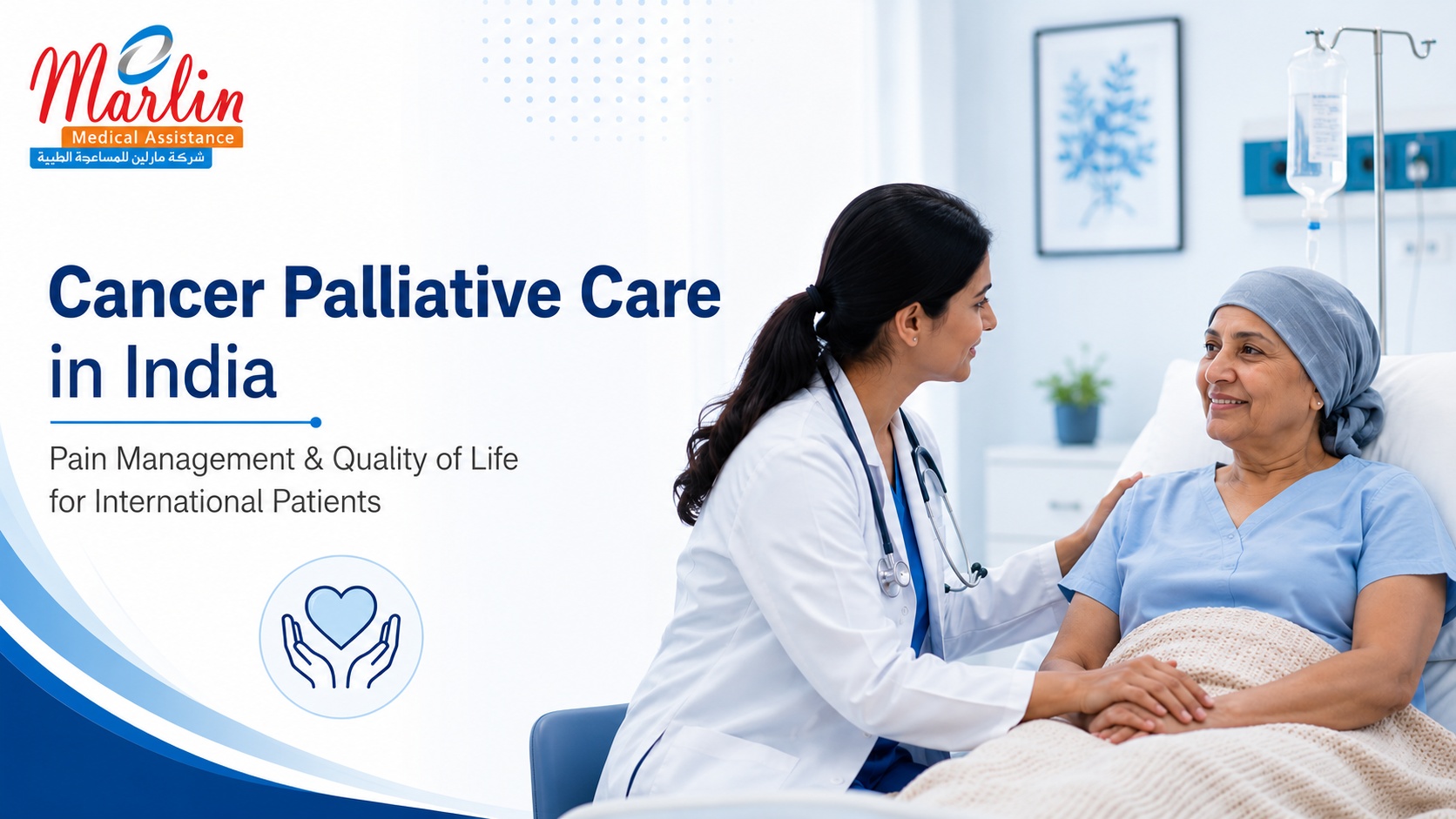
Undergoing advanced cancer treatment requires a holistic approach that goes far beyond treating the tumor alone. In the global landscape of supportive oncology, families are rapidly shifting away from the old misconception that supportive therapy means giving up hope. Rather, current medical practice understands that prompt handling of symptoms is important for physical and psychological well-being. For those who face issues like high prices and lengthy wait periods back home, cancer palliative care India international patients offers a new experience through which they can achieve something truly life-changing and excellent.
Redefining the Patient Journey Through Early Support
It means that by introducing palliative oncology right from the beginning of the treatment process, the treatment process of the person will undergo significant change. It is because this kind of treatment will not come right after the person has been administered other kinds of treatment like chemotherapy and immunotherapy.
This dualistic treatment process aims at managing the treatment-related toxicities, pain, and physical stress caused by cancer.
What Is Palliative Care and Who Needs It?
The science of palliative medicine is one of the most complicated branches of medicine and comprises a number of branches related to improving the quality of life of people experiencing serious threats to their lives caused by lethal diseases. Palliative medicine, as defined by WHO, aims to minimize suffering starting from its emergence to treatment.
Contrary to popular belief, palliative care does not apply only at the terminal stages of life but begins earlier in the development of the illness and functions interactively with curative medicine.
In the realm of advanced oncology, this model is frequently referred to as supportive oncology. It provides a vital safety net for patients navigating the aggressive side effects of modern cancer treatments, ensuring that systemic therapies do not completely degrade a patient's functional independence or physical comfort.
The Escalating Demand and Target Demographics
The clinical demand for structured palliative oncology in India is driven by an escalating oncological crisis. India faces a massive cancer burden, with approximately 2.25 million individuals currently living with the disease. Each year, there are more than 1 million newly diagnosed cancer cases within a population of over 1.4 billion.
The reason being that most people are diagnosed with cancer when they have advanced disease, the mortality rate due to cancer is quite high in India, accounting for about 68% of the total incidence rate each year. The following table breaks down the key clinical and access metrics that define the current palliative landscape:
| Annual Palliative Care Need | 7,000,000 – 10,000,000 patients | Growing rapidly due to rise in chronic diseases |
| National Access Rate | Less than 4% of the requiring population | Highly concentrated in urban areas and specific states |
| Metastatic Cancer Unmet Need | 98.3% unmet palliative care needs | Leads to high rates of unmanaged terminal pain |
| Severe Pain Incidence in Cancer | ~60% of all diagnosed cancer patients | Standard surrogate marker for systemic palliative gaps |
| Adequate Opioid Access Rate | ~1% of patients experiencing severe pain | Underdosing driven by regulatory and clinical barriers |
Early Integration Alongside Curative Therapies
Early involvement of supportive oncology along with the active treatment therapies like chemotherapy, biological, and innovative immunotherapy forms an integral part of the current day supportive oncology. Traditionally, palliative care has always been seen as a last resort to be considered if all other active treatment methods have failed. But the present day practice guidelines completely deny this idea.
Where the patient is being treated through the administration of strict chemotherapy or immunotherapy, the negative side effects which may include severe neuropathy, fatigue, nausea, inflammation, amongst others, may be too much for the patient to the point where the patient has to postpone or completely stop the therapy.
Involvement of these specialists occurs after the disease or change of its course is made known to the patient. Through the management of toxicity associated with the process of treatment, the palliative care ensures maintenance of the functional status of the patient, his organ integrity, and his psychological balance.
Who Needs Palliative Oncology?
Identifying the exact clinical demographics that require immediate palliative intervention is essential for optimizing patient outcomes. Palliative oncology is not restricted by a patient's prognosis or age; rather, it is dictated by symptom burden and complexity. Demographic Target Audience Includes:
- Terminal Cancer Patients: The patient may either be at stage III or IV of his/her cancer (including lung cancer, breast cancer, colon cancer, rectal cancer, or pancreatic cancer) with the cancer being metastatic in other areas of the body leading to pain because of varied symptoms.
- Highly Toxic Regimen of Treatment Patients: These kinds of patients are undergoing highly toxic regimens of treatment through chemotherapy with more than one drug, pelvic or brain radiotherapy, and newly available immune therapies which may result in unfavorable physical outcomes.
- Patients with Blood Cancer: These patients are suffering from complicated blood cancer like leukemia, lymphomas, or multiple myelomas where there are complications including painful bones, serious anemia, varied infections, and hospitalization.
- Refractory Symptom Patients: These are the cancer patients experiencing any kind of symptom that can only be managed without over-the-counter medications, and patients with malignant bowel obstruction that is non-responsive to treatments and also dyspnea or cachexia.
- Family Members of Terminal Cancer Patients Experiencing Significant Burnout: Such family members are having to deal with complications of the logistical and physical nature as well as the emotions involved in dealing with their relatives’ difficult terminal illness.
Even with the clinical markers, there remains a serious geographic and infrastructure issue in delivering care in domestic borders. Whereas certain urban cities have been able to optimize their palliative care facilities, a mere 11.8% of people in rural areas can access these facilities within a 30-minute ride from a palliative care center while 55.6% of people in urban areas can. This distribution issue is partly why medical tourism has emerged as patients seek out palliative oncology care in India’s top tertiary hospitals.
Palliative care is not 'giving up' — it's quality of life
A common impediment to early implementation of palliative medicine is the false belief held in medical practice and within the culture that entering into palliative care implies a lack of struggle, that is "giving up" on the patient. For too long, it has been believed that referral to palliative care involves giving up all hope because it simply means that death will follow shortly after.
In recent times, scientific works concerning oncology reject this outdated theory regarding palliative care, which proves that palliative oncology was developed to complement treatment programs already in use. Being included into the process of oncology treatment during its initial stages, palliative medicine is aimed to reduce physiological and psychological strain from radical methods of treatment so that the person could live a comfortable and independent life.
The Psychological Shift to Dual-Track Care
The adjustment from thinking about curative only treatment to dual-track therapy, taking into account both curative and supportive elements of the treatment, is very important for the families of patients. In many countries worldwide, in case of the diagnosis of advanced cancer, the natural reaction of the patients is to apply an aggressive line by line tumor-directed therapy despite the lack of recovery potential and significant toxicity in the organs.
This is connected with the fact that it is generally recognized that the introduction of palliative therapy implies giving up medical care totally. However, the introduction of dual-track therapy implies two important targets: first, an aggressive attack on the tumor using advanced oncological protocols, and secondly, an aggressive attack on physical suffering.
Clinical Data: Extending Survival Through Early Symptom Management
Other than providing psychological support, another strong argument for early palliative integration is empirical evidence drawn from the clinical practice setting. There is a great deal of clinical research that demonstrates that integrating palliative care early does not affect the survival period. On the other hand, many randomized controlled studies have demonstrated that patients who go through early palliative care integration survive longer than those undergoing oncology care only.
The reasons for this effect are well understood and highly predictable:
• Minimizing Stress Response in the Body: Pain, nausea, and lack of sleep stimulate the body’s release of stress hormones like cortisol and adrenaline, which effectively means that a chronic stress response is created, which in turn suppresses the immune system, increases catabolic cachexia, and stresses the cardiovascular system. With the minimization of these stress responses, stores within the body are saved up for later use.
• Prevention of Secondary Illnesses: The monitoring by a trained and multidisciplinary team will enable early identification of illnesses that could have been avoided such as severe dehydration, serious electrolyte imbalance, radiation skin breakdowns, and early infections.
• Fewer Unplanned Hospital Admissions: The integration of palliative treatment means there will be significantly fewer emergency room admissions which are highly disruptive to patients. Most critically, avoiding ICU admission protects vulnerable, immunocompromised cancer patients from infection as well as a drop in functional capacity.
• Better Adherence to Treatment Regimens: By controlling the adverse physical symptoms of treatment in the outpatient setting, patients are more likely to adhere to their prescribed cycles of chemotherapy, radiation and immunotherapy.
Mapping Interventions Across Malignancies
To achieve this effectively, palliative experts tailor their medical treatment to suit the physical and cellular requirements of the specific cancer type being dealt with. There are different priorities when dealing with advanced solid tumor cancers and hematological malignancies:
Advanced-Stage Solid Tumors
In relation to palliative care for solid tumors, including metastases in the lungs, breast, colon/rectal cancer, pancreatic, and prostate, palliative care is intended to ensure there is no mechanical stress, anatomic obstruction, and tissue damage. The implication of this is that palliative treatment in cases of metastasis cannot target the curative aspect of the disease.
This is because the primary effect of the treatment is to shrink the tumor size as a way of alleviating the pain caused by mechanical stress and obstructions of adjacent nerves and organs, inflammation of the area, as well as any potential complications, which include bowel obstruction, spinal cord compression, and tumor bleeding.
Hematological Malignancies
Unlike with cases of blood cancers like leukemias, lymphomas, and multiple myeloma, where the illness becomes systemic rather than local from onset itself. In such scenarios, the aspect of emphasis on palliative treatment entails addressing completely different physiological aspects. For example, patients with multiple myeloma suffer from bone pain due to osteolysis which is controlled through the administration of potent analgesics together with bisphosphonates and radiation therapy.
In addition, there will be severe bone marrow suppression causing severe anemia as well as the lack of essential white blood cells in the case of blood cancers. With regard to the issue of palliative care of hematological cancers, this encompasses the proper planning of low threshold blood component transfusions and symptom control subcutaneously in a home-like setting.
Palliative Oncology Services in India
The infrastructure supporting palliative oncology India has evolved from an ad-hoc system of charitable clinics into a highly sophisticated, structurally sound medical specialty. Today, India’s top-tier tertiary hospitals feature specialized, multi-disciplinary departments that integrate pain medicine, physical rehabilitation, nutritional therapy, and psycho-oncology into a singular care pathway.
Advanced Multidisciplinary Institutional Capabilities
The contemporary Indian palliative medical team works through organized MDTs wherein different medical specialties work together at the same time for the benefit of one patient. Instead of leaving the responsibility on one oncologist to take care of the complex and terminally ill patients, the patient is allotted a particular team consisting of fellowship-trained palliative medicine and onco-anesthesiology doctors.
Here, one finds clinical nurses, onco-dietitians, physical therapists, and psycho-oncologists working together. In other words, these experts can help in handling the complex nature of the problem of cancer simultaneously.
Thus, for instance, while the onco-anesthesiologist utilizes interventions in coping with physical pain pathways, the psycho-oncologist begins dealing with the question of existential anxiety, and the clinical nutritionist begins devising an elemental diet to cope with cancer-related cachexia. All the while, however, these measures prevent any clinical vacuums and promote effective communication.
Specialized Clinical Infrastructure
In order to aid these state-of-the-art clinical teams, the best medical facilities in India have spent huge amounts on infrastructure tailored to handle such high-symptom patients. These advanced facilities are structurally divided into two areas:
• Inpatient Palliative Care Units (PCU): Highly acute units, distinct from the highly stressful units that are usually associated with the normal emergency and surgical wards. The units are designed with individual, climate controlled chambers, pressure relieving air beds, as well as monitoring machines through which nurses can deal with acute symptom crises without overwhelming the senses of the patient.
• Interventional Pain Suites: These are special intervention units equipped with high quality C-Arm Fluoroscope and ultrasonography machines. The palliative anesthesiologists use such specialized suites for administering precision regional nerve blocks, epidural infusion and neurolysis with the patient having very little discomfort.
• Daycare Clinics: These are special units tailored specifically for the needs of those patients who need to undergo various medical processes like quick fluid drainage for malignant ascites, paracentesis, etc., but would prefer to go back to their respective hotels or lodging place immediately after the medical procedure.
• Special Hubs for International Patients: These are special logistical centers within the hospital that offer translation service, visa extension desks as well as rest rooms for foreign nationals who accompany the patient during his/her hospital visit.
Alignment with International Clinical Guidelines
One major reason why patients from other nations prefer to get treated at tertiary hospitals in India for their symptoms is the complete clinical agreement with the medical guidelines around the world. Notable tertiary hospitals in India do not function in isolation and do not follow experimental models but rather base their palliative treatments on the established clinical guidelines set by the WHO, NCCN, and ESMO.
Also, the NCG, which is a consortium of more than 300 cancer treatment centers, reviews its clinical guidelines on a regular basis using scientific methodology with the aim of getting optimum results. The guidelines of NCG suggest using clinically proven methodologies such as Edmonton Symptom Assessment Scale (ESAS) and Visual Analog Scale (VAS) for assessing the pain of the cancer patient.
With the application of standardized methods of pain measurement, it becomes possible to measure pain being felt by the patient through the same methods that would be used for measurement in India and other locations such as London and New York. Evidence based standards help in making changes to and managing pain properly.
| National Average (India) | 526 Centers | 4.0 | 118 minutes | 23.6% |
| Urban Metropolitan Areas | High Concentration (Private Chains & Tier-1 Hubs) | Disproportionate Concentration | Under 30 minutes (Avg) | 55.6% |
| Rural Regions | Low Density (Community-led clinics) | Highly Deficient | Several Hours (Avg) | 11.8% |
| Kerala State | Over 90% of National Units | Outlier / Highly Optimized | Near-Universal Access | Near-Universal Coverage |
| Chandigarh / Delhi / Goa | High Density (Tertiary Private & Govt Hubs) | Optimized | 3 – 4 minutes (Chandigarh) | Optimized Coverage |
| Madhya Pradesh / Bihar / Odisha | Critical Scarcity | Extreme Deficit | Highly Elevated | Critically Low |
From the table above, it is evident that the state of Kerala forms a crucial outlier in Indian history based on the many number of palliative care centers established through decentralization of health policy in India. For international patients however, only four major cities in India host the palliative care centers: Delhi NCR, Mumbai, Chennai, and Bangalore. This is because the specified metropolitan cities guarantee a travel time of below 30 minutes, possess highly certified oncology departments by the JCI, and possess the administrative capability to process international documents.
Pain management with WHO opioid access
Effective pain management cancer India relies on structured medical protocols and access to essential opioid analgesics. Top hospitals in India treat cancer pain using the WHO 3-step ladder, a scientifically proven tool.
The process of treatment is one where non-opioids are used for mild pain, weak opioids are used for moderate pain, while strong opioids are used for severe pain. This step-wise approach ensures that the level of strength of the drug is commensurate with the level of pain.
Nonetheless, the availability of these essential drugs was strictly controlled through the Narcotic Drugs and Psychotropic Substances (NDPS) Act that was brought in the year 1985. The licensing provisions provided in this Act resulted in a drastic fall of 92%-97% in medical use of morphine in India, reducing it to the lowest level of mere 18 kg in 1997. To tackle the prevailing situation, the Parliament of India brought in the NDPS (Amendment) Act, 2014. One of the key changes under this Act is the categorization of the aforementioned drugs as “Essential Narcotic Drugs” (ENDs).
The concept of “Recognized Medical Institutions” (RMIs) has been introduced within this framework since 2014 via rules 52N and 52O. This system enables recognized hospitals to stock, prescribe, and distribute ENDs using a single license for three years. This framework guarantees that foreign nationals seeking healthcare services in India can get access to important drugs like oral morphine, fentanyl patch, and other adjuvant medicines without any coordination issues among the Indian states.
Psychological and family counselling
The fact of diagnosing a person with advanced cancer creates an impact on the psychological health of such patients in a manner that not only their personality but also their body is affected. There are palliative care plans in place for India, which make use of multi-disciplinary counseling sessions with the help of cognitive behavioral tools.
Because of the structure of India’s health care system where the family is taken as the basic unit during health care services delivery, family-based interventions emerge. It is through the collaboration between the palliative care team and the family that family-based intervention techniques are offered to the family to manage stress and burnout.
These international families who are waiting for palliative care for their loved ones are assisted by these culturally-oriented therapy programs that consider their unique traditions and beliefs. The therapists help the family experience anticipatory grief counseling to prepare them for the impending grief.
Home care setup before returning home
It is imperative that when patients leave the Indian tertiary hospitals after their stabilizing treatment, they have an appropriate discharge roadmap in place to return safely to their respective countries. The palliative care teams utilize their experience with extensive community-based care models by ensuring that international patients' relatives receive appropriate training regarding their clinical needs. They receive training on how to treat wounds, administer tube feeding, and take note of medication with tools such as the Visual Analogue Scale.
To facilitate ongoing medical supervision, telemedicine connections are made for tracking symptoms and monitoring medication. Palliative coordinators also help relatives in acquiring and setting up the necessary equipment for proper care once they get back home. This equipment includes items like home oxygen concentrators, nebulizers, syringe drivers, and pressure relieving air beds.
Why Choose India for Palliative Care
The choice of India in terms of symptom management and oncology support gives the unique combination of skills in treatment, the need for infrastructure, and unparalleled cost-effectiveness. Patients coming to a hospice in India will be offered cutting-edge medical care facilities accredited by the Joint Commission International (JCI) and the National Accreditation Board for Hospitals & Healthcare Providers (NABH). Such standards of quality assurance make sure that all medical, security, and pharmaceutical standards are fully compatible with those of the West.
A unique advantage of an international patient comes from the presence of high-end multidisciplinary teams speaking English fluently. It is due to the fact that all doctors working at Indian tertiary care centers have been trained in English. Moreover, top hospitals offer special lounges for international patients and dedicated coordinators.
Finally, the country provides a massive cost advantage that significantly eases the financial burden of managing a terminal illness. Complex pain management therapies, advanced interventional nerve blocks, and specialized end of life cancer care India offers are available at just 20% to 30% of the cost of identical treatments in Western nations. This considerable financial relief makes it possible for international families to continue providing quality care for their dear ones without having to pay astronomical bills that would be incurred from hospitalization expenses.
Frequently Asked Questions
We offer you streamlined communication methods to make your travel arrangements easier. Through our protected portal, families can easily upload recent medical reports, history summaries, and current imaging files. Once received, our team will coordinate a comprehensive virtual multidisciplinary consultation with India’s leading pain specialists and oncologists. This allows us to map out a personalized care plan, arrange specialized medical equipment, and handle custom travel logistics before you depart—giving your family complete peace of mind without any immediate financial pressure.