Heart Bypass Surgery (CABG) in India: what it actually costs
A coronary artery bypass graft (CABG) at an accredited Indian hospital costs between $4,500 and $7,500, including surgical team, ICU, hospitalization and post-operative cardiac monitoring. Below is the price at top cardiac centres, what is included, and your estimated trip budget.
What the price includes
- Chief cardiac surgeon, anaesthetist and perfusionist team
- Operating theatre with heart-lung bypass setup
- 2–3 nights post-operative Cardiac ICU stay
- 4–5 nights room hospitalization with round-the-clock nursing
- Pre-op angiography review and biochemical panels
- Pre-discharge echocardiogram and cardiologist review
What it does not include
- Return international flights for patient and companion
- Serviced apartment accommodation after discharge
- Attendant visa fees and consular documentation
- Treatment of acute unassociated co-morbidities
- Subsequent outpatient cardiac medications past 30 days
- Extended cardiac rehabilitation once back in home country
What each hospital charges
Same clinical excellence across 5 accredited partner hospitals. Marlin charges no patient commission — figures are transparent official hospital estimates.
Tier-1 quaternary care facility with comprehensive international patient care concierge and translator desk.
Premier multi-super-speciality hospital in South Delhi with state-of-the-art diagnostic and surgical wings.
State-of-the-art tertiary hospital known for complex surgical interventions and fast recovery clinical pathways.
First hospital in India to receive JCI accreditation, with over 700 beds and world-class surgical faculties.
Estimate your whole trip, not just the surgery
Flights, hotel, food and visas for the full 18–21 days — so the number you budget for is what you actually spend.
$6,310 – $6,655
- Surgery, hospital and care$4,500 fixed
- Return flights (1 passenger)$920
- Hotel & meals during recovery$810
- Indian medical visas$80
The upper figure allows for a longer stay. The implant and surgery are fixed. Marlin adds nothing to any of these numbers.
Surgeons who do this operation every week
Senior consultants at JCI/NABH accredited centres with decades of dedicated procedural volume.
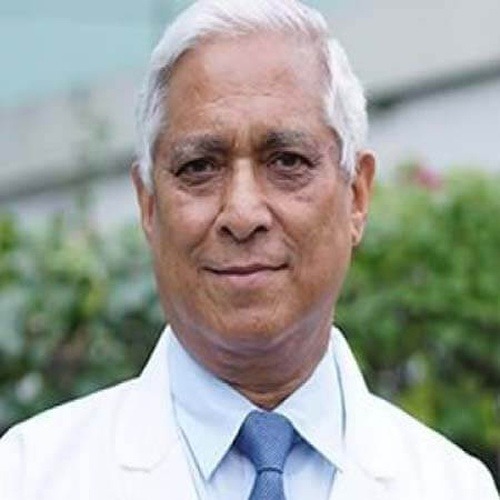
Dr. Vijay Kumar Chopra
Chairman of Clinical Cardiology & Research, leading cardiology expert in complex bypass and heart failure management.

Dr. Ashok Seth
Padma Bhushan & Padma Shri recipient. Global pioneer in angioplasty and advanced cardiac catheter interventions.
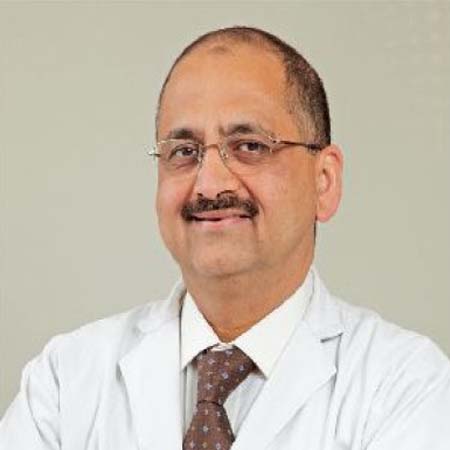
Dr. S.K.S Marya
Pioneered computerized precision surgeries and minimally invasive techniques across Asia.
What the three weeks actually look like
From sending your first medical scans to your fit-to-fly clearance.
Before you fly
Reports and a surgeon’s opinion
Send your X-rays and medical history. Within 24–48 hours you get a named surgeon’s written opinion and a costed plan from each hospital you shortlist.
Day 1–2
Arrival and tests
Airport pickup, hotel check-in and hospital consultation. Blood work, ECG, anaesthesia clearance and a fitness review are completed the same or next day.
Day 3
Surgery
The operation takes 60–90 minutes per joint. You are moved to your private room the same day and stood up with support within 24 hours.
Day 4–7
Walking with physio
Twice-daily physiotherapy in the ward. Most patients walk with a frame by day two after surgery and manage stairs before discharge.
Day 8–21
Recovery and review
You stay near the hospital in a serviced hotel with outpatient physio, then a final review, stitch removal and fit-to-fly clearance before you travel home.
“I paid the hospital directly at the billing counter and the number matched the estimate Marlin sent me in Nairobi. Nobody asked me for a single extra shilling.”
Questions patients ask before they book
Essential details on payments, visa processing, language and post-operative flight permissions.
Who do I pay, and when?+
You pay the hospital directly, at their official billing counter, in Indian rupees or by international credit card. There is usually an advance deposit on admission and the balance settled at discharge. Marlin never handles your money and charges you zero fees.
What if the cost changes after I arrive?+
The hospital re-confirms the estimate after your in-person tests. It can only move if your surgeon discovers complications or you require an extra night in ICU. Anything above the written estimate must be explained to you in writing before it is billed — we sit in on that conversation.
How do I get an Indian medical visa?+
The treating hospital issues an official visa invitation letter once your surgeon reviews and accepts your reports. You apply online for an Indian e-Medical Visa with that letter, passport copies and proof of funds. Your companion applies for a Medical Attendant visa on the same letter.
Will the surgeon and hospital staff speak English?+
Yes, 100%. All medical education and hospital communication in premier Indian hospitals is conducted in English. Translators for Arabic, French, Russian and Swahili are also provided free of charge by the hospital international patient desk.
Can my attendant or family member stay in my room?+
Yes. In all private and deluxe hospital rooms, an attendant couch/bed is provided at no extra charge, allowing one family member to stay overnight with the patient throughout hospitalization.
When is it safe for me to fly back home?+
For joint replacements, surgeons typically issue a fit-to-fly clearance after suture removal and mobility verification at around Day 14 to 21 post-operation. We also provide compression stocking guidance and wheelchair assistance at Indira Gandhi International Airport.